Synopsis “Ten blue links” are no longer how search works. Today, AI and search intent decide what users see, and often, they don’t even need to click. Today the goal has shifted from ranking pages to becoming a trusted source. This guide shows the future where human experience (E-E-A-T) helps your content stand out and turn zero-click searches into real opportunities.
What is a Search Engine Results Page?
The page you see after you hit “Google Search” is called a Search Engine Results Page(SERP). It is the digital answer sheet to your question. Today, the SERP is much smarter than a simple list of links. Search engines no longer just scan for matching keywords.
Modern search understands entities, not just text.
So when you type “How to brew coffee,” it interprets the meaning behind the word, based upon your query and not just the word itself.
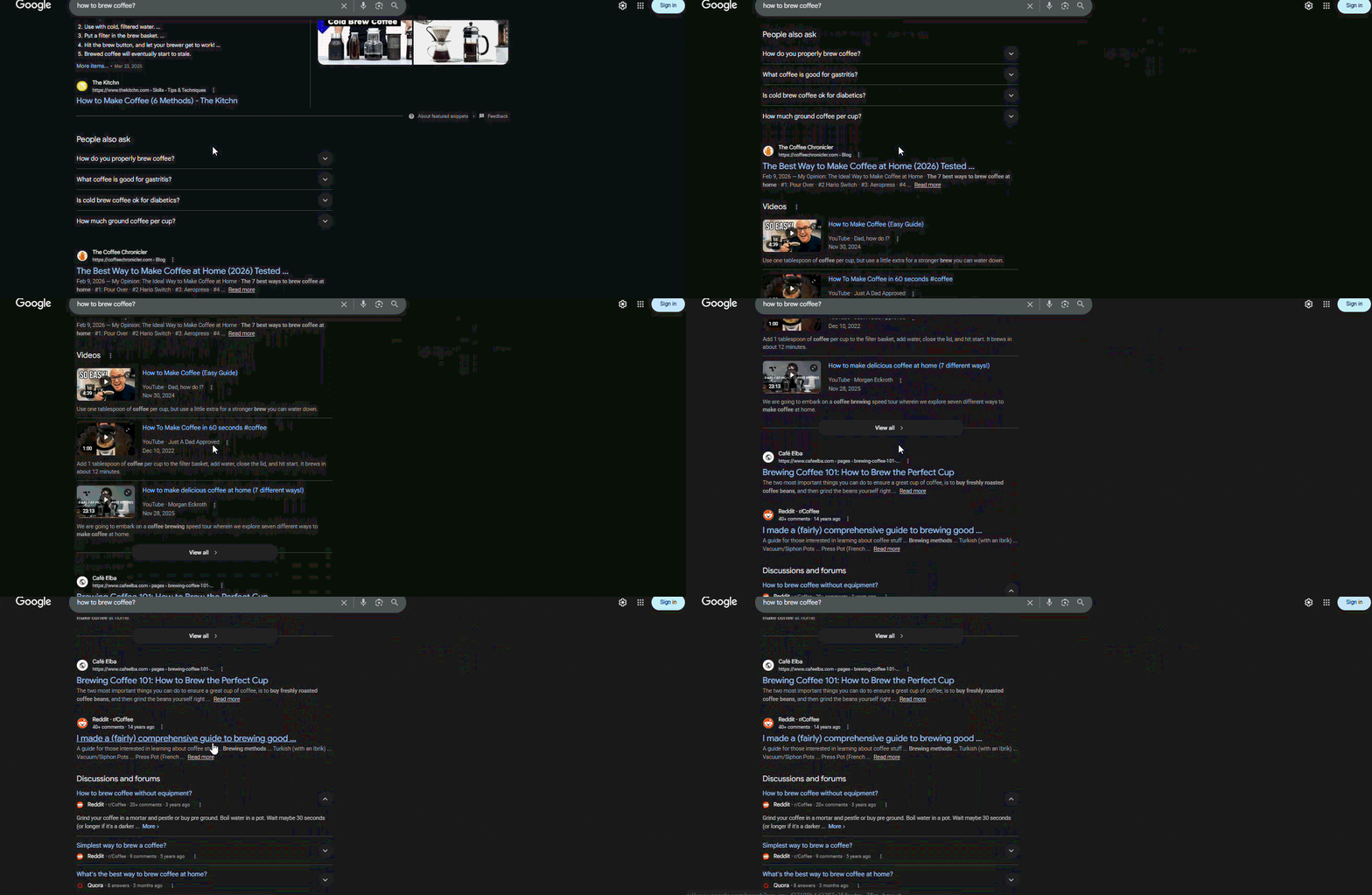
Google’ SERP showing result for “How To Brew Coffee?”
“Google used to be a librarian who handed you a stack of books. Now, it’s the expert who has already read them for you.”
How Does a SERP Actually Work?
At its core, a search engine is a system that understands search intent and connects it to the most relevant answer. Its one and only job is to figure out exactly what you are looking for and hand it to you instantly.
In the search world, search intent is the underlying “why” behind every search.
If you search “best running shoes,” Google’s SERP won’t show you the Wikipedia page for the history of shoes. It will first read the context and understand that you want to compare products.
How Search Engine Understands Your Intent?
To build the perfect results page, search engines instantly sort your question into one of four categories:
| Search Intent | User Mindset | SERP Utility |
| Informational | “Answer My Question” | Featured Snippets & AI Overviews |
| Navigational | “Go to This Website” | Direct Brand/Domain destinations |
| Commercial | “Which One Should I Buy?” | Comparisons & Expert-driven guides |
| Transactional | “I’m Ready to Buy” | Digital Marketplace & Checkouts |
Beyond the Links What Shows Up on a SERP Today
Today, a search engine does not just hand you a list of websites to click. It gives you an answer instantly by customising the page filled with specialized tools. To do this, it uses advanced AI concepts to provide the best information right onto your screen.
Here are the four main features you will see on a modern SERP:
Featured Snippets
Instead of making you click a link and read a whole article, the search engine reads the page for you. This is called Featured Snippets. It uses a new concept called Passage Ranking which is powered by a specific Google AI known as BERT. This means BERT can dig deep into a long article, find the single paragraph that directly answers your question, and pin it to the very top.
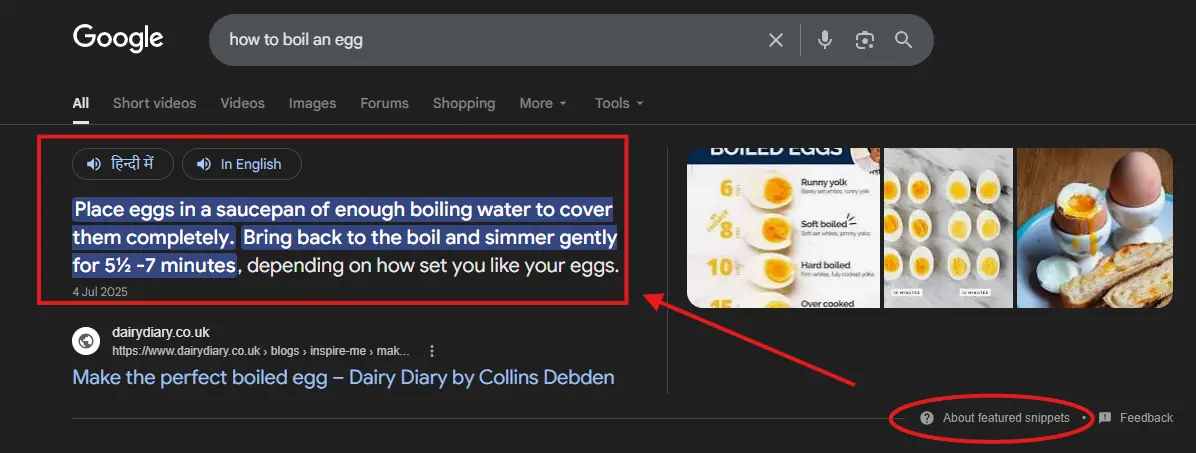
A paragraph Featured Snippet providing a direct, highlighted answer at the very top of the search results.
“It extracts the exact meaning of a specific paragraph, pulling the answer out of the website for you.”
People Also Ask
People Also Ask is a smart list made by Google that has follow up questions which expands as you click on it. Search engines use Topical Mapping to understand how ideas connect to each other and predict the next three questions you might ask.
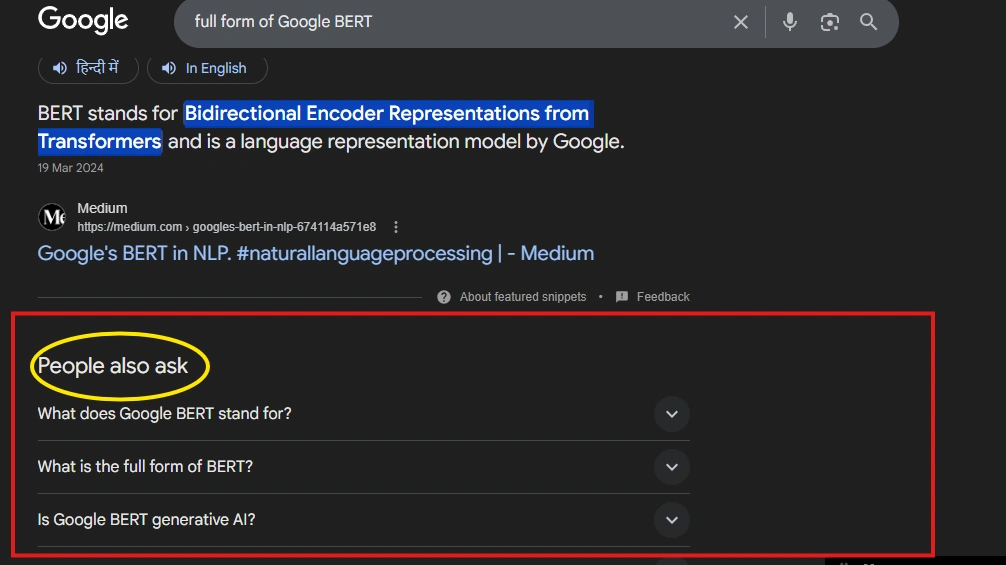
The “People also ask” (PAA) feature, providing users with an accordion list of related questions based on their initial search.
“PAA links related ideas together, predicting your next thought so you do not even have to type a new search.”
Local Packs
When you search for something nearby, the engine treats your actual physical location as part of the question. Google uses Hyper Local Intent that shows you a mini-map along with following:
- Opening Hours
- Star Ratings For The Top Three Spots Right Around You
- Contact Details And Address
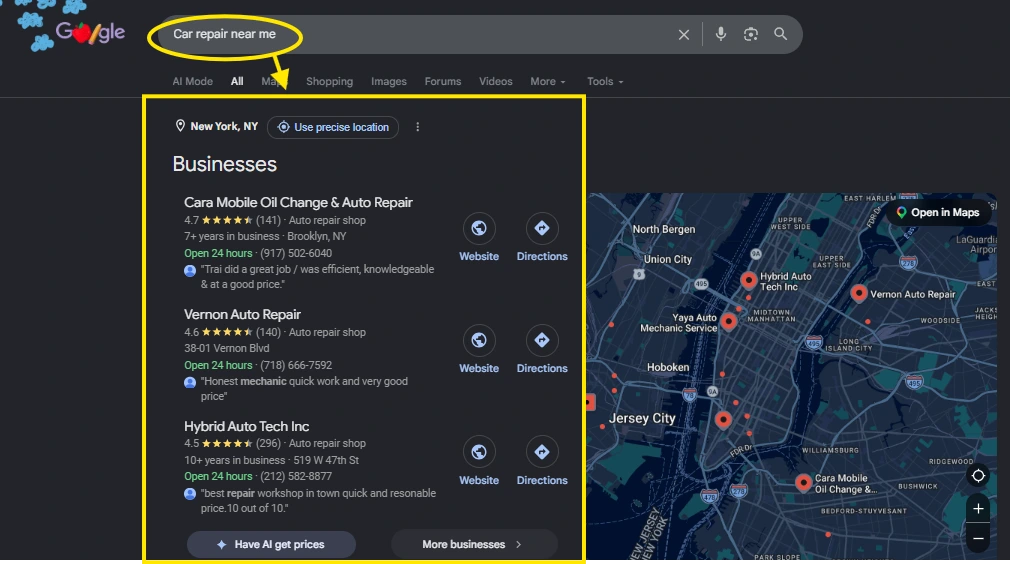
A Google Search results page highlighting the Local Pack (Map Pack), which displays nearby businesses.
“Google has stopped hunting for words and started mapping real-world locations where life actually happens.“
Knowledge Panels
Knowledge panel is the large box of facts you see on the right side of the screen. It is powered by the Knowledge Graph, which is Google’s massive brain database. It stores facts about people, places, and things, and organises information into one neat profile.
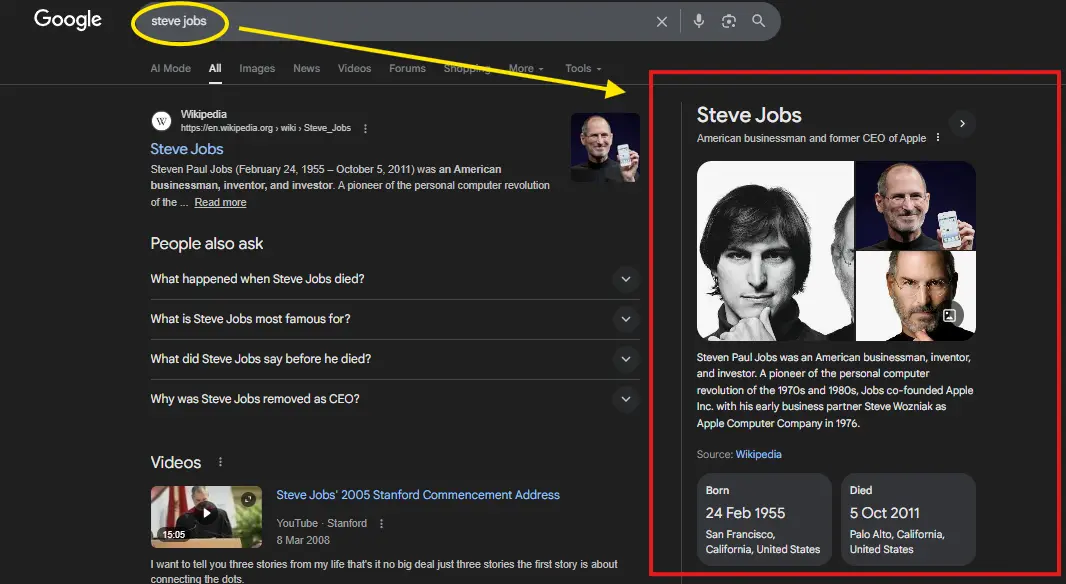
A Google Knowledge Panel displaying a quick summary of biographical information, photos, and key facts about a well-known entity.
“Knowledge Panel is the proof that Google understands “things, not strings.” It knows a person is a real human with a birthdate, a job, and relationships, not just a word on a screen.”
Imagine that you give such a perfect answer in your content that the search engine shows it right on the screen. This prevents the user from clicking even a single link. This is the Zero Click Search, where Google is not the middleman but your brand’s spokesperson.
It happens because the AI has recognized your content as the Source of Truth for that specific topic, proving you are a trusted entity rather than just a wall of text.
“A click means the user found you. A zero click means Google chose you.“
Organic Results vs Paid Results
SERP is a dynamic marketplace where you can, “either pay to appear instantly” or “earn your spot with high quality content”. Success comes from knowing how to balance paid authority with organic long term authority.
Organic Search (SEO)
Organic Search is about positioning yourself as a trusted entity. Instead of paying for a spot on Google’s SERP, you earn it by demonstrating E-E-A-T (Experience, Expertise, Authoritativeness, and Trustworthiness).
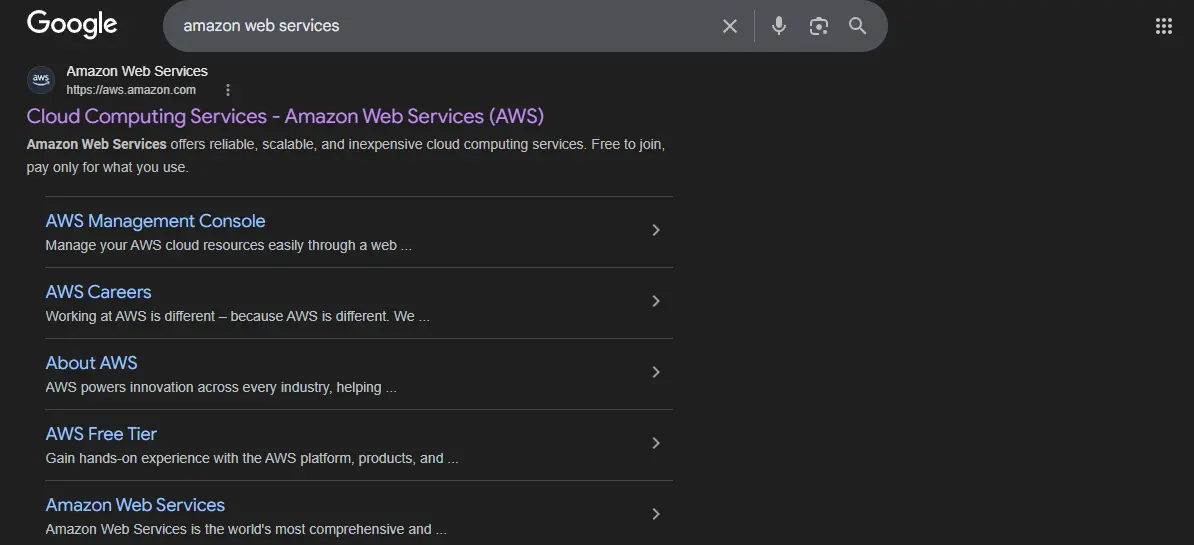
A standard organic search result featuring sitelinks, which help users navigate directly to important subpages of a website.
“Winning at organic search takes time, but it creates a lasting digital legacy that money simply cannot buy.”
Paid Search (PPC)
Paid Search is essentially renting the top spot on the page. Google AI tools like Performance Max (PMax) makes this possible. PMax will instantly find people ready to buy based on their intent signals. It is the ultimate tool for immediate conversion and quick wins.
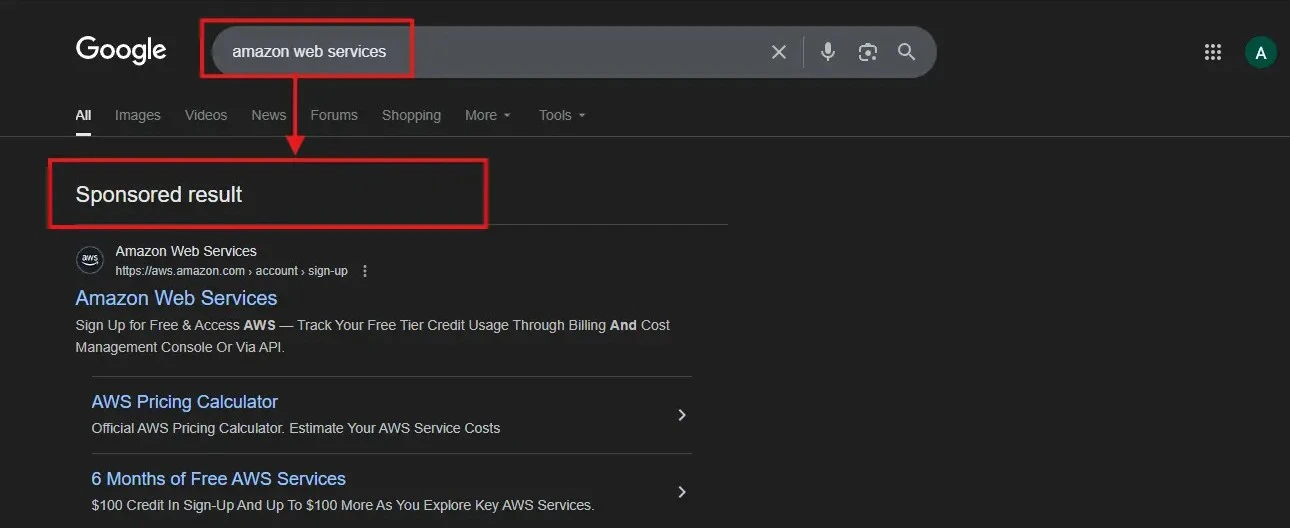
A sponsored search result (Google Ads) appearing prominently at the top of the search engine results page.
“You get immediate visibility and traffic, but your presence disappears the moment your budget runs out.”
Case Study: How Mastering Search Intent Transformed DigitalGuider’s Traffic?
This case study outlines how we at DigitalGuider, a well known digital marketing platform overcame a stagnant ranking to break into the top results of Google.
Problem: “On Page SEO” blog being stuck at Page 2
Our primary challenge was moving our blog post of “On-Page SEO” from Page 2 to Page 1 on the Google SERP. The blog had become stale and was stuck at its position for about a year, failing to gain the momentum needed to reach the first page.
Solution : Steps Taken to Analyze the Issue
To rank the content effectively, we performed a deep dive into why the post was underperforming:
- Revamp vs. Replacement: We had to choose between optimizing the current page or creating a new one for the keyword “On-Page SEO.”
- Content Relevance: We found that 60-70% of the original content was not related to the core topic of On-Page SEO.
- Analysing Competitors: We searched for the keyword and analyzed all top 10 results to see what the ranking pages were doing differently.
- Identifying Gaps: Our analysis revealed several topics missing from our blog, such as Search Intent , Schema Markup and Core Web Vitals.
How We Fixed It?
Once we identified the gaps, we executed a precise strategy to revamp our search presence:
- Creating Fresh Content: Instead of revamping the old post, we decided to create a brand new one from scratch to make sure it’s up to date.
- Reducing Word Count: We researched the ideal content length and realized our original post was too long. We shrunk the content from 7,000 words to about 2,000 words, removing all complicated jargon to improve readability.
- User Centric Research: We dug deep to pinpoint the major questions people were asking regarding On Page SEO on platforms like Reddit and Quora. This allowed us to cover the most important trending topics being discussed today.
- Optimising content: Our final steps involved thoroughly analyzing and reframing the Meta Title, Meta Description, and H1 tag.
- Strategic Linking: We focused heavily on contextual interlinking to build authority, eventually finalizing the post at exactly 1,892 words.
The Results
By the end of this process, we successfully moved the blog from position 19 to the 8th position on the Google SERP. This allowed us to reach a better threshold point and finally secure a spot on the first page.
Our Takeaways
Throughout this process, we learned that Google has evolved. Success on the SERP is no longer about keyword density and keyword stuffing; instead, Google now focuses more upon entity based writing and providing direct value to the user’s intent.
End Note
Previously goal of SEO was to be #1 on the list. Now, SEO has become Agentic SEO. The goal has now shifted to be the only one the AI feels safe enough to recommend. Focus of SEO has now shifted to your real world experience and authentic human expertise.
Don’t just focus upon the rank but become the benchmark of your domain . Ask yourself: “If an AI was looking for the most trusted expert in my field right now, would my digital footprint give it enough proof to choose me?”
Share This Article
About the Author: Kenji Tanaka

Related Articles
 September 17th, 2026 | 8 minutes read
Austin is a competitive market for local businesses, tech companies, startups, and growing brands. The right agency can help you
- September 14th, 2026 | 8 minutes read
Search used to take minutes. AI changed it into seconds. People are not more interested in scrolling down 10 blue
- September 10th, 2026 | 13 minutes read
1. DigitalGuider 2. Thrive 3. WebFX 4. Coalition 5. Victorious SEO 6. First Page Sage 7. RankScience SEO 8. The
- September 7th, 2026 | 8 minutes read
If someone asked ChatGPT about your business today, what would it say? Would it recommend your website, name your rivals,