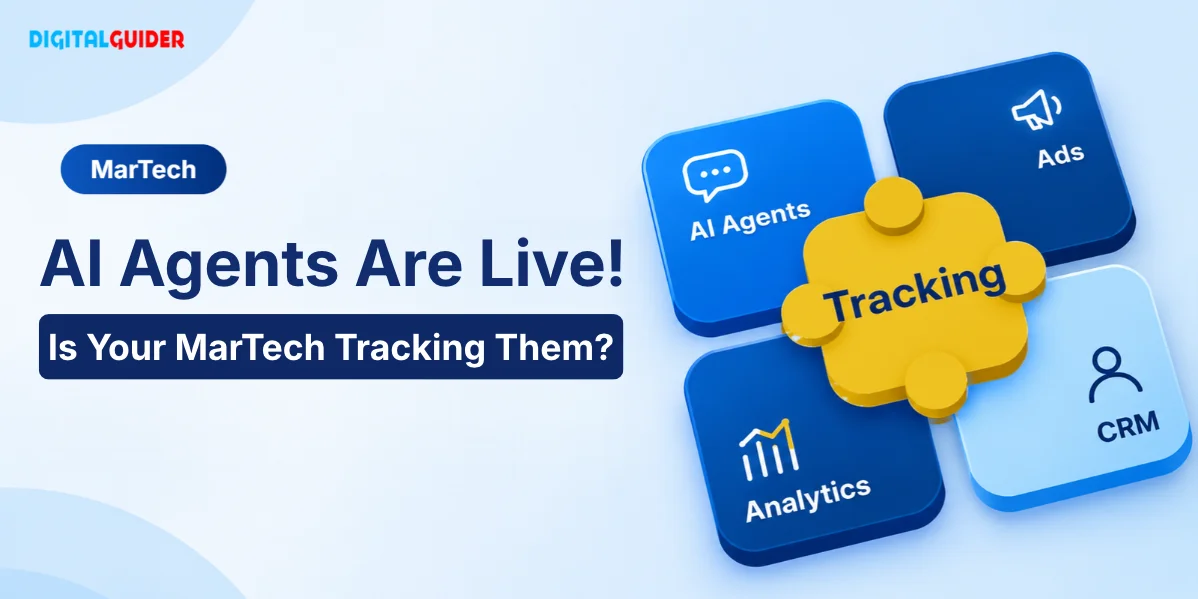
While 44% of B2C marketers have conversational AI agents live in at least one channel, only 19% can reliably send agent conversion data back to advertising platforms.
New research highlights a growing gap between AI adoption and marketing measurement. Businesses are increasingly using artificial intelligence (AI) agents to interact with customers, answer questions, and support purchasing decisions.
However, tracking whether these interactions actually generate revenue remains a challenge for many marketing teams.
According to Invoca’s 2026 Broken Funnel Report, released on November 10, 2026, 44% of surveyed B2C marketers already have conversational AI agents operating in at least one channel, while another 27% are testing them.
Despite this adoption, only 19% can reliably send conversion data from AI agent interactions back to advertising platforms.
The findings suggest that businesses are expanding AI-powered customer interactions faster than they are developing the measurement systems needed to evaluate their impact.
AI Adoption Is Outpacing Conversion Tracking
The report identifies a significant gap in how businesses measure AI agent performance. Only 27% of marketers use revenue, bookings, or conversions as their primary measure of AI agent success.
Others rely on indicators such as customer satisfaction, qualified leads, conversation volume, and the number of interactions handled without human assistance.
The problem extends beyond AI conversations. Around 74% of surveyed marketers cannot fully track leads from their first digital interaction through to conversion. Only 26% can connect AI agent conversations to the campaign, keyword, or advertisement that generated them.
This makes it hard to determine which marketing activities contribute to actual sales and whether AI investments deliver measurable returns.
Customer Journeys Are Becoming Harder to Track
The research also highlights gaps in attribution when customers move between digital and offline channels.
Around 56% of marketers lose lead attribution when customers reach a dealer, franchise, or local branch.
Meanwhile, 46% lose tracking visibility during text or chat interactions, and 40% face similar challenges with phone calls.
AI agents introduce another interaction point into an already fragmented customer journey. A customer may discover a business through an advertisement, interact with an AI agent, and eventually complete a purchase through a salesperson or local branch.
Without connected data, marketers may struggle to attribute that conversion to the original campaign.
AI Search Is Emerging as a Lead Source
The report also identifies AI answer engines, including ChatGPT, Claude, and Gemini, as emerging sources of qualified leads. According to the survey, 44% of marketers identified AI answer engines as their leading source of qualified leads, ahead of Google Local Services Ads at 40%.
However, tracking these leads throughout the purchasing journey remains challenging, especially when customers move between AI platforms, websites, conversations, and offline sales channels.
Better AI Measurement Will Become a Marketing Priority
The findings indicate that deploying AI agents is only one part of successful AI adoption. Businesses also need connected customer data, reliable attribution, and performance metrics that link AI interactions to actual business outcomes.
For marketers, the focus is increasingly shifting from measuring how many conversations AI agents handle to understanding how those conversations contribute to qualified leads, conversions, and revenue.
Deploying AI is easy. Proving it works is harder. DigitalGuider helps marketers connect AI interactions to real conversions. Learn more at digitalguider.com.
Share This Article
About the Author: Kenji Tanaka

Related Articles
 November 12th, 2026 | 2 minutes read
Reddit has started testing ad placements on its search pages, the company announced on November 3, 2026. The test is
- November 5th, 2026 | 2 minutes read
On October 28, 2026, Google announced the opening of its Connected Apps Platform preview, allowing developers to integrate third-party applications
- October 29th, 2026 | 3 minutes read
Google has updated its user-generated spam guidance to cover tools that let people publish shared pages, generated content, and web
- October 22nd, 2026 | 3 minutes read
OpenAI introduced Dots on September 29, 2026, as always-on AI agents designed to manage ongoing tasks across connected applications. Powered