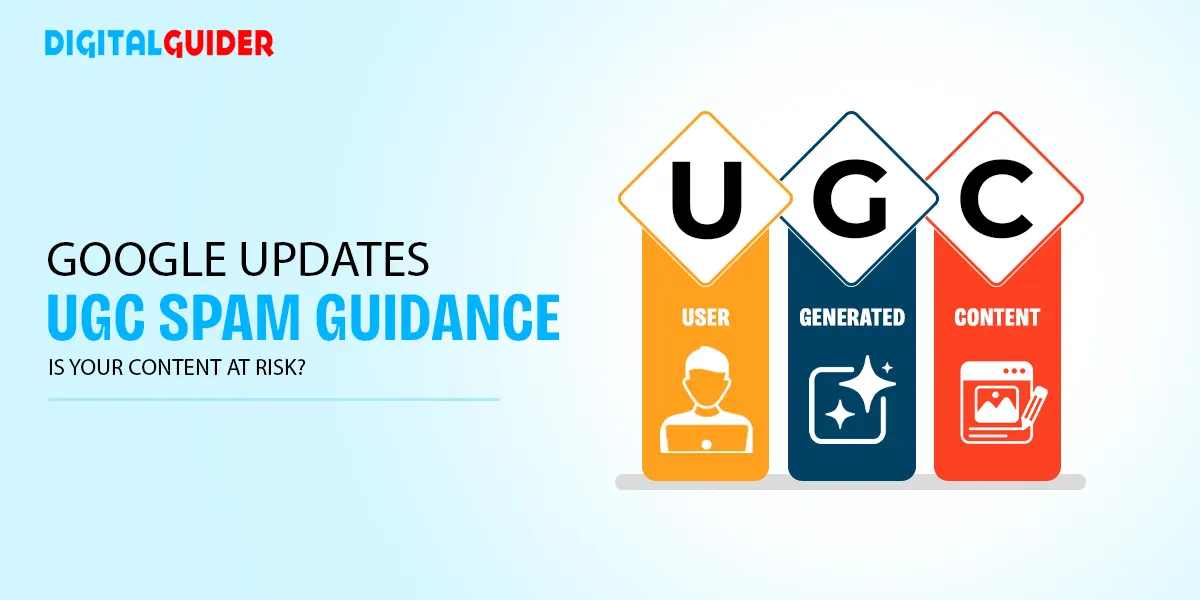
Google has updated its user-generated spam guidance to cover tools that let people publish shared pages, generated content, and web apps, and it adds a section advising that pages made for sharing or utility, rather than Search discovery, be kept out of the index by default. For any business whose site accepts comments, reviews, listings or customer-created pages, it is a prompt to check what is being indexed under your domain.
What Google changed
On October 26, 2026, Google updated its Prevent user-generated spam on your site and platform help page. Three changes stand out:
• Wider scope. The page now names “hosting platforms and tools that let users publish shared pages, generated content, or web apps” as targets for abuse, alongside classic comment forms.
• A new section, “Only index content meant for Search.” If your service creates shareable pages, generated outputs, or interactive tools, Google advises applying noindex (a robots meta tag or X-Robots-Tag header) or blocking crawling in robots.txt by default when those pages exist for sharing or utility rather than public discovery. The two work differently: noindex keeps a page out of the index only if Google can crawl the page and read the directive, while a robots.txt block alone does not guarantee a URL stays out of the index.
• Monitoring advice. Verify your site in Search Console, review the Page Indexing and Search performance reports for unexpected spikes, and set alerts for sudden jumps in newly published public pages, or a few users producing a large share of indexable URLs.
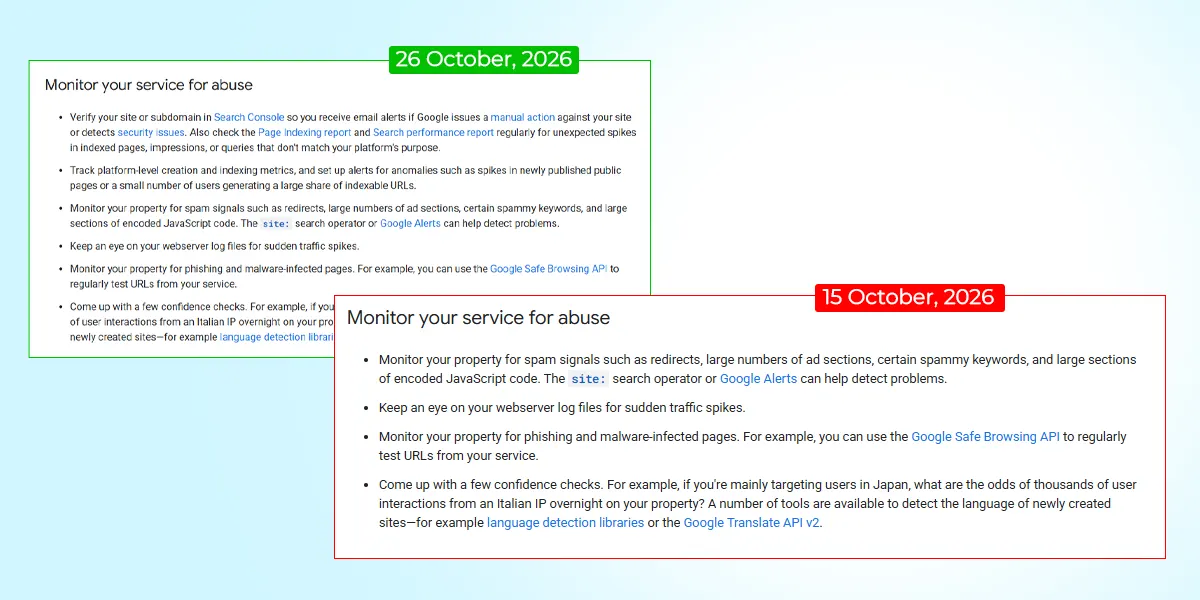
Google Search Central · Wayback snapshot Oct 26 vs. Oct 15, 2026
Not everything on the page is new. It already recommended noindex for posts from new users without a reputation, ugc or nofollow on links in untrusted content, and measures such as moderation, blocklists and CAPTCHAs. The clearest additions are the platform wording and the indexing section.
Why it matters beyond big platforms
Google warns that hosting platforms and publishing tools can attract spammers who create large volumes of pages that violate its spam policies and add little value.
Although the update focuses on publishing platforms, its advice also applies to business websites with comments, reviews, forums, or user-created pages. Spam can appear under a business’s domain and create indexing and trust issues. Google may issue manual actions or security alerts depending on the circumstances.
The key takeaway: treat “should this page be in Search at all?” as a decision you make, not a default.
A checklist for this week
“Preventing abuse on your platform or site is usually not hard.”
Google Search Central, “Prevent user-generated spam on your site and platform”
These steps follow Google’s published guidance and can be done in an afternoon:
• Verify your site in Search Console to receive manual action and security alerts.
• Check Page Indexing and Search performance reports for unusual spikes.
• Search site:yourdomain.com for suspicious or unfamiliar pages.
• Identify where visitors can create content and decide which pages should appear in Search.
• Apply noindex to pages intended only for sharing or utility, ensuring Google can crawl them to read the directive.
• Consider noindex for posts from new users until they establish a reputation.
• Add rel=”ugc” or rel=”nofollow” to untrusted links.
• Use moderation and CAPTCHA or similar protections where appropriate.
• Review server logs for unusual activity.
DigitalGuider’s take
This update is a reminder that indexing should be a decision. Every page a site publishes asks Google to spend attention on it, and pages that were never meant to rank can crowd a site’s index alongside the pages that were.
We read the new section as Google asking site owners to decide what belongs in Search instead of leaving it to platform defaults. For most businesses, the first step is a simple inventory: where can visitors create content, which of those pages are indexed, and does what shows up match what the business actually does.
We would also add two cautions. Don’t over-correct by applying noindex to pages that should earn traffic. And don’t treat this as a new penalty: Google’s page is guidance on preventing abuse, not an announced ranking update. The Search Console reports it points to are worth checking on a regular schedule.
Share This Article
About the Author: Sofia Moreno

Related Articles
 October 22nd, 2026 | 3 minutes read
OpenAI introduced Dots on September 29, 2026, as always-on AI agents designed to manage ongoing tasks across connected applications. Powered
- October 15th, 2026 | 2 minutes read
Google has completed its September 2026 spam update. The update took nearly two weeks to complete and became the longest
- October 8th, 2026 | 2 minutes read
Google Search Console has introduced a new Multimodal filter that gives website owners more insight into how their content performs
 September 24th, 2026 | 2 minutes read
Google is expanding its AI-powered Search into travel, providing users with new methods to check airline fares, compare points and