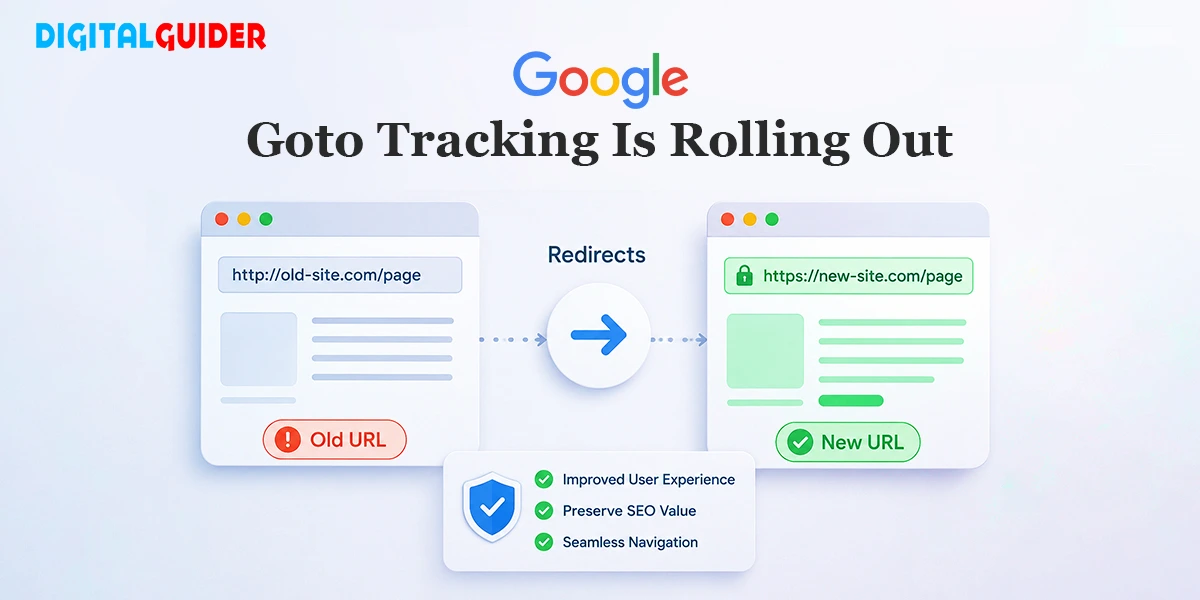
Google has confirmed a new “Goto” URL redirect for links in its Search results. The change means some search-result links may now pass through a Google URL before taking users to the website they selected.
For example, instead of a Search result sending you directly to xyz.com, Google may first use a URL such as google.com/goto?… and then redirect you to the same page.
For most users, this process will happen in the background. The website they visit does not change.
The update comes as Google Search continues to operate at a massive scale. Google said in June 2026 that AI Overviews had more than 2.5 billion monthly active users, while AI Mode had surpassed 1 billion monthly users. Google also reported that Search queries had reached an all-time high.
Why Is Google Using Goto URLs?
Google says it regularly introduces technical measures to protect its services and users from evolving forms of abuse.
Google has not said that the new redirects were specifically created to stop SEO tools or rank trackers. However, the change could make it harder for automated systems to collect and process search result links at scale.
That is where the update becomes important for the SEO industry.
How Could This Affect SEO Tools?
SEO platforms, rank trackers, and other systems often collect Google Search results automatically. If those systems encounter Goto URLs instead of direct destination URLs, they may need to change how they identify and process those links.
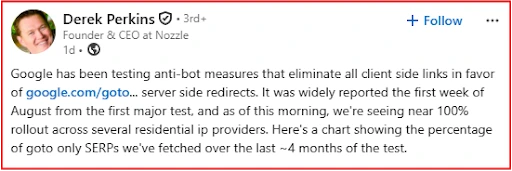
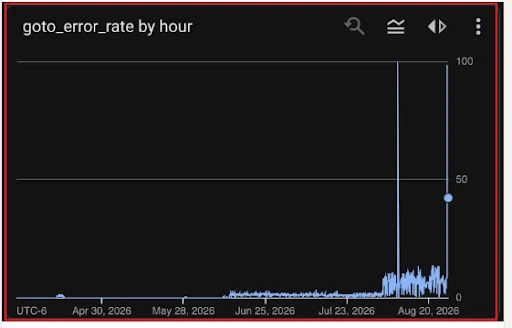
The rollout also appears to be widespread.
Derek Perkins of Nozzle reported that he was seeing the change at “nearly a 100% rollout” across several residential IP providers. This is an observation from the providers Nozzle tested, not a Google-confirmed rollout percentage.
What Does It Mean for Website Owners?
For now, there is currently no confirmation that Goto URLs affect how Google ranks or indexes websites. Website owners do not need to change their website URLs because of this change.
The main impact is likely to be on the tools and systems that monitor Google Search.
SEOs should keep an eye on their rank trackers and SERP tools to see whether the new redirect structure affects reporting or data collection as Google’s rollout continues.
Share This Article
About the Author: Liam O’Shea

Related Articles
 October 15th, 2026 | 2 minutes read
Google has completed its September 2026 spam update. The update took nearly two weeks to complete and became the longest
- October 8th, 2026 | 2 minutes read
Google Search Console has introduced a new Multimodal filter that gives website owners more insight into how their content performs
 September 24th, 2026 | 2 minutes read
Google is expanding its AI-powered Search into travel, providing users with new methods to check airline fares, compare points and
- September 17th, 2026 | 3 minutes read
Google is changing its AI Mode search to help publishers. They added link carousels for changing news topics. This means