Synopsis Did you know most people don't even click on websites anymore to get answers? What happens to the internet when "zero-click searches" finally take over?
Where did all our website clicks go?
For years, a change called “zero-click searches” was growing on Google. Users got fast answers from small text boxes without ever clicking a link. But that was only the start.
AI tools like ChatGPT, Gemini, and Perplexity write direct answers instead of listing websites. We still click when we need to buy or compare things, but the old way of finding information online is gone.
This blog shows the biggest changes in zero-click searches and how to keep your brand visible.
4 Types of Zero-Click Search Formats
Before AI, Google created zero-click searches by answering questions directly. This reduced website clicks but gave brands new visibility.
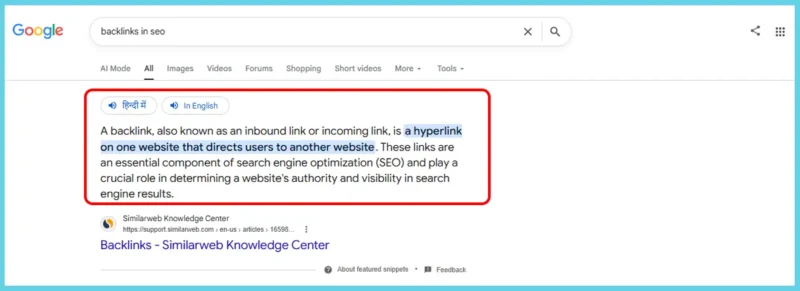
Featured Snippets:
1. Featured snippets show a short answer or list from a webpage at the top of search results.
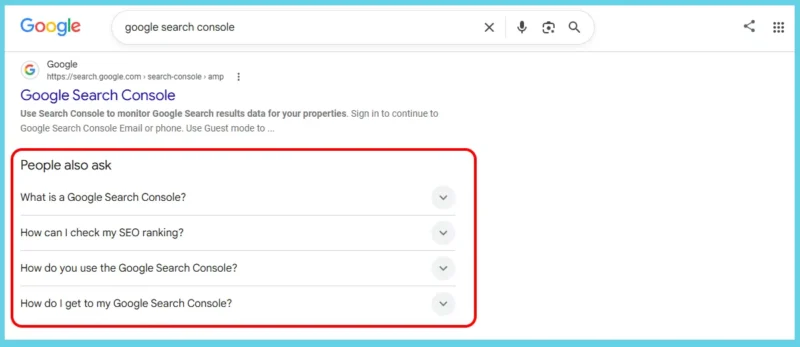
2. People Also Ask:
These are drop-down questions that expand to show quick answers to related searches.
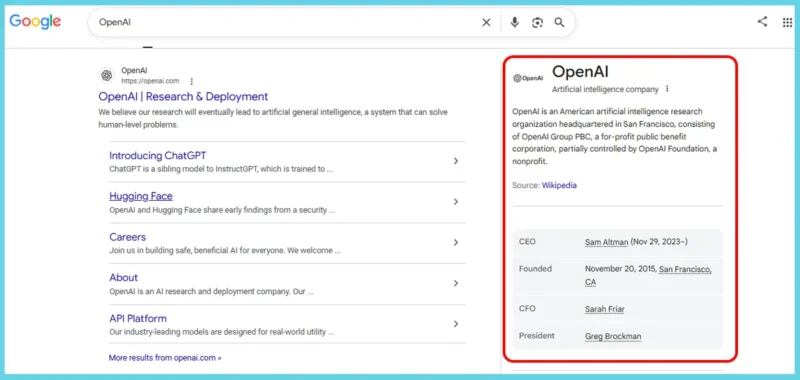
3. Knowledge Panels:
These are sidebar boxes that give quick facts. It could be about famous people, big companies, products, or groups.
4. Local Packs:
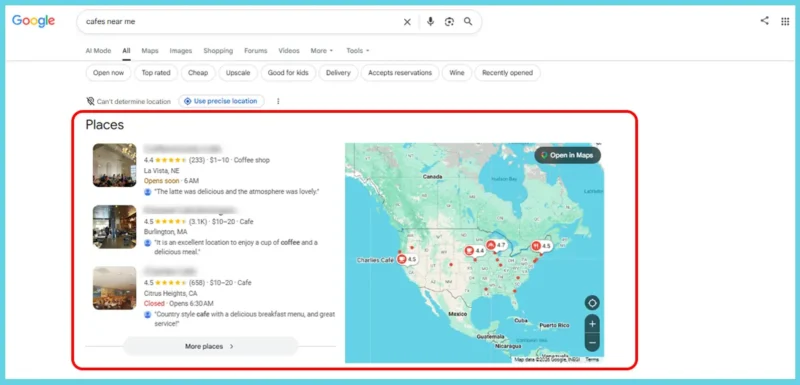
These show up when you search for businesses nearby, such as the best dentist near me, an SEO agency in your city, or restaurants nearby.
They display key details like business names, reviews, locations, hours, and contact information.
Main Zero-Click Types:
| Format | What It Does | Why It Matters |
| Featured Snippets | Displays direct answers | High visibility |
| People Also Ask | Shows related questions | Expands discovery |
| Knowledge Panels | Displays entity information | Builds trust |
| Local Packs | Highlights nearby businesses | Drives local leads |
All of these older tools still matter a lot today. The only big difference now is that they have to share the screen and your attention with the new AI answers.
10 Major Zero-Click Search Shifts Changing SEO Forever
#1: The Reality of Zero-Click Searches Right Now!
Zero-click search has changed. Instead of just copying an answer from one webpage, AI now builds new answers by blending facts from many trusted sites.
| What is Happening? |
1. AI reads articles, reviews, and forums to create one combined response. 2. People get information immediately without clicking any links. 3. AI can pick your data even if your site is not #1 on Google. |
| How to Win Now |
1. Write clear fixes for real problems, not just keywords. 2. Use short definitions and lists so AI can read your page easily. 3. Share real facts and numbers so AI trusts you as a source. |
#2: Standard Google vs. AI-Powered Zero-Click Search
Zero-click searches used to follow a simple rule. Users either saw your page, or they didn’t. New AI search tools have broken that rule.
AI tools combine facts from multiple sources rather than focusing on a single webpage.
Here’s the simplest way to picture it:
Basis | Standard Google | AI-Powered Zero-Click Search |
| Source | One direct answer. | Many mixed websites. |
| Style | Copies and pastes text. | Writes a brand-new summary. |
| Credit | Usually links back. | Might not name sources. |
| Goal | Be the single perfect answer. | Be a trusted, cited source. |
AI looks for individual pieces of information, such as facts, checklists, and definitions, to build answers.
#3: Moving From Clicks to Mentions
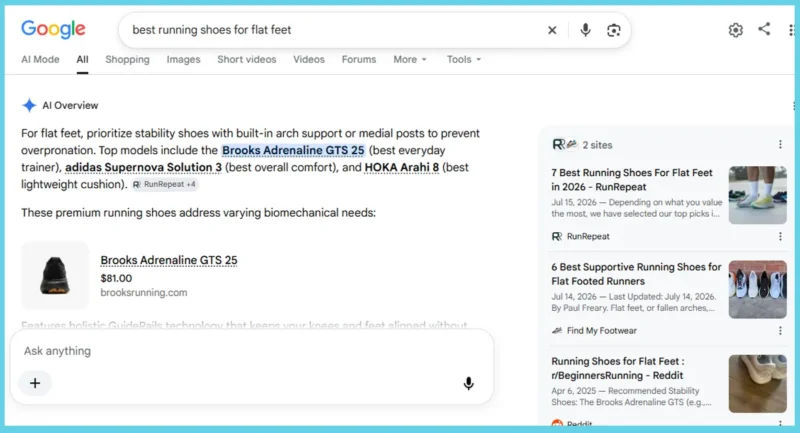
In the past, companies tried to get people to click their website links on Google. Today, AI answers user questions directly, so people rarely visit websites. This means getting clicks is no longer the only way to win.
Businesses must now ensure AI models mention, cite, and recommend their brand in answers
#4: Meet the New Zero-Click Searches Gatekeepers
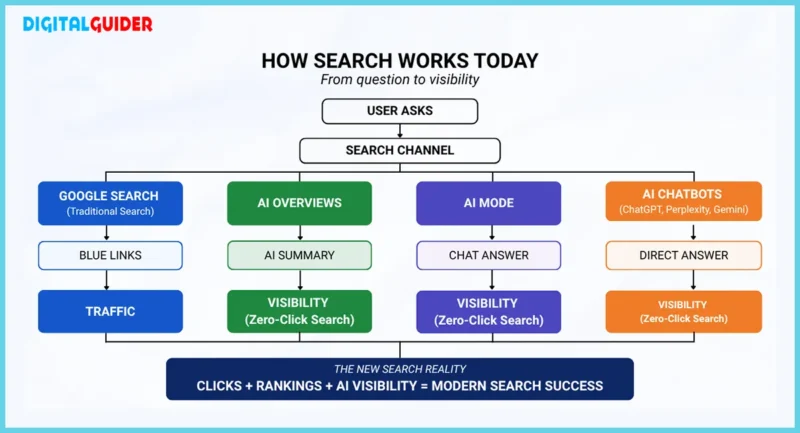
Three new gatekeepers of zero-click searches have joined the game. Each one now decides what people see online.
➤ AI Overviews
A summary at the very top of Google search results. It pulls key details from different websites to answer your question fast.
➤ AI Mode
Google’s conversational search tool. It feels like chatting with a knowledgeable assistant who answers your questions one after another.
➤ Chatbots
Tools like ChatGPT, Claude, Gemini, and Perplexity act like personal assistants. Anyone can ask a question in plain language and get an instant answer with sources listed.
#5: AI Changes What People See
AI search tools don’t show pages of links anymore. Instead, they mix info from a few trusted sources into one single answer.
It is a tight race. According to Everything-PR’s The AI Platform Citation Source Index 2026, the top 15 websites get 68% of all AI citations.
- Perplexity uses 8.2 sources per answer, which it notes is 3.4x more than ChatGPT.
- ChatGPT uses roughly 2.4 sources per answer
Real trust and a good reputation matter way more than traditional rankings.
Example: Coffee Storage Guide
A large online store publishes a basic article called:
“How to Store Coffee Beans”
The content is short and generic.
A local coffee roaster creates a detailed guide explaining how light and air damage coffee over time. Food magazines and local news sites link to it.
When users ask AI how to keep coffee fresh, it chooses the roaster’s guide because trusted experts support it.
#6: How to Make AI Mention Your Brand
Make your content easy for AI to understand and trust.
- Answer fast.
- Use clear headings
- Add schema markup
- Keep facts consistent
Example: A cooking blog with clear sections like “Prep Time,” “Ingredients,” and “Instructions” is easier for AI to understand.
How Businesses Track AI Visibility?
Track your AI score with three simple habits:
- Test real questions
- Count mentions.
- Cross-check facts
Example: A skincare company can track how often its product appears when users ask AI for moisturizer recommendations.
Why AI Mentions Matter?
When AI engines repeatedly pick your business, it changes how customers view your company:
- AI mentions act like a trusted recommendation from a friend.
- Repeated appearances in trusted answers prove to users that your business is a reliable, expert source.
#7: SEO Changes but Stays Alive
The rumors are false: SEO is not dead. But the old playbook is officially gone.
Today, winning depends on creating trusted content. It needs to perform well in both standard Google search and AI-powered search.
| What Is Changing |
| 1. Rankings: #1 is no longer the only win. 2. AI visibility: Traffic comes from AI mentions3. No spam: Packing pages with keywords destroys your traffic |
| What’s Staying the Same |
| 1. Speed: Fast, smooth websites still win. 2. Quality: Clear, accurate content cannot be replaced.3. Structure: Organized pages get picked by AI. |
Stop chasing algorithms. Write content that builds trust, and both people and AI will reward you!
#8: GEO, AEO Make New Zero-Click Search Plans
Two new terms are changing how we write online: GEO and AEO. They help your website show up when people ask ChatGPT or Google AI for help.
Basis | GEO (Generative Engine Optimization) | AEO (Answer Engine Optimization) |
| Definition | GEO means making content easy for generative AI systems to find, understand, and cite. | AEO means creating direct answers that search engines and AI tools can understand and show. |
| Goal | Get AI to pick your site as its main source of facts. | Get AI to show your text as the single best answer. |
| How it works | AI scans the web for real facts to build its answers. | AI looks for quick, easy answers to show the user instantly. |
| Strategy | Fill your pages with clear numbers, real data, and facts. | Answer right away in simple language. |
Schema Markup: Hidden Labels AI Reads
Schema markup adds structured labels to your content. It helps AI systems understand important details about your pages.
Common Types of Schema Markup:
◆ Local Business: Confirms your company name, location, and contact info.
◆ FAQ: Labels questions and answers so AI can grab them easily.
◆ Review: Marks your star ratings so they display accurately.
◆ Article: Labels blog posts, author names, and publish dates.
#9: Google Rankings Are Not Enough
Before, SEO tracked Google rankings, but Zero-click searches changed that. If AI answers users directly, traditional tracking tools miss it completely.
Track what standard rankings cannot see:
- Check if ChatGPT or Gemini names your brand.
- Track what Reddit and other forums users say about you.
- Watch direct visits
Tracking AI search shows where you stand, where competitors win, and how you can grow.
Is Your Website Ready for AI Search?
| Question | Yes/No |
| Can AI understand your services? | ✓ |
| Does your website demonstrate expertise? | ✓ |
| Are competitors appearing in AI answers? | ✓ |
| Are you tracking AI visibility? | ✓ |
Ready to see where you stand?
Find out where your website stands with an AI-ready SEO audit from DigitalGuider.
#10: New Tools To Track AI Mentions
Google Analytics cannot tell you what people ask ChatGPT. To fix this data blackout, new software has emerged that tracks exactly how AI models are mentioning your brand.
Check the guide below to see which platforms these new tools track:
| Tool | ChatGPT | Perplexity | Gemini | Claude |
| Profound | ✓ | ✓ | ✓ | ✓ |
| AthenaHQ | ✓ | ✓ | ✓ | ✓ |
| Scrunch AI | ✓ | ✓ | ✓ | ✓ |
| Peec AI | ✓ | ✓ | Add-on on some plans | Add-on on some plans |
| Otterly AI | ✓ | ✓ | Limited | Limited |
| Semrush | ✓ | ✓ | ✓ | Limited |
| Ahrefs | ✓ | ✓ | ✓ | Limited |
| Evertune | ✓ | ✓ | ✓ | ✓ |
Profound, AthenaHQ, and Semrush are the most popular tools to see what AI says about your business.
Profound and AthenaHQ help big teams track major chatbots. Semrush and Ahrefs add AI tracking to current plans. Otterly AI is cheap at $29 a month. Peec AI handles different languages, and Scrunch AI compares you to competitors.
The New Way to Search
People now get instant answers through zero-click searches without clicking on websites. To win, your business must show up wherever customers ask questions, especially on AI tools.
Search is about being the trusted source that pops up when users need help.
Want to boost your AI search visibility? Let DigitalGuider audit your content today.
The “Zero-Click Searches” Q&A
1. Does everyone see the same AI answers?
No. Answers change based on the user’s location, the exact question, and the AI app used.
2. Do some industries lose more clicks than others?
Yes. Industries like health, finance, travel, and technology are more affected because AI can answer many questions.
3. What content loses the fewest clicks?
Content like tools, calculators, downloads, prices, and special resources gives people a reason to visit your website.
4. How often should you check AI visibility?
Regularly. AI answers, links, and competitors change constantly.
5. How long does it take to improve AI visibility?
There is no fixed time. It depends on your content quality and how often the AI updates.
6. Do videos help you show up in AI?
Yes. Videos prove your expertise and explain hard topics.
7. How do you get people to visit your site anyway?
Offer things AI cannot copy, like free tools, templates, or personal help.
8. Does appearing in AI answers guarantee sales?
No. AI brings visitors. You still need great products and a good website to make them buy.
9. Does updating content help?
Yes. Fresh and accurate information makes it easier for AI to use your content.
10. Can AI summaries have old information?
Yes. Updating your website helps AI find the latest facts about your brand.
Thanks For Reading!
Share This Article
About the Author: Lucia Ferrer

Related Articles
 August 31st, 2026 | 5 minutes read
Imagine walking into a huge cannabis dispensary where nothing is labeled. How would you find what you need? You might
 August 24th, 2026 | 7 minutes read
You search Google for a question, and before you even scroll, one result grabs your attention. It answers exactly what
- August 10th, 2026 | 14 minutes read
Ever searched for something like "best plumber near me" and noticed the same two or three businesses show up every
- August 3rd, 2026 | 7 minutes read
Running a cannabis business sounds exciting until it comes to marketing it! That's where the struggle begins. No paid ads