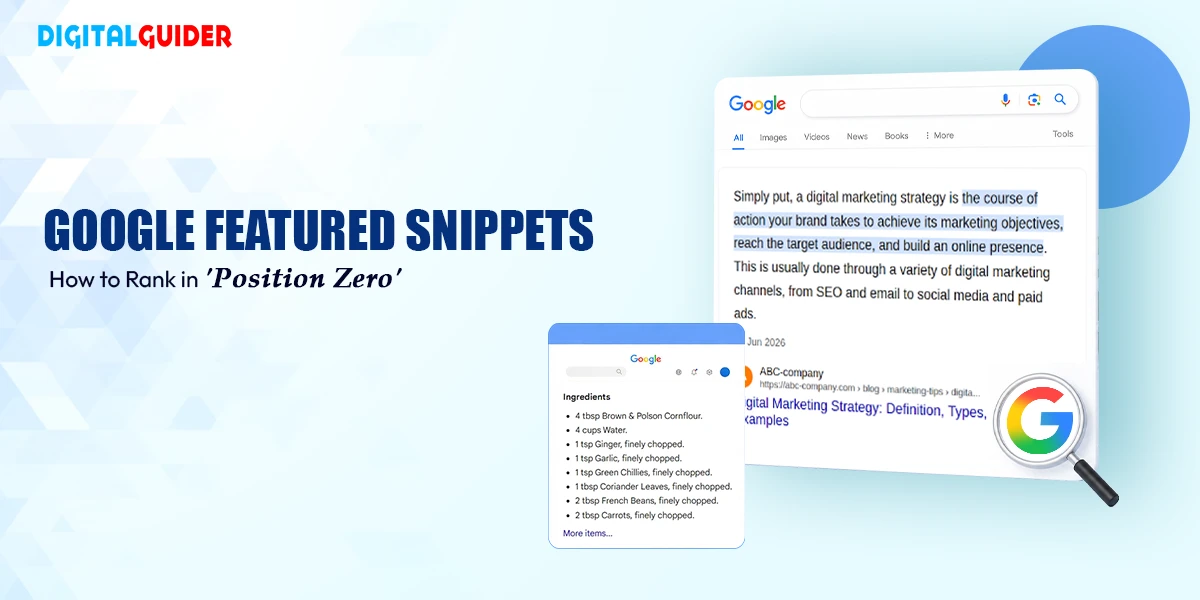
Synopsis Be the first answer users see on Google. Understand how Featured Snippets work, what Google looks for, and the strategies that improve your chances of winning Position Zero.
You search Google for a question, and before you even scroll, one result grabs your attention.
It answers exactly what you were looking for in just a few lines. Without thinking twice, you click it instead of the other blue links below.
That’s the power of a Google Featured Snippet. If your business could own that spot, your brand would become the first answer users see.
The question is: How?
That’s exactly what we will uncover in this guide: what featured snippets are and how to appear in them.
What Is a Google Featured Snippet? (Explained with an example)
When a user searches a query on Google, a box that appears at the top of the Google SERP is a ‘Google featured snippet’.
A Featured Snippet provides a concise answer that Google extracts from a high-quality webpage to directly answer a user’s query.
It appears above the traditional organic search results and can include text, lists, tables, or videos depending on the search intent.
Featured snippets on Google aren’t limited to standalone boxes, they can also appear within a “related questions” group, also known as “People Also Ask.”
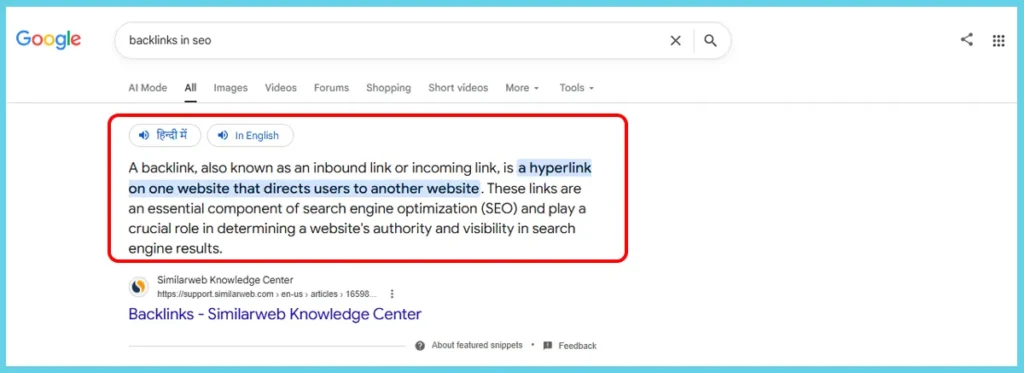
For Example: If someone searches “What is a digital marketing strategy?” Here is how Google replies to this in snippet format.
Why Featured Snippets Matter in SEO?
Featured snippets matter in SEO because your content is the one users see first. Securing ‘position zero’ means your brand gets maximum visibility and brand trust.
Increased Click-Through Rate (CTR)When your brand appears in Position Zero, it gets prominent visibility above the traditional organic results. For queries where users want to explore the topic further, this visibility can encourage clicks and attract more visitors. |
Builds Brand Authority and TrustGoogle doesn’t randomly choose pages for featured snippets. It picks clear, relevant, and authoritative content. When your website consistently appears in Position Zero, users begin to trust your expertise over competitors. |
Boosts Zero-Click Search VisibilityAs AI enters the market, zero-click searches are trending. When users find their answer directly on the SERP, your business gains valuable exposure. Getting appearances in featured snippets improves brand visibility. |
Improves Voice Search ResultsVoice assistants like Google Assistant read the featured snippet aloud as the spoken answer. So winning the snippet also wins the voice search result. It helps you target users beyond traditional search results. |
4 Types of Featured Snippets
There are 4 different types of featured snippets. Each type has a specific query type. Let’s understand it better with examples:
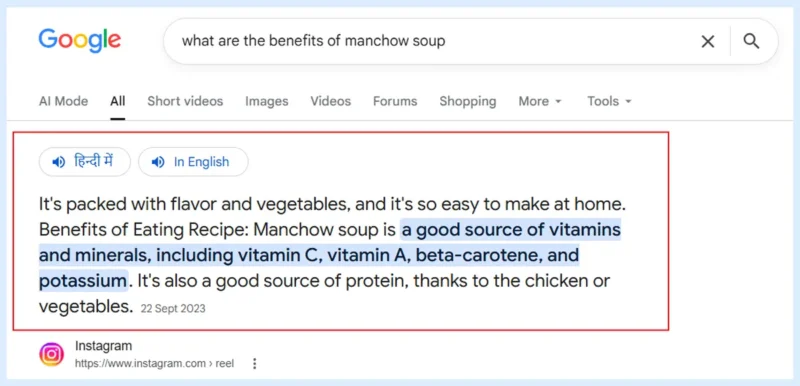
#1. Paragraph Snippets (what query )
Paragraph snippets directly answer user queries in the form of short text blocks that appear at the top of search engine results. They are best optimized for “what,” “why,” and “how” questions.
#2. List Snippets (step-by-step query)
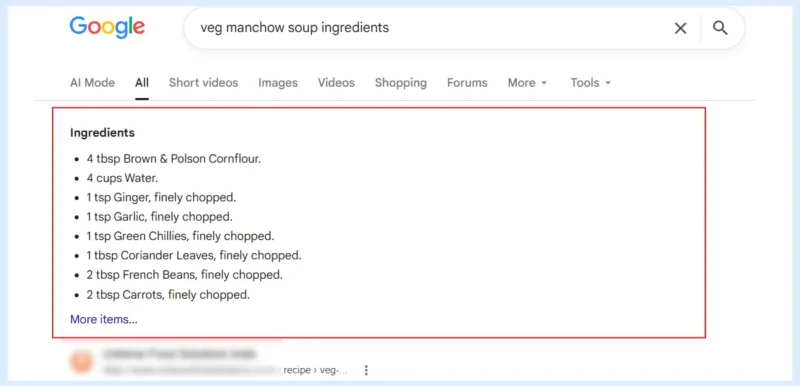
List snippets appear on search queries seeking sequential steps, item collections, or rankings, such as how-to guides, types of items, and best-of lists.
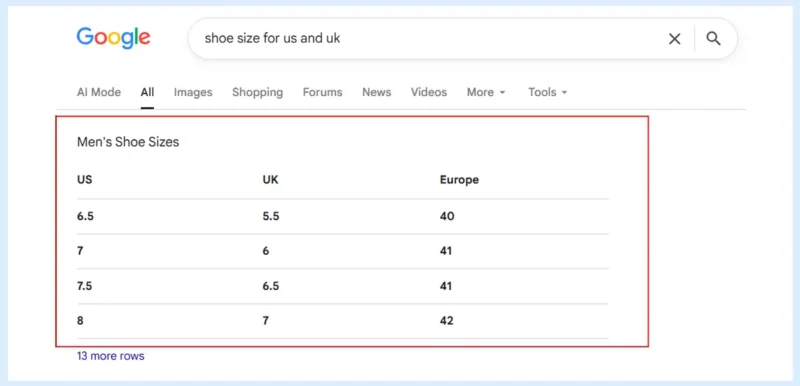
#3. Table Snippets (comparison, data, pricing)
Google shows Table snippets for specific queries such as comparisons, data, and pricing. These queries can be based on pricing & rates, statistical data, and measurements & sizes.
#4. Video Snippets (how-to query)
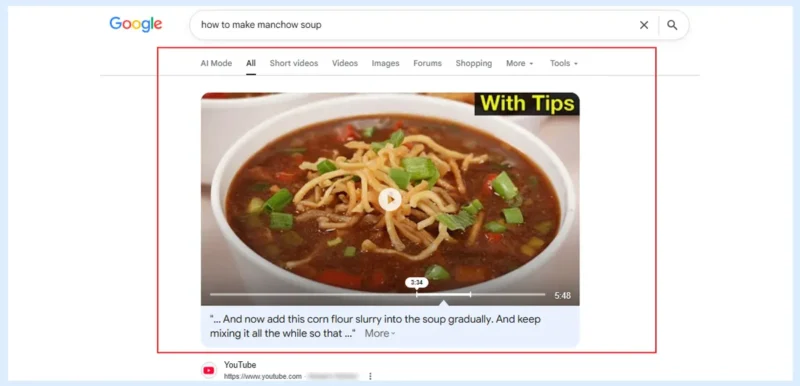
Video snippets are short clips or highlights taken from longer videos that are used to highlight important points. They appear for How-to queries.
Featured Snippets vs. AI Overviews: Key Differences
Do you also think featured snippets and AI overviews are the same?
No, featured snippets and AI overviews are completely different. Let’s understand it better through a table:
| Parameters | Featured Snippets | AI Overviews |
| Content Source | Extracted from a single webpage. | AI-generated summary using multiple sources. |
| Content Format | Paragraph, list, table, or video. | Conversational summary with cited links. |
| Primary Purpose | Gives a quick, direct answer to a specific query. | Provides a broader overview of a topic. |
| Optimization Focus | Structured content, search intent, and snippet-friendly formatting. | Topical authority, comprehensive content, and semantic relevance. |
| Traffic Impact | Often drives clicks by highlighting one source. | Increases brand visibility but may reduce clicks for simple queries. |
How Google Chooses a Featured Snippet
If you think that Google randomly picks the highest-ranking page for the snippet section, then you are mistaken.
Highest ranking is essential for the snippet section, but Google prioritizes the page that has the clearest, most relevant, and easiest-to-understand answer to a user’s query.
1. Page 1 Ranking RequirementPage 1 ranking increases your chances of getting Position Zero. In most cases, Google selects featured snippets from the first page of the SERP. That is why strong on-page SEO and technical optimization are crucial. |
2. Content Structure and FormattingGoogle appreciates well-organized and easy-to-scan content. Make sure to use descriptive headings, answer the main question in the first few lines, and use bullet points, numbered lists, or tables where required. |
3. Relevance and Search Intent MatchUser intent is the key to increasing your chances for position zero. No matter how perfectly formatted your content is, if it doesn’t satisfy user intent, it won’t earn a featured snippet. |
How to Rank in a Google Featured Snippet: Step-by-Step
To appear in a Google Featured Snippet is all about making your content the easiest and most reliable answer to a search query. Follow these four practical steps to improve your chances of securing Position Zero.
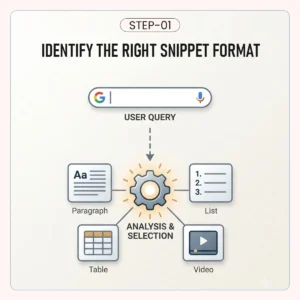
Step 1: Select the Right Snippet Format
Understand the right snippet format as per the type of user query. So, before creating content, identify the type of featured snippet it needs. Is it a paragraph, list, table, or video? It increases the possibility of your content being selected.
Step 2: Target Featured Snippet Keywords
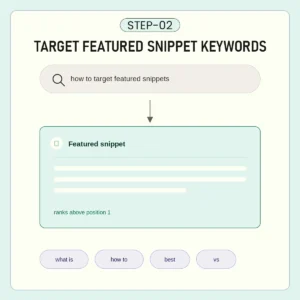
Question-based and informational keywords such as “what is,” “how to,” “why,” “best,” and “vs” work wonders.
As users want direct answers, these types of queries frequently trigger featured snippets.
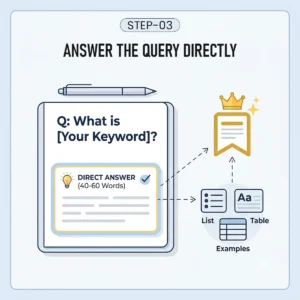
Step 3: Answer the Query Directly
Write a concise and relevant answer for the heading before going into detailed explanations. Make sure to answer the question in 40–60 words with supporting information, examples, lists, or visuals.
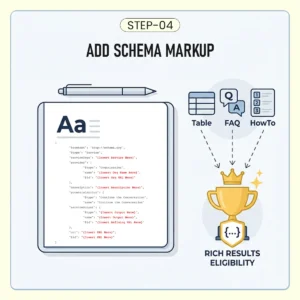
Step 4: Add Schema Markup
Schema markup helps search engines better understand your content. Implement relevant structured data such as FAQ, HowTo, or Article schema where appropriate. It enhances your page’s overall search exposure and eligibility for rich search features.
Common Mistakes Businesses Make When Targeting Featured Snippets
Avoid these common mistakes while targeting Google featured snippets:
| Key Points | Mistakes | Do this instead |
| Keywords | Overusing keywords hurts readability and reads as low quality. | Use keywords naturally, only where they fit the sentence. |
| Language | Use of Hard-to-read wording makes content harder to scan. | Write in simple, clear language with everyday vocabulary. |
| Search intent | Content does not match what users actually asked. | Match content directly to the user’s search query. |
| Schema markup | Without schema markup, search engines struggle to parse unstructured content. | Add structured data so search engines understand your page. |
Real Example: A Featured Snippet We Won
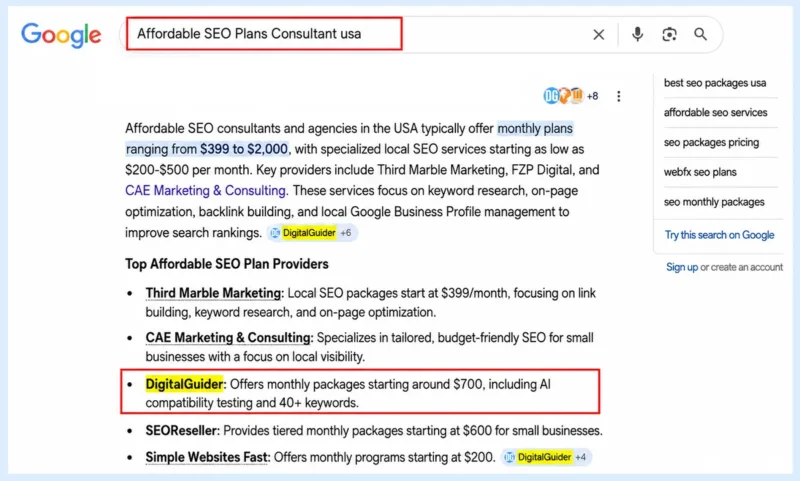
At DigitalGuider, we focus on writing clear, direct definitions upfront and breaking down key points into short bullet lists to make content snippet-ready. We’ve seen many featured snippet wins using this approach. Here’s one of them:
Why SEO Agencies Win More Featured Snippets
Featured snippets require intent, structure, SEO, and timely updates. That’s where experienced SEO agencies have an edge.
They Understand Search Intent |
SEO agencies understand well what users really search and create answers that match their search intent. |
Have Expertise to Create Snippet-Ready Content |
Agencies structure content with clear headings and concise answers that make it easy for both users and Google to understand. |
Strengthen Technical SEO |
Strong technical SEO helps pages get crawled, indexed, and ranked properly. It increases your chances of earning featured snippets. |
Track and Improve Results |
Search results keep changing. SEO agencies regularly track opportunities and help you to find new ways to improve and win more Google snippets. |
Conclusion
Position Zero or Google Featured Snippets are a chance to build authority, increase visibility, and drive high-intent organic traffic. As zero-click searches become more common, appearing prominently on the SERP can help keep your brand visible even when users don’t immediately visit your website. To boost the possibility of securing Position Zero, your business needs to grasp how Google chooses snippets and implement the proper SEO tactics. Optimize now to get faster results.
Google Featured Snippet FAQs
1. Is a Featured Snippet the same as the Knowledge Panel?
No. A Featured Snippet provides a direct answer to a search query using content from a webpage. A Knowledge Panel displays information about a known entity using information from Google’s Knowledge Graph and other trusted sources.
2. Can a page get a Featured Snippet without ranking #1?
Yes. A page does not have to rank in the first organic position to earn a Featured Snippet. Google can select a relevant page from the first page when it provides a clear and useful answer to the query.
3. Can one website have multiple Featured Snippets for different queries?
Yes. A website can earn Featured Snippets for multiple queries across different pages. Each page can target relevant questions and provide clear, structured answers that match the search intent.
4. How do I track a Featured Snippet I’ve won or lost?
You can monitor your target keywords in Google Search Console and SEO rank-tracking tools. Track changes in rankings, impressions, clicks, and whether your page continues to appear as the Featured Snippet for the query.
5. How do I get my website to appear in Google Featured Snippets?
Answer specific search queries clearly, match search intent, use descriptive headings, and structure information with paragraphs, lists, or tables. Ranking on Page 1 can also improve your chances.
6. What keywords trigger Google Featured Snippets?
Question-based and informational searches such as “what is,” “how to,” “why,” “best,” and “vs” commonly trigger Featured Snippets. The format depends on the query and the information users want.
7. How long should an answer be for a Featured Snippet?
There is no fixed word limit for Featured Snippets. However, a concise answer of around 40–60 words can make information easier for Google to understand and extract.
Thanks for Reading!
Share This Article
About the Author: Lucia Ferrer

Related Articles
 October 5th, 2026 | 7 minutes read
“Why isn’t my law firm showing up when potential clients search for an attorney?” Imagine, as a law firm owner,
- October 1st, 2026 | 8 minutes read
Growing your business online sounds simple until you see how many marketing options there are. SEO? Social media? Paid ads?
- September 28th, 2026 | 9 minutes read
Chicago businesses don’t all compete in the same way. A local restaurant in River North, a growing company in Fulton
- September 21st, 2026 | 8 minutes read
Someone nearby is searching for a cannabis dispensary right now. They may want a specific strain, need to check store