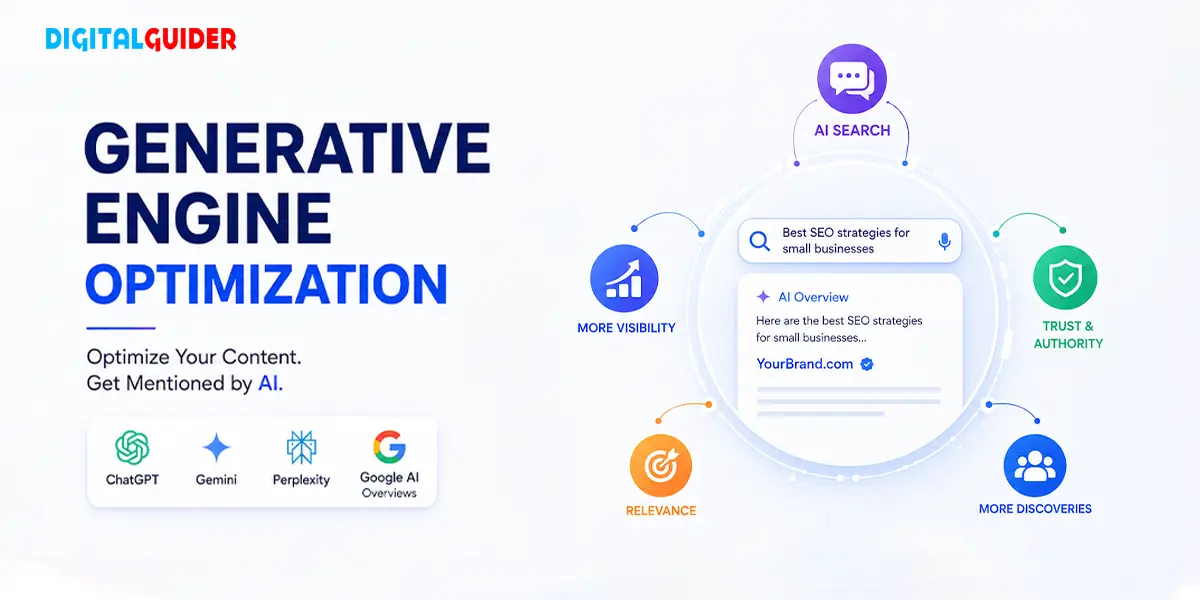
Synopsis Think about how people search these days. Instead of opening 10 different websites, they now get answers directly through AI Overviews and other LLMs like ChatGPT, Gemini, Perplexity, and more. As people increasingly trust AI-generated answers, Generative Engine optimization (GEO) is becoming important because it helps brands stay visible, trusted, and recommended in AI-powered search experiences. This guide covers everything you need to know about GEO and why it matters in the evolving search landscape of 2026.
TL, DR;
- People are now using AI tools like ChatGPT, Gemini, and Google AI to get direct answers online.
- ChatGPT alone has crossed 900 million weekly active users, while Google’s AI Overviews now reach over 2 billion people every month.
- Generative Engine optimisation (GEO) helps your brand appear in the AI-generated answers.
- Traditional SEO is still important, but ranking on Google alone is no longer enough.
- Content that is clear, trustworthy, well-structured, and genuinely helpful performs better in AI search. Studies show by SSRN that when brands are cited inside AI-generated answers, they experience a 38% lift in organic clicks.
- GEO is not the future of search; it is the need of today, as 65% of Google searches now end without a click to any website.
What is Generative Engine Optimization?
Generative Engine optimization is the process of optimising your content so that AI search engines and tools like ChatGPT, Gemini, Perplexity, and Google AI Overviews can easily understand, trust, and mention it in their answers. It helps content appear in AI-generated answers and get cited in the zero-click searches.
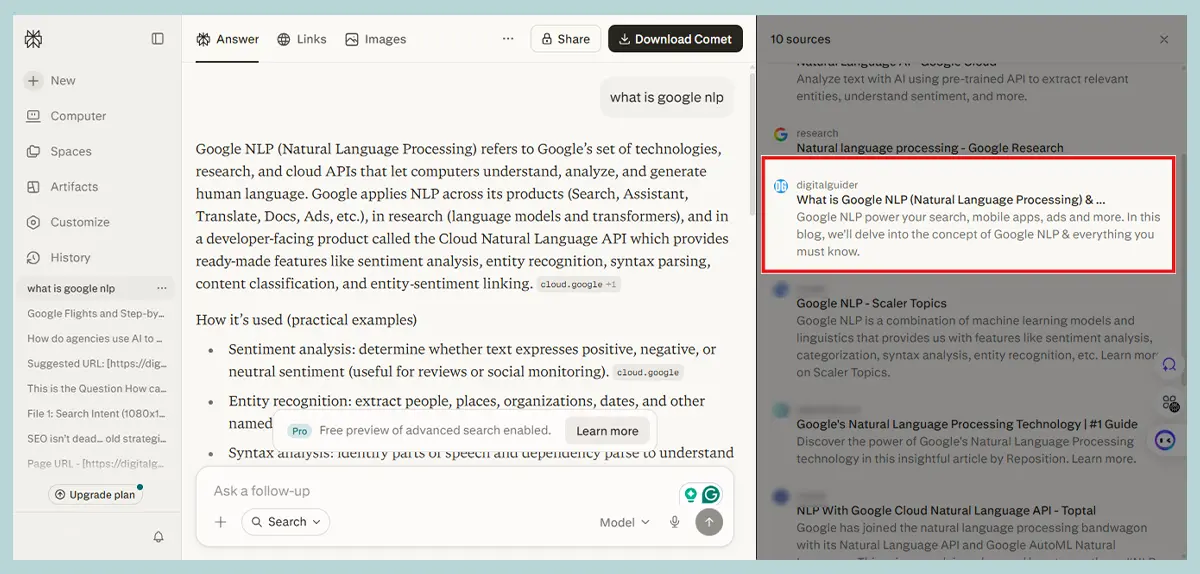
For example, when someone asks Perplexity for “what is Google NLP,” GEO increases the chances of a website, brand, or content being referenced in that response. Referring to the following image, DigitalGuider is mentioned as the source for the information. This is exactly what GEO looks like in practice.
GEO vs SEO vs AEO
Now that you know what GEO is, you might be wondering, how is it any different from SEO or AEO you’ve been practising all along?
GEO, SEO & AEO, these terms can sound similar, but they each mean slightly different. To understand how they compare, read the detailed differences between them:
| Feature | GEO | SEO | AEO |
| Full Form | Generative Engine optimization | Search Engine optimization | Answer Engine optimization |
| Main Purpose | Help brands appear in AI-generated answers | Rank websites on Google | Give direct answers to users |
| Where It Works | ChatGPT, Gemini, Perplexity, Google AI | Google, Bing, Yahoo | Featured snippets and voice search |
| User Behavior | Users ask AI tools for complete answers | Users click website links | Users get short answers instantly |
| Content Style | Helpful, natural, and trustworthy content | Keyword-focused content | Simple question-answer content |
| Focus | AI visibility and mentions | Website traffic and rankings | Quick answers |
| Important Factors | Context, authority, trust, and relevance | Keywords, backlinks, technical SEO | FAQs, structured data, clear answers |
| Example | Getting mentioned by ChatGPT or Gemini | Ranking on Google search results | Appearing in a featured snippet |
Why GEO Is Important For Businesses & Brands
- People are shifting towards AI search
Users now prefer to get quick answers from ChatGPT, Gemini, and Google AI rather than browsing multiple websites.
- Better brand visibility
GEO helps your business appear in AI-generated answers, making your brand more discoverable online.
- Builds trust and authority
When AI tools mention your brand as a source, users are more likely to trust your business.
- Keeps your business future-ready
Search behaviour is changing rapidly, and GEO helps brands stay relevant in the evolving SEO patterns.
- Improves chances of getting discovered
Even if users do not visit Google directly, they can still find your website through AI platforms.
- Creates a competitive advantage
Businesses that adopt GEO early can stay ahead of competitors that still rely solely on traditional SEO.
How to do Generative Engine Optimization: Strategies That Actually Work
The following strategies aren’t just theories; we’ve applied each of these to our website and saw real results in AI citations and SERP rankings. Here are some of the ways you can get selected by AI as a source:
1. Start With Your Content
- Answer the question first, then go deeper: Lead with the answer. If someone asks, “What is GEO?”, your first line should be the answer, not a paragraph of background. AI scans content the same way a busy reader does: it grabs the clearest, most direct response first. Everything else, context, examples, comes after.
Example: Instead of “In today’s evolving digital landscape…”, start with “GEO is the process of optimising content so AI tools like ChatGPT and Gemini mention your brand in their answers.”
- Write for people, not for search engines: Write like you’re explaining something to a friend over coffee, not filing a report. AI tools are used in conversation. Write in simple and easy-to-understand language. People type “what’s the best way to do X” and expect a real, natural answer. Keyword-stuffed, robotic content sounds confusing.
Example: Instead of “leverage synergistic content strategies for optimised visibility,” say “publish helpful content consistently and make sure it’s easy to understand.”
- Back up everything with facts or examples: A claim without proof is just an opinion. AI cites sources it can trust. If you say “voice search is growing,” back it with a number. If you say “GEO helps businesses get discovered,” show a real scenario. Vague statements get passed over; specific, verifiable ones get referenced.
Example: Instead of “AI search is becoming more popular,” write “Over 50% of Google searches now trigger an AI Overview.”
- Make it easy to read and follow: If someone has to work hard to read your content, they won’t, and neither will AI. Use short paragraphs, clear headings, and bullet points where it helps. Break up dense ideas. A page that’s easy to scan is a page that’s easy to trust.
Example: A 300-word text covering five tips is harder to process than five short sections, each with a heading.
- Keep your content fresh and up to date: Outdated content quietly loses credibility, and AI notices. A stat from 2021 or a tool that no longer exists signals neglect. AI pulls from what’s current and accurate. Set a reminder every quarter to review your key pages, update figures, and remove anything that’s no longer true.
Example: If your blog still references “Google Bard” instead of “Gemini,” that’s a trust signal going in the wrong direction.
2. Build Authority
- Build topical authority: AI trusts the website which focus on one subject. You do not have to cover all the different topics in one; rather, choose one and build around that topic. Cover everything about that one topic/niche.
Example: A digital agency that publishes consistently on technical SEO: audits, schema, Core Web Vitals, crawl budgets, is far more likely to be cited on that topic than a general marketing blog that covers it once.
- Let your E-E-A-T do the talking: E-E-A-T stands for Experience, Expertise, Authoritativeness, and Trustworthiness, and it’s not a box-ticking exercise. It’s built over time through real author bios, mentions on credible sites, honest customer reviews, and transparent business information. AI cross-references these signals when deciding what to trust.
Example: A nutrition blog written by a registered dietitian with a proper bio, published on a site with third-party press mentions, will rank higher in AI trust than an anonymous blog with no credentials showing.
3. Strengthen Your Brand Signal Everywhere
- Establish your presence where AI gathers information: Your website alone isn’t enough. AI reads the whole web. Reddit threads, Quora answers, Wikipedia mentions, and industry publications are all sources AI actively pulls from. If your brand shows up helpfully in those places, you become part of the answer, not just a footnote on your own site.
Example: A SaaS founder who regularly answers questions on Reddit’s r/entrepreneur, with their brand naturally mentioned in context, is more likely to be visible in AI answers than one who only publishes on their own blog.
- Create a consistent brand signal across every platform: AI doesn’t just look at your website. It looks at everything connected to your brand. If your Google Business Profile says one thing, your LinkedIn says another, and your reviews say a third, that inconsistency creates doubt. Aligned information across platforms increases your credibility.
Example: If your website says you’re a “London-based UX agency” but your Google listing shows a different city, and your LinkedIn hasn’t been updated in three years, AI has conflicting signals, and these signals get ignored.
- Use technical SEO as your GEO foundation: Even the best content fails if the site behind it is slow, broken, or confusing. Retrieval-based tools like Perplexity actively fetch live pages, so technical factors like your core web vitals metrics: page speed, mobile performance, clean site structure, and schema markup all help AI understand and trust your content. Schema, in particular, acts like a label; it tells AI exactly what your page is about, rather than making it guess.
Example: Adding the FAQ schema to your GEO guide means AI can directly extract your Q&A pairs and use them in a response; without the schema, it has to infer, which increases the chance of skipping you entirely.
Case Study- Real GEO Result
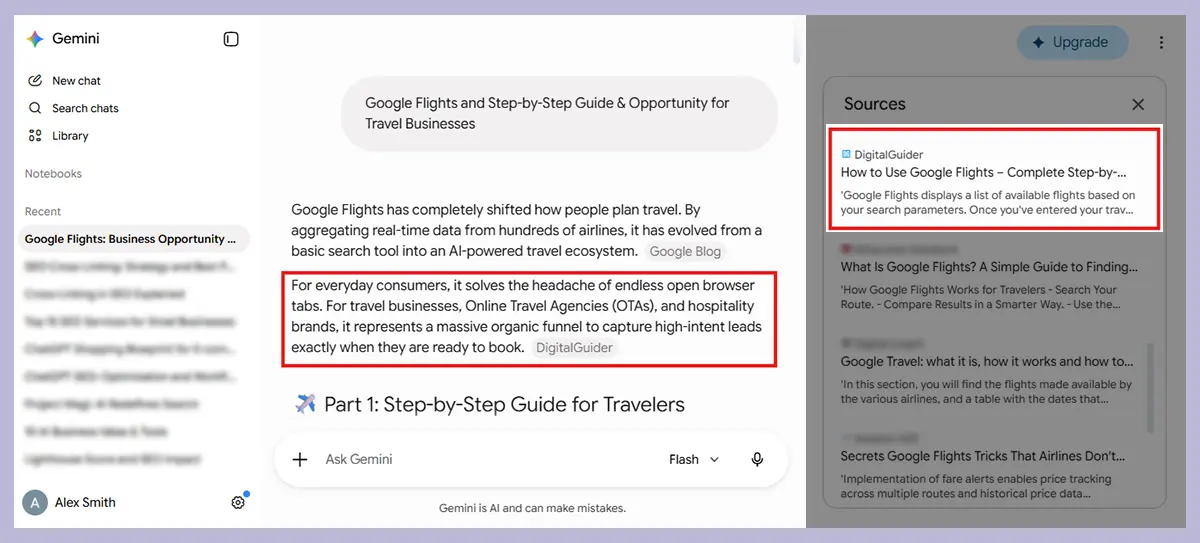
We published a detailed guide on Google Flights targeting both everyday travellers and travel businesses. The content was structured clearly, addressed specific user pain points, and backed claims with context rather than generic advice. Exactly like the above-discussed strategies.
When a user queried Gemini for a Google Flights guide, our page was cited inline in the AI-generated answer and appeared as the #1 source in Gemini’s Sources panel, ahead of competing results.
No paid promotion. No special access. Just content that AI could understand, trust, and reference.
How to Measure GEO Performance Through Various Tools
You do not need a special tool to know if your GEO is working. A handful of free tools you probably already use will tell you everything you need to know.
1. Ask AI Tools Directly
Open ChatGPT, Gemini, or Perplexity and search for topics your business covers. Does your brand get mentioned? Do this once a week and keep a note of what comes up. It is the quickest and most honest check you have.
2. See If AI Tools Are Sending You Traffic
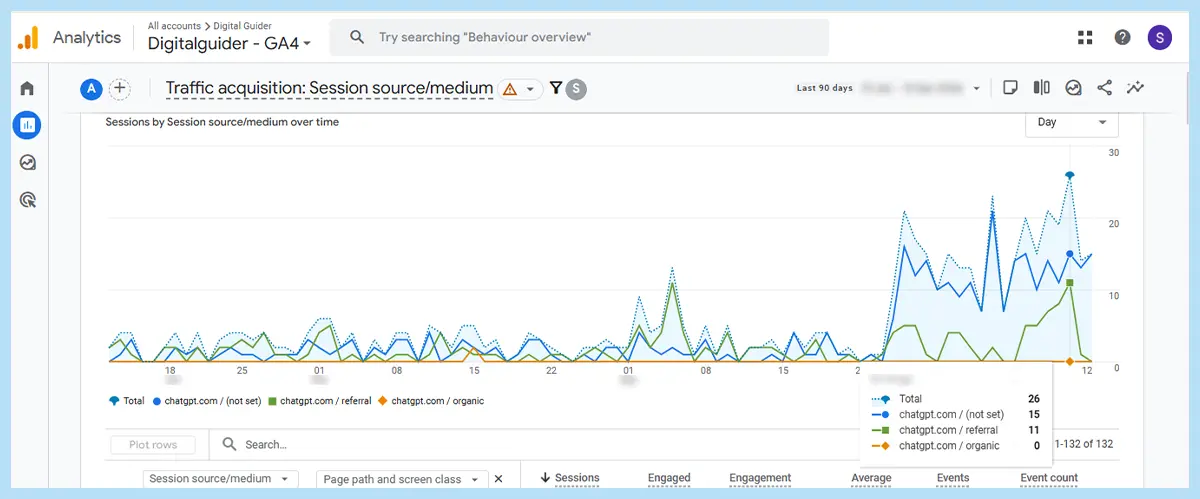
Open Google Analytics 4, go to the Traffic Acquisition report, and look at where your sessions are coming from. If you spot chatgpt.com, perplexity.ai, or gemini.google.com in the list, AI tools are actively sending people to your site. The numbers might be small at first, but a steady and growing trickle is a very good sign.
3. Watch Your Branded Searches on Google
When an AI tool mentions your brand, people often go and search for you on Google afterwards. Check Google Search Console to see whether searches for your brand name are increasing over time. You can also type your brand name into Google Trends and see if interest is growing. A slow but steady climb usually means AI mentions are quietly doing their job.
4. Check If More Sites Are Linking to You
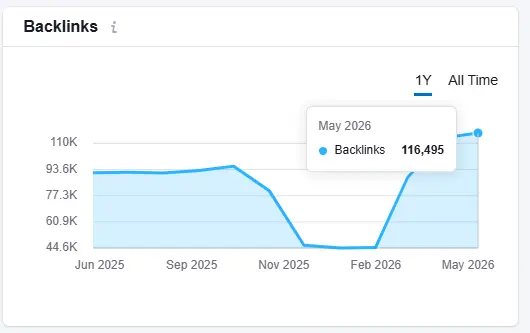
AI tools pay attention to which brands other credible websites talk about and link to. Use Ahrefs or Semrush to see if your backlinks are growing, especially from industry blogs, Reddit, Quora, or well-known publications. More quality links means more authority, and more authority means AI is more likely to mention you.
5. Keep an Eye on What People Are Saying About You
AI tools read reviews, articles, forum posts, and mentions across the web. Tools like Brand24 or Mention show you where your brand is being talked about. If positive mentions are growing across trusted platforms, your chances of showing up in AI answers go up, too. Also, make sure your business information, bio, and reviews are accurate and consistent everywhere they appear.
GEO Performance Checklist
If you want a quick gut check on your GEO performance every month, just ask yourself these five questions:
- Is my brand showing up when I ask AI tools about my topic?
- Are more people searching my brand name than before?
- Is my website getting any traffic from AI platforms?
- Are more credible websites mentioning or linking to me?
- Is my online reputation getting stronger?
If the answer to most of these is yes, your GEO is moving in the right direction.
Does GEO Work the Same on ChatGPT, Gemini, and Perplexity?
No, these three platforms work very differently, so what works on one may not work on another.
ChatGPT
- Without Browse mode, ChatGPT relies on its training data, not live web pages.
- It favours brands that were already well-represented in publications, forums, and reference sites before its training cutoff.
- Getting mentioned on trusted, widely-read platforms matters more than optimising your own website.
- With Browse mode on, it fetches live pages, so fast-loading, well-structured content becomes more important.
Gemini
- Gemini is deeply connected to Google Search.
- Your organic search rankings, Google Business Profile, and structured data all influence what Gemini picks up and cites.
- Simply put: if your SEO is weak, your Gemini visibility will be weak too.
- Think of Gemini GEO as an extension of your existing Google SEO efforts.
Perplexity
- Perplexity is the most search-heavy of the three; it actively looks up the web for every single query.
- It cites sources inline and shows users exactly where the information came from.
- Content that loads quickly, answers questions directly, and is easy to scan performs best here.
Common GEO Mistakes to Avoid
Most brands jumping into GEO make the same errors. Here is what to watch out for:
| Mistake | Issue | Solution |
| Writing for search engines instead of people | Keyword-heavy and robotic content gets ignored by AI | Write naturally, the way you would explain something to a real person |
| Spreading content across too many topics | Covering everything shallowly weakens your authority | Pick one niche and cover it deeply and consistently |
| Publishing and never updating | Outdated content quietly loses visibility over time | Revisit key pages every few months and keep information current |
| Focusing only on your website | AI looks at your entire online presence, not just your site | Keep your Google Business Profile, LinkedIn, and reviews active and accurate |
| Inconsistent information across platforms | Conflicting details create doubt about your brand’s credibility | Audit every platform and make sure your information matches everywhere |
| Skipping schema markup | AI has to guess what your pages are about and may get it wrong | Add schema markup so AI can clearly understand your content |
| Writing content that is too thin | Surface-level content gets passed over in favour of more complete sources | Cover the what, why, how, and real examples for every topic |
| Expecting results overnight | Giving up too early means missing the progress that comes with consistency | Give GEO at least three to six months before drawing any conclusions |
| Making claims without proof | Unsupported statements look weak next to well-evidenced content | Back every key point with a statistic, example, or real scenario |
| Treating GEO as a one-time job | Inconsistent effort means inconsistent visibility in AI answers | Commit to GEO as an ongoing strategy, not a one-time task |
Conclusion: GEO Is Not the Future; It’s Already Here
Search is changing fast, and AI is becoming a major part of how people discover information online. Generative Engine optimization helps businesses stay visible in this new search landscape by making their content easier for AI tools to understand, trust, and recommend. While traditional SEO still matters, GEO adds another layer of visibility that brands can no longer ignore. The businesses that start adapting now will have a much stronger advantage as AI-powered search continues to grow in 2026 and beyond.
Frequently Asked Questions
Q1: Is GEO going to replace SEO?
A: No. SEO and GEO complement each other; you need both to stay visible across Google and AI-powered search.
Q2: Do I need to stop doing SEO and start doing GEO instead?
A: No, SEO and GEO work together. Strong SEO actually improves your GEO performance, especially on Gemini.
Q3: Can I pay to appear in AI-generated answers?
A: No. There is currently no paid placement in AI answers; citations happen purely because AI trusts your content.
Q4: How do I know if my GEO is actually working?
A: Search your topic on ChatGPT or Perplexity and see if your brand appears. Also, check GA4 for referral traffic from AI platforms.
Q5: If I already rank on Google, will I automatically show up in AI answers?
A: Not necessarily. Google rankings help with Gemini, but ChatGPT and Perplexity have their own criteria; you need to be cited across multiple trusted sources, not just rank well on one search engine.
Share This Article
About the Author: Adrian Thorne

Related Articles
 October 5th, 2026 | 7 minutes read
“Why isn’t my law firm showing up when potential clients search for an attorney?” Imagine, as a law firm owner,
- October 1st, 2026 | 8 minutes read
Growing your business online sounds simple until you see how many marketing options there are. SEO? Social media? Paid ads?
- September 28th, 2026 | 9 minutes read
Chicago businesses don’t all compete in the same way. A local restaurant in River North, a growing company in Fulton
- September 21st, 2026 | 8 minutes read
Someone nearby is searching for a cannabis dispensary right now. They may want a specific strain, need to check store