Synopsis Drip marketing means sending small, automated, and scheduled messages in a sequence to nurture a customer step-by-step over a period of time. These messages are called 'drips'. These messages are fully automated and usually executed through a CRM or email automation tool.
I have personally noticed that most customers do not buy something the first time they visit a website. They usually need reminders, useful information, or a little trust-building before making a decision. That is exactly where drip marketing works really well.
Instead of sending everything at once, businesses slowly share the right message at the right time through emails, texts, or automated campaigns.
For example, imagine you visit an online shoe store in the US and add sneakers to your cart but leave without buying. A few hours later, you receive an email reminding you about the shoes. The next day, the brand sends a review from happy customers, and after two days, you get a small discount offer. That complete sequence is called drip marketing because the business slowly “drips” messages to guide you toward a purchase instead of pushing everything at once.
In this guide, you will learn what drip marketing is, how it works, why businesses use it, and some practical examples that actually make sense in real marketing.
What is Drip Marketing?
Drip marketing is a series of automated, scheduled messages sent to a customer or lead over time. It is a slow but steady follow-up instead of sending everything at once. These messages are sent one by one, like drops, based on what the user does. The goal is to keep them engaged and slowly move them towards buying or taking an action. In today’s Digital Marketing strategies, businesses use drip campaigns across email, WhatsApp, SMS, push notifications, and even AI-powered customer journeys to keep users engaged without overwhelming them.
Why It’s Called Drip
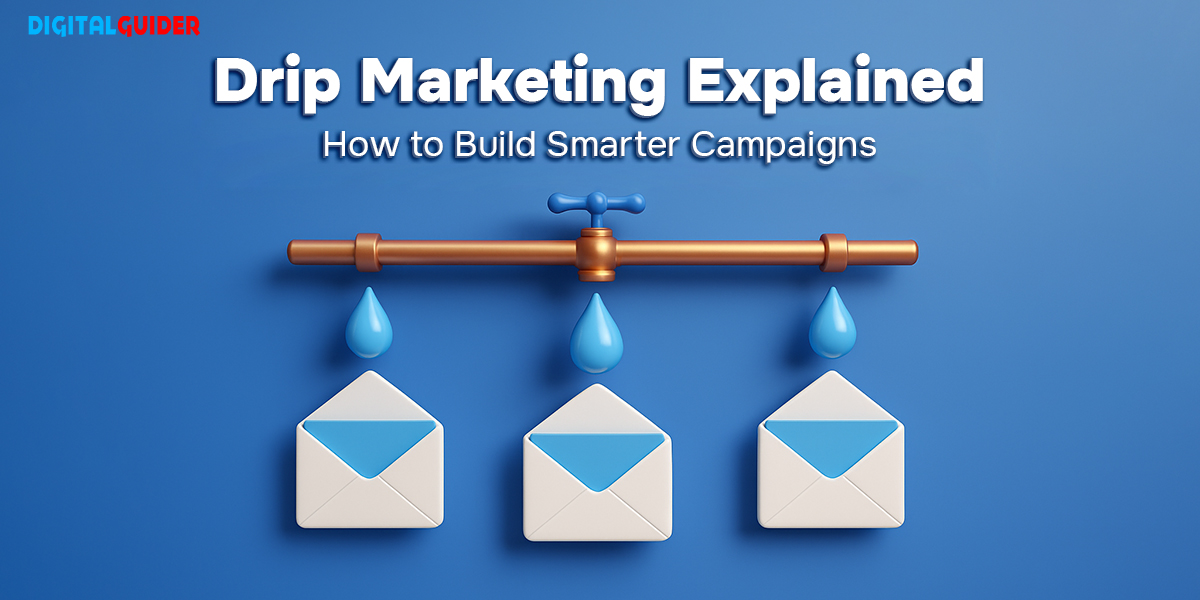
It’s called “drip” because the messages go out slowly over days or weeks, one by one, just like water dripping from a tap. The goal is not to send everything at once to the customers and confuse them, but to send small, timed updates or reminders over time so that they have time to think over it and take action.
Difference Between Drip Marketing vs Regular Email
- Drip Marketing: Is a series of slow, automatic emails planned in sequence, step-by-step, not all in one day. Messages are usually triggered by customer behavior and delivered over time based on engagement, intent, or buying stage.
- Regular Email: A one-time manual email. The same message goes to everyone at the same time, irrelevant of user behaviour. No timing, no sequence, just an announcement.
Why Businesses Use Drip Marketing
Businesses use drip marketing to stay connected with potential customers without manually following up every time. It helps brands educate leads, build trust, recover abandoned carts, onboard new users, increase repeat purchases, and retain existing customers through automated messages.
The process usually starts when a user takes an action on a website, such as:
- Signing up for a newsletter
- Downloading an eBook
- Adding products to the cart
- Visiting a service page
- Registering for a free trial
Once the action happens, the user automatically enters a pre-planned drip campaign sequence. The business then sends helpful messages step by step instead of pushing everything at once.
For example, a simple drip sequence may look like this:
- Day 1 → Welcome email
- Day 3 → Product benefits or helpful tips
- Day 5 → Customer reviews or case studies
- Day 7 → Discount offer or strong call-to-action
This process runs automatically and keeps the customer engaged throughout the buying journey.
For example, if someone adds running shoes to their cart on an online store but leaves without purchasing, the business may send:
- A reminder email after a few hours
- Product reviews the next day
- A limited-time discount after two days
That gradual follow-up is what makes drip marketing highly effective because it feels more natural and less aggressive to customers.
How Drip Marketing Works – Step-by-Step
1. Someone shows interest: They visit your page, sign up, download something, or buy something. This starts the drip and they enter in the drip marketing system.
2. Starts a series of automated emails:
- Email 1: Welcome
- Email 2: Tips
- Email 3: Product intro
- Email 4: Offer
- Email 5: Reminder
3. Emails go out automatically: Once the drip is triggered, the system sends each email one by one, based on timing (Day 1, Day 3, Day 7, etc.).
4. Emails match the user behaviour: If they bought something, they get a “how to use” series. If they abandoned the cart, they get a “you forgot something” series.
5. The drip creates the connection: Each email slowly builds trust drop-by-drop.
6. Final email for conversion, it may push:
- A discount
- A call to book
- A reminder
- A product suggestion
7. Improvisation: Check which emails people open or click, and improve the drip next time.
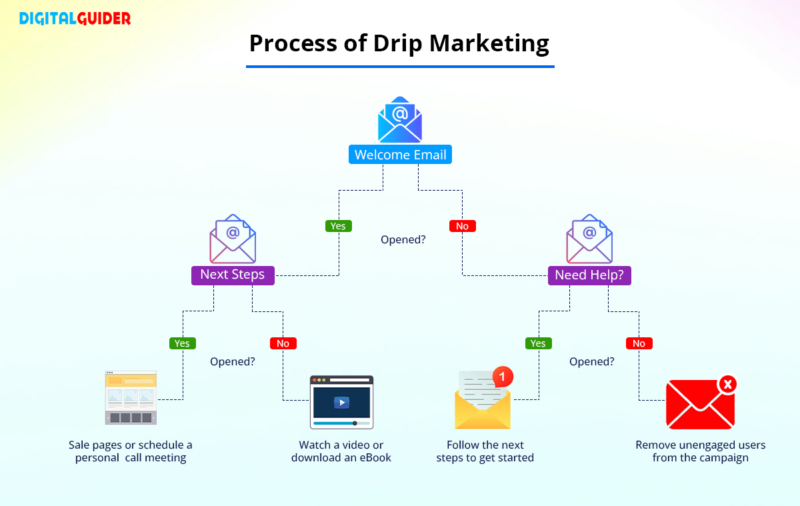
Process of Drip Marketing
How does the Drip Marketing Process Help?
Drip campaigns personalize the journey for every potential lead, making them feel like your next loyal customer. Here’s a quick view of what makes it work:
- Keeps the Brand at Top-of-Mind
- Sends the Right Message at the Right Time
- Align with the user’s actions, like sign-ups, clicks, or abandoned cart
- Saves Time, Works 24/7
- Boosts Engagement & Conversions
- Builds Trust & Nurtures Relationships
Benefits of Drip Marketing
The benefit of Drip marketing is to automate follow-ups, nurture leads, increase engagement, recover lost customers, and improve conversions by sending timely and personalized messages automatically. Here are some benefits of using a drip marketing system:
1. Saves valuable time:
You create the entire email sequence once, e.g., 5–15 emails for a welcome series or an onboarding & engagement campaign. After that, the system automatically sends the right email to the right person at the right time. Drip marketing runs 24/7 on autopilot even while you sleep, travel, or work. You invest effort & time once, and save n number of hours over months. No manual segmenting of the list every time you want to send something or send batch emails repeatedly. Messages also may not reach on time or to the right person.
2. Better Lead Nurturing:
Research shows 50% of leads are qualified but not ready to buy yet (Gleanster), and 79% of marketing leads never convert without nurturing (MarketingSherpa). Drip campaigns fix that by delivering helpful content over time, building trust and authority so that when the prospect is ready, your brand is at the top of their mind.
3. Higher Engagement & Conversion:
Data from www.campaignmonitor.com and https://nethunt.com/ shows that newsletters & emails may have around a 10% open-to-click rate.
Automated drip campaigns often outperform bulk email blasts because the messaging is more relevant and behavior-driven. In many industries, triggered emails generate significantly higher click-through and conversion rates than generic newsletters.
4. Consistent Communication:
People love and generally buy from brands they are in touch with. Drip marketing guarantees your audience hears from you on a regular basis, and you are always on top of their mind.
5. Easy to Test and Optimize:
Since drips are a collection of emails roped through one format. You can change one subject line, CTA button, colour combination, or message itself, and it immediately applies to hundreds of emails. You can even see who opened, clicked, or acted before making your decision. This also gives an opportunity to test and improve results for subscribers who enter the drip sequence. You do not need to start a new campaign every time.
6. Re-engagement of Past Leads or Customers:
It is best to touch base with old subscribers who went cold. You can run a campaign like “We miss you” re-engagement drip and watch some of them come back. Abandoned carts, trial expirations, lapsed customers – you can win them back with the right drip sequence. Drips remind customers before they forget, drop off, or go to a competitor.
7. Higher ROI:
Email marketing already delivers $36–$42 for every $1 spent (Litmus/DMA 2023–2024 data). Drip campaigns perform even better because they’re automated, highly targeted, and reusable. For many SaaS and e-commerce brands, automated lifecycle campaigns contribute a meaningful share of repeat purchases and customer retention revenue.
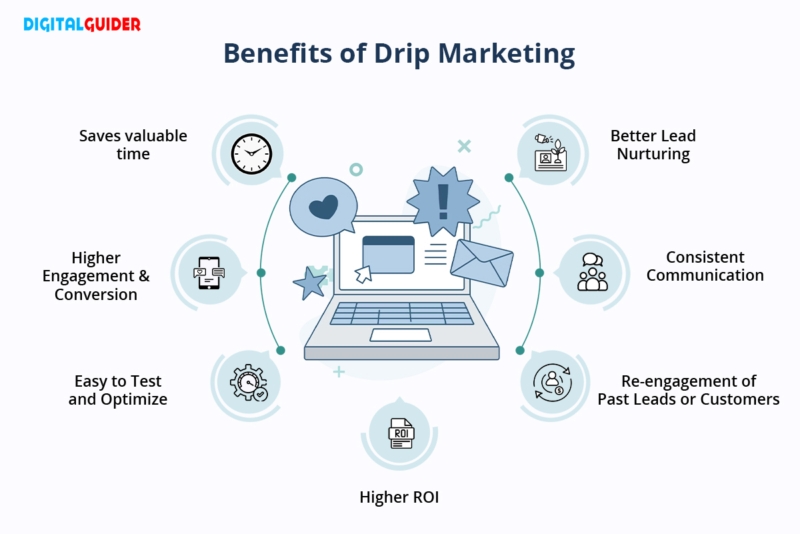
Benefits of Drip Marketing
Email Marketing ROI: Why Drip Marketing Works So Well
Drip marketing is a part of email marketing, and email marketing consistently delivers one of the highest ROIs in digital marketing. According to Forbes Advisor, email marketing generates an average return of $36 for every $1 spent, based on different industries, making it a highly profitable channel for businesses of all sizes.
For better understanding, have a look at the data below that explains why businesses rely on drip campaigns—they help maximize revenue by sending the right message at the right time.
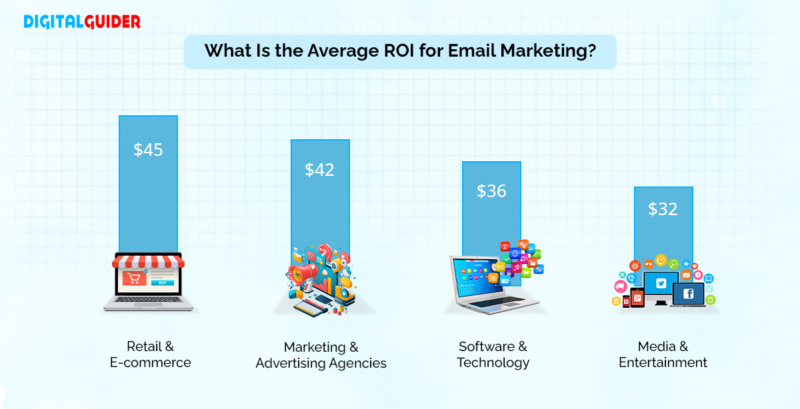
Average ROI – Drip Marketing
Types of Drip Marketing Campaigns
Businesses use different types of drip marketing campaigns based on customer actions and goals. Popular drip campaigns include welcome emails for new subscribers, lead nurturing campaigns to build trust, onboarding sequences for new users, abandoned cart reminders to recover lost sales, re-engagement emails for inactive users, post-purchase campaigns to encourage repeat buying, and webinar or event drips to keep attendees informed and engaged before and after the event.
Here are some popular types you can use to engage with your audience via email:
1. Welcome Campaigns:
Make an impactful first impression with a friendly and quick onboarding campaign right after sign-up. Greet your new subscribers, introduce your brand or products, or provide them with exclusive discount offers.
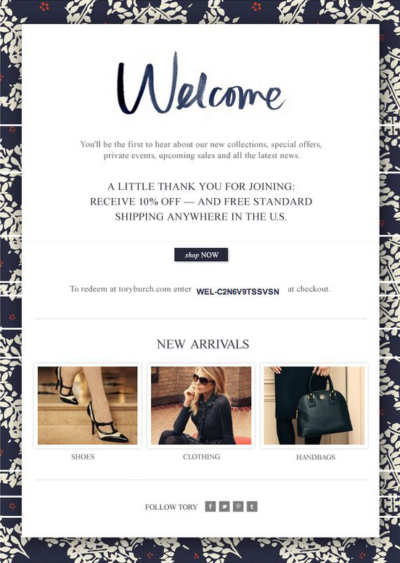
Source: TORY BURCH
2. Lead Nurturing Campaigns:
Ensure to transform your cold leads into warm prospects with content marketing of blog posts, tips, success stories, or product demos to earn trust before asking for the sale.
3. Onboarding Drip Campaigns:
This campaign is used for new users/customers using your product or service. This campaign informs them how to start, about features, or get results.
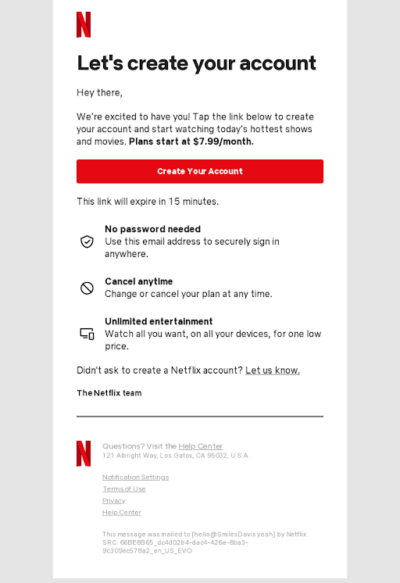
Source: Netflix
4. Abandoned Cart Campaigns:
A shopper adds a product to the cart but doesn’t buy. Abandoned cart campaign gently reminds him what he has in the cart, sometimes with a little incentive (like free shipping) to bring him back.
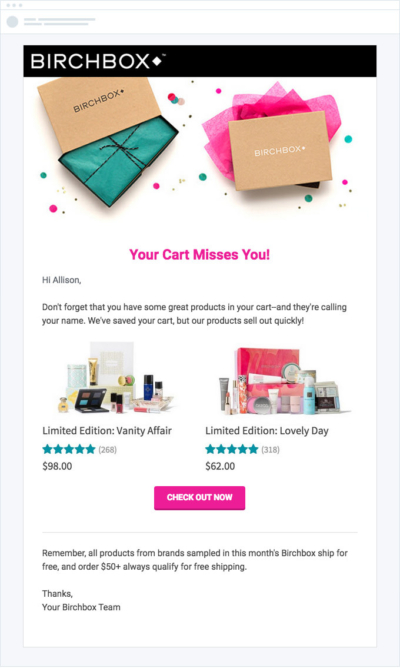
Source: BIRCHBOX
5. Re-Engagement Campaigns:
Re-engagement drip campaigns are best when you want to reconnect with dormant users through exclusive offers or surveys. Share helpful content, offer a special deal, a product update, or simply ask, “Still want to hear from us?” to win back inactive subscribers.
6. Post-Purchase Drip:
The sale is not the end—it’s the start of a deeper relationship with your customer. Thank your customer, suggest complementary products or services, provide helpful tips on how to use what they purchased, or request a review. This strengthens customer loyalty and builds online reputation, boosting the chances of repeat purchases.
7. Webinar/Event Drips:
If you are hosting something special, then use this campaign to confirm registrations, send reminders, share sneak peeks, and follow up after the event or webinar. It keeps your audience excited and engaged from start to finish.
Types of Drip Marketing Channels
Email Drip Marketing:
This is the most popular type. It works by sending a series of pre-scheduled or automated emails based on what your audience does—like signing up, clicking a link, or leaving something in their cart. Each email drip campaign is part of a carefully planned journey designed to educate, engage, and convert customers, step by step. For example, you sign up for a newsletter or download a free guide, and suddenly, your inbox starts getting perfectly timed emails. Not spammy, not random. Just…right. That’s email drip marketing at its best.
Social Media Drip Marketing:
Drip campaigns are widely used in social media marketing. A strategic sequence of targeted posts, DMs, or ads is published on popular social media platforms like Facebook, Instagram, or LinkedIn. Any specific action by the user, like following your page, clicking an ad, or engaging with a story, can trigger a personalized automated sequence.
SMS Drip Marketing:
SMS drip marketing means sending automatic text messages to people one after another, over time. These messages are sent based on what the user does, like: sign up, purchase, abandon cart, or become inactive. These are a pre-planned series of SMS reminders, delivered at the right time.
WhatsApp Drip:
A WhatsApp drip is again a series of pre-planned WhatsApp messages that automatically go to a person over a fixed period. It could be useful info, reminders, offers, step-by-step, or just an engagement message. Brands use WhatsApp drips as it is more personal than email, has a faster open & read rate, is great for follow-ups & reminders, and encourages people toward buying.
Push Notification:
A push drip is a series of automatic push notifications (the small pop-up messages you get on your phone or browser) sent over time to keep users engaged. A push drip gently nudges users without needing them to open WhatsApp or email. Brands use push drips as they have quick visibility, are great for reminders, alerts, or updates, and work even if users don’t check email or WhatsApp.
Retargeting Ads:
A retargeting drip is a series of automatic ads shown repeatedly to people who visited your website/app earlier but didn’t take action. Retargeting drip follows your visitor around the internet with helpful reminder ads. Brands use retargeting drips for their brand marketing as it is super easy to use, works automatically once set up, to bring back warm leads, and increases conversions.
Chatbot / Messenger Drips:
A chatbot drip is a series of automated messages sent through chat platforms like Facebook Messenger, WhatsApp, or website chatbots. It’s like having a smart robot conversation that guides users automatically over time. Brands use chatbot drips as these are quick, interactive, and personal; more engaging as user can reply instantly, great for support services, and works 24/7.
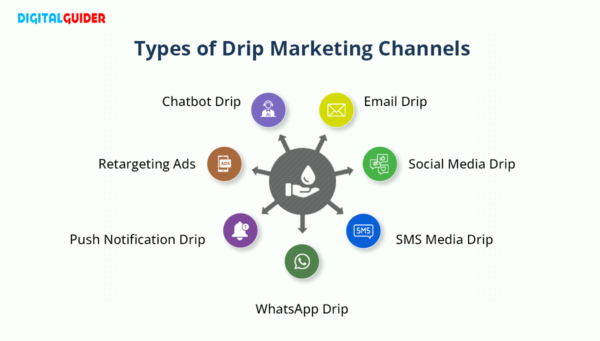
Drip Marketing Channels
Step guide to Set Up & Automate a Drip Marketing Campaign
To set up a drip marketing campaign, first decide your goal, such as welcoming new subscribers, recovering abandoned carts, or nurturing leads. Then choose a trigger action like sign-ups, downloads, purchases, or cart abandonment. Create a sequence of helpful emails that guide users step by step instead of selling immediately. After that, use an email automation tool like Mailchimp, HubSpot, ActiveCampaign, or Klaviyo to schedule and automate the emails based on timing or user behavior. Once the campaign goes live, track open rates, clicks, and conversions regularly to improve performance over time.
Step 1: Start with a Clear Goal:
Every great campaign starts with a purpose, based on what your business goals are and what result your business wants to achieve. So, ask yourself:
- Do you want to welcome new subscribers?
- Remind people about their abandoned carts?
- Nurture leads until they’re ready to buy your products and services?
- Reconnect and engage with inactive users?
The answers to these questions will help you shape everything, from the messaging to the timing of the drip marketing campaign.
Step 2: Segment Your Audience:
Segment your audience based on:
- Behaviour: Downloaded a guide, clicked a product, abandoned cart
- Interest: Signed up via blog, webinar, or social campaign
- Stage: New lead, active user, past customer
This segmentation of the audience will help you determine your target audience and which triggers you should implement for your automated drip campaigns.
Step 3: Map Out the Customer Journey:
This is the point where you plan your drip flow, step by step. Think of it like building a smart conversation—timed, relevant, and triggered by user actions. Each action tells you something about their intent, and your drip should respond accordingly.
For example:
- They sign up for a free trial → Send a welcome series
- They add a product to the cart → Remind them with useful nudges
- They fill out a contact form → Follow up with customized content
Wait and then decide what happens next, maybe trigger → Email 1 → Wait 2 Days → Email 2 → Wait 3 Days → Email 3.
Step 4: Craft Your Messages
Write the actual messages your users will receive—whether via email, SMS, or social DMs. Add eye-catching visuals, customer testimonials videos, or how-to guides to increase engagement. The message should be:
- Short, clear, and valuable
- Conversational and personal
- Action-driven, with one clear CTA
Examples:
- Email 1: “Welcome to [Your Brand]! Here’s what you’ll love.”
- Email 2: “3 quick hacks to get the most out of [product].”
- Email 3: “Still exploring? Here’s how others saw results.”
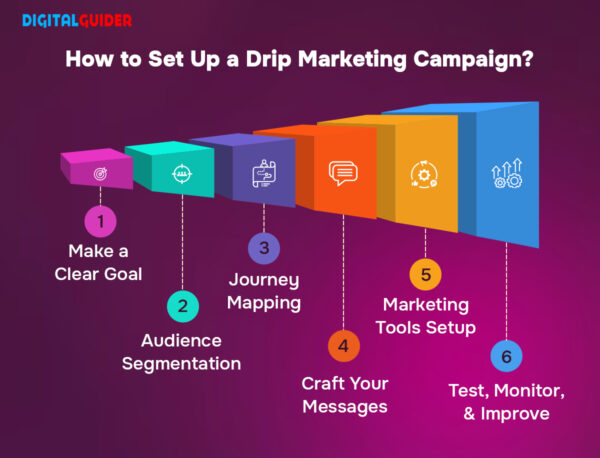
How to Set Up a Drip Marketing Campaign?
Step 5: Choose Your Drip Marketing Tool for automation:
Now, your business needs an effective marketing tool to automate your drip campaign. The right tool will help you set up triggers, design workflows, and track the performance of your drip marketing efforts. Here is your quick guide to the marketing tools you can use to set up your drip campaigns:
For Email Drip:
Tool | Best For | Key Features |
| Beginners, start-ups & small businesses | Easy automation building, attractive templates | |
| ActiveCampaign | E-commerce | Strong flows, advanced segmentation, smart triggers |
| HubSpot | B2B & sales-focused teams | Deep CRM integration, visual editor, sales alignment |
For Social Media Drip:
Tool | Platform | What It Does |
All major social media platforms | Schedule drip-like post sequences | |
Instagram, Facebook, LinkedIn | Drip posts & analytics in one dashboard | |
| Sprout Social | Large-Scale Businesses | Plan, publish, & automate drip content |
Step 6: Test, Monitor, & Improve
Once your campaign is live, the real task begins to analyse what’s working and what’s not for your business. So, keep a regular track on:
- Open Rates – How many messages are there? Are your subject lines engaging?
- Click-Through Rates – Are people interacting with your content?
- Conversions – Are users taking the final action?
Based on the analysis, use A/B testing to experiment with your content and subject lines to explore new strategies. Use A/B testing to:
- Subject lines
- Send times
- CTA buttons
- Email design/layout
What Makes a Drip Campaign Successful?
The key to a successful drip campaign is setting up a drip system of emails – small, steady, relevant emails at just the right time. Do not flood customers with annoying emails; they may just mark them as spam. Success will largely depend on how you automate emails (or messages) sent over time, and how they are triggered by someone’s actions. Successful drip campaigns aren’t luck – they are smart execution. Stats show drip emails get 80% higher open rates and 3x more clicks than one-off emails. Here’s what makes them blossom:
Timing and relevance:
Send the right message at the right moment. Example: Someone abandons their shopping cart → Drip starts: Email 1 (gentle reminder), Email 2 (show reviews), Email 3 (limited-time discount). Many brands recover 10-30% of lost sales this way!
Personalization:
Use the customers’ names, remember what they browsed, or reference their signup reason. When done right, personalized drips can boost transactions 6x higher.
Provide real value, not just a sales pitch:
Great drips educate first: Tips, stories, freebies. Sell softly at the end. Like a welcome series:
Email 1: “Thanks for joining!”
Email 2: “Quick win tip.”
Email 3: “Exclusive offer.”
Successful drips feel helpful, not pushy.
No one-size-fits-all:
Newbies get onboarding drips. Inactive folks get “We miss you!” re-engagement. Buyers get upsell tips. Segmented campaigns earn more revenue.
Keep it short:
Use bullets, images, emojis, and short paragraphs. Clear call-to-action buttons like “Grab Your Deal” stand out. Set it up once, automate, and watch relationships (and sales) grow steadily.
A/B testing:
A/B test subject lines, send times, and content, etc. Keep what is working, tweak what is not.
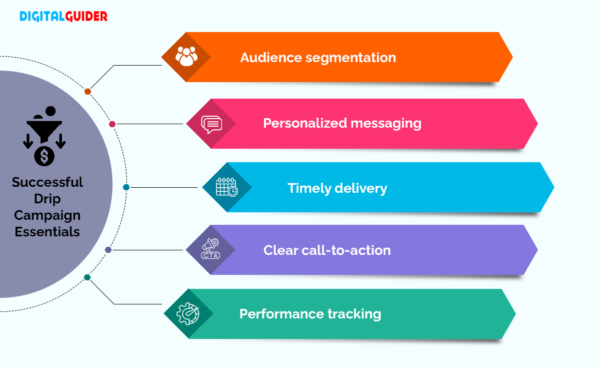
Successful Drip Campaign Essentials
Common Mistakes to Avoid in Drip Campaigns
- Sending too many messages: If you bombard people with emails, they get annoyed and unsubscribe. Keep a time interval from one another and keep it useful.
- Not segmenting: Sending the same email to everyone is a mistake. New customers, old customers, and leads all need different messages.
- Wrong trigger logic: If the drip starts at the wrong time, like a welcome email sent to an old customer, it looks unprofessional. Make sure each drip starts only when it should.
- No personalization: Just ‘Hello’, ‘Hi’ emails feel generic and don’t work well. Small personal touch, like using their name or based on what they viewed, helps a lot.
- Forgetting to test: If you don’t test the sequence, emails may have spelling mistakes, broken links, or wrong timing. Always test before launching.
- Not updating the sequence: Old emails stop working after a while. If you never update your drip, it becomes boring and ineffective. Review and refresh regularly.
What Does the Future of Drip Marketing Look Like?
Drip marketing is evolving as customer expectations, privacy standards, and automation tools continue to change. Modern drip campaigns are becoming more behavior-driven, personalized, and connected across multiple channels instead of relying only on fixed email sequences.
Here are some key trends shaping the future of drip marketing:
From Emails to Conversations:
Traditional drip marketing is based on a time model. The future campaigns will be based on behavior. For example, someone opened an email but didn’t click; the next message changes: clicked but didn’t convert.
AI-Driven Hyper-Personalization:
AI will completely transform drip campaigns; tools like ChatGPT, predictive AI systems, and behavioral automation platforms will help to analyze user behavior, preferences, and real-time data to generate email content like subject lines, body text, and images based on individual profiles. This could lead to multi-fold ROI boosts.
Predictive Analytics & Autonomous Campaigns:
Predictive AI will analyze patterns to forecast customer actions, automating drip triggers for optimal timing and content. AI tools are increasingly helping marketers automate segmentation, send-time optimization, and campaign testing with less manual effort.
Omnichannel Integration:
Powered by predictive AI optimization, omnichannel integration into drip marketing will automate the communication through WhatsApp, push notifications, retargeting ads, in-app messages, and chatbots to create seamless customer journeys across the channels. Two users may enter the same funnel, but experience entirely different journeys.
Interactive and Multimodal Content
More brands are now experimenting with interactive emails, embedded videos, quizzes, polls, dynamic product recommendations, and carousel-style content to improve engagement and increase clicks. Instead of sending static promotional emails, businesses are focusing on creating more personalized and engaging experiences inside drip campaigns.
Shorter Funnels, Faster Decisions:
Adaptive drip marketing future funnels will be shorter and more value-driven from the first touch. Instead of dragging users through long sequences, brands will aim to build trust faster and convert sooner.
AI Will Not Replace Marketers:
AI won’t take over drip marketing; it will enhance it. Marketers will set strategy, voice, and goals, while AI fine-tunes subject lines, adjusts copy length, and predicts the best send time for each user. Think of AI as a co-pilot—handling optimization while humans focus on storytelling.
Privacy-First:
With stricter data regulations and rising user awareness, the future of drip marketing will prioritize permission and transparency. With regulations like GDPR strengthening, drip marketing will prioritize zero-party data and privacy-proofing. Brands that respect privacy and deliver real value will win. Those that over-automate will be ignored or blocked.
Outlook for Drip Marketing
The future of drip marketing is promising, driven by AI integration and consumer-centric innovations. Businesses adopting these trends could see significant gains in engagement and revenue. As tools become more accessible, even small teams can compete at enterprise levels, making drip marketing a cornerstone of modern strategies.
Real-Life Drip Marketing Examples
- Amazon Drip Marketing Campaign: Amazon used a drip marketing campaign with the subject line “Can I have work–life balance working at Amazon?” to directly address job seekers’ concerns. The email includes honest employee testimonials and outlines flexible policies, creating a transparent, human tone that builds trust and encourages engagement from curious job seekers.
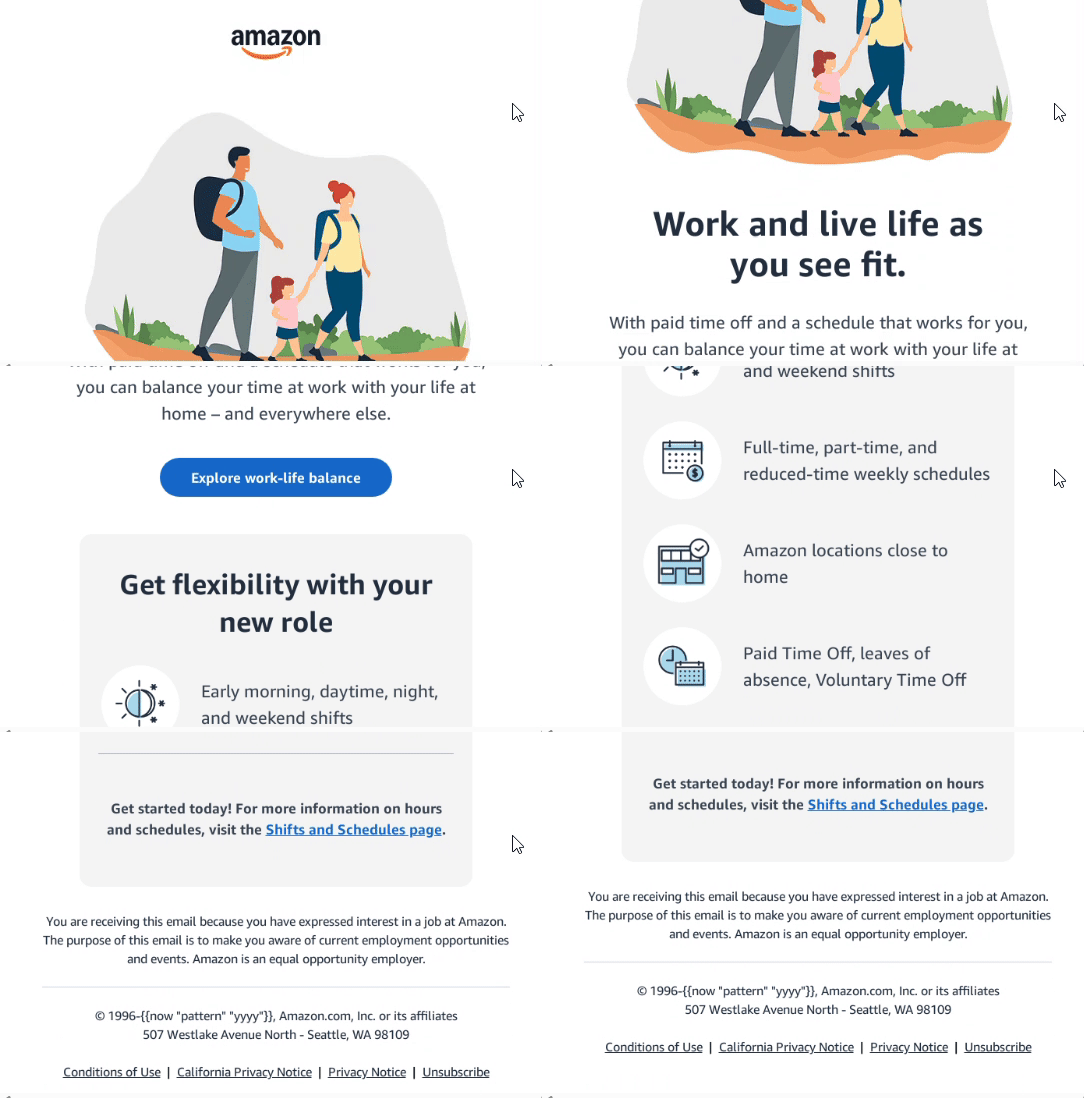
Source - Really Good Emails- Dyson Drip Marketing Campaign: With the subject line “Items in your basket at Dyson,” for the drip marketing campaign, Dyson reminds users of unfinished purchases. The email includes product visuals, additional benefits, or free shipping prompts—gently influencing users to return and complete their purchase without being pushy.
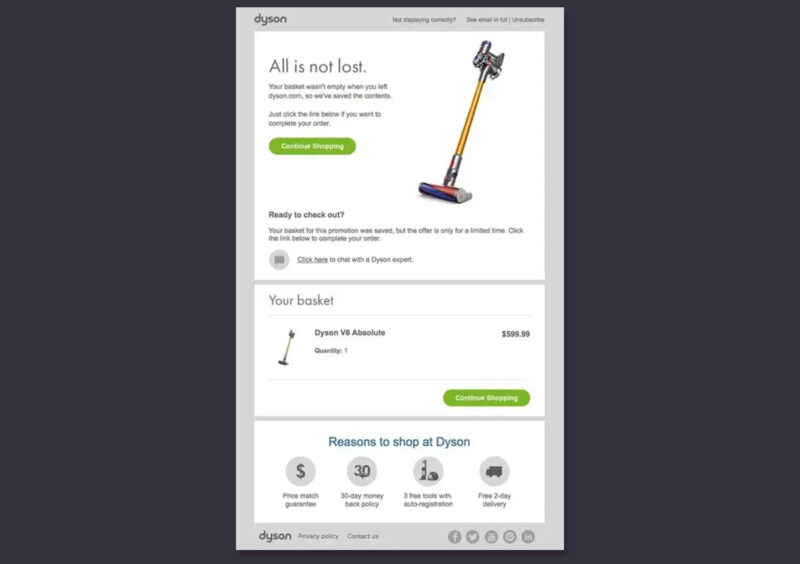
Source - Hubspot- Baron Fig Drip Marketing Campaign: To win back inactive customers, Baron Fig sends a limited-time discount email with product images and new arrivals. It creates urgency and curiosity, encouraging users to return to the shopping cart and shop—an effective drip step to spark interest using a re-engagement drip campaign.
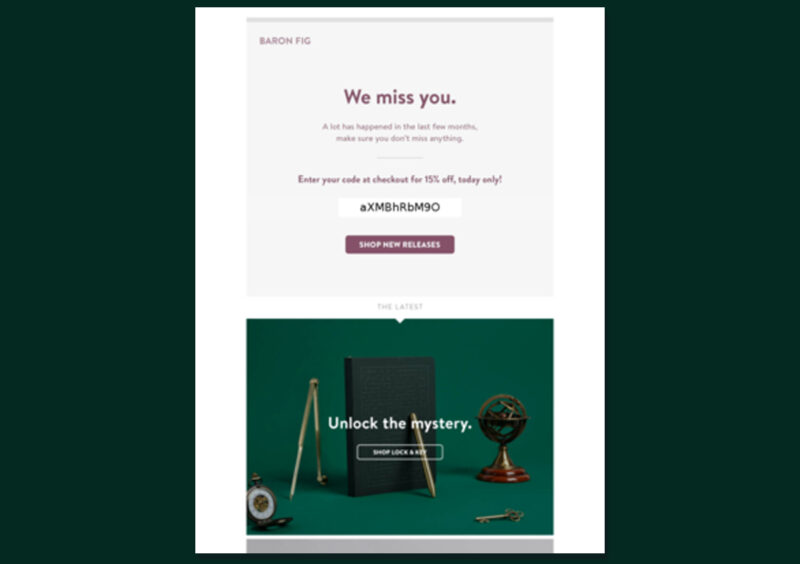
Source - Mail charts Finally
Drip marketing is all about the perfect automation strategy. You define your goals, map your funnel, and plan your messages. The best drip campaigns don’t just reach people—they move them. With the right automation in place, your brand can show up at the perfect moment every time.
FAQs
Q1. Why is Genshin called drip marketing?
A1. In the Genshin community, “drip marketing” is a fun nickname for how the game slowly reveals upcoming characters in small drips instead of revealing everything at once. This keeps players excited and talking about new characters for weeks in the same way that companies use “drip marketing” to build hype.
Q2. How much is a 1000 email list worth?
A2. The value of an email list depends more on audience quality and engagement than list size alone. A smaller, highly engaged list often outperforms a large inactive one.
Q3. How many emails should a typical drip campaign include?
A3. Anywhere between 3 to 7 messages are relevant, depending on your goal and audience engagement.
Q4. What is the 60 40 rule in email?
A4. Use 60% of your email content to share tips, how-to guides, case studies, industry news, or other useful information that is not promotional. Use the remaining 40% to promote offers, discounts, services, sales pitches, or call-to-action to buy.
Q5. Does a drip campaign need to follow privacy laws?
A5. Yes. Get consent, allow easy unsubscribe, and follow rules like CAN-SPAM.
Q6. Are drip campaigns different from newsletters?
A6. Yes. Drips are automated and behaviour-based, while newsletters are sent manually.
Q7. Can I stop or pause a drip campaign at any time?
A7. Yes. You can adjust, pause, or skip steps based on user actions.
Q8. What is drip in Gen Z slang?
A8. In Gen Z slang, “drip” refers to something or someone very cool, stylish, fashionable, presenting trendy outfits, flashy accessories, high-quality clothes, shoes, or jewellery, overall showing great swag. It is a direct compliment to someone’s or something’s overall appearance, e.g., ‘He’s got drip.’
Share This Article
About the Author: test

Related Articles
 June 8th, 2026 | 13 minutes read
Top 10 Best SEO Companies in Chicago for 2026 1. DigitalGuider 2. Straight North Chicago, IL 3. Thrive Internet Agency
- June 1st, 2026 | 11 minutes read
TL, DR; People are now using AI tools like ChatGPT, Gemini, and Google AI to get direct answers online. ChatGPT
 May 25th, 2026 | 8 minutes read
List of Top 10 Digital Marketing Agencies in USA 1. DigitalGuider 2. WebFX 3. Disruptive Advertising 4. Ignite Visibility 5.
- May 21st, 2026 | 11 minutes read
Top 11 Best SEO Companies in Austin, Texas DigitalGuider Coalition Technologies WebFX Funnel Boost Media Thrive Agency Bird Marketing Motoza