What Is Content Delivery Network (CDN)?
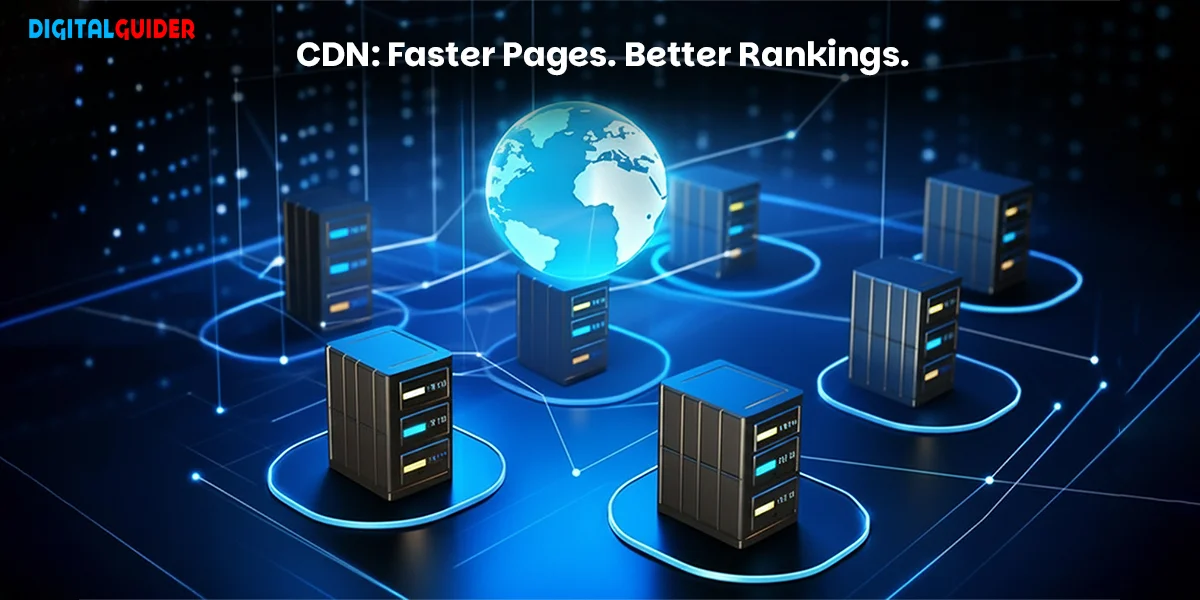
A Content Delivery Network (CDN) is a distributed system of globally located servers placed in different parts of the world that deliver your website’s static content like images, CSS, JavaScript, and videos from the server closest to the user. These distributed servers are called ‘edge’ server. Instead of every visitor loading your website from the main hosting server, a CDN copies your content to multiple edge servers worldwide. This reduces the data travel time, page loading time, server overload, and bandwidth usage. This makes your website load much faster on the user’s system, and improves overall SEO performance.
Think of it is like ATM, imagine if you can withdraw cash only from the main bank branch, there will be long lines which will delay the entire process. However, with ATMs everywhere, you get cash instantly.
How CDN Works?
A CDN works by storing copies of your website on many edge servers around the world. When someone visits your site, the CDN automatically sends your content from the server that is closest to them. It enables the visitor to faster load your website as data has to travel shorter distance and it also reduces pressure on your main server preventing the crash risk.
What Content Does a CDN Deliver?
A CDN mainly delivers static content meaning the parts of your website that don’t change every time someone visits but these are heavy in size and slows your website. These are copied and stored on CDN servers worldwide so they can load instantly. A CDN typically delivers:
🔵 Images (jpg, png, webp, logos, banners)
🔵 Videos (mp4, promo videos, product demos)
🔵 CSS files (styles that control how your site looks)
🔵 JavaScript files (scripts that make your site function)
🔵 HTML pages
🔵 Fonts
🔵 PDFs/Downloads
What a CDN usually doesn’t deliver
🔵 Dynamic content that changes for each user (like personalized dashboards)
🔵 Real-time data (live stock prices, live chat messages)
Why Websites Need Content Delivery Network Services
Websites need CDN services to make sure their web pages load quickly and smoothly to provide better UX for people across the world. Without a CDN, all visitors connect to one central server, which can easily become slow or overloaded for different users around the world.
A CDN keeps copies of your website’s static content files (images, videos, scripts, etc.) on many servers around the globe. When someone visits your site, they get the content from the server closest to them. This leads to:
🔵 Greater stability and reliability of website content
🔵 Faster loading no matter the user’s location
🔵 Less strain on your original server
🔵 Minimal downtime or interruptions during heavy traffic
🔵 Easy loading of large files like images, PDFs, or videos
🔵 Reduced crashes
🔵 Enhancement in Google’s Core Web Vitals
🔵 Improved SEO performance
Key SEO Benefits of Using a CDN
Using a CDN is a best practice for modern SEO. Its primary SEO value comes from dramatically improving site speed and user experience. Here’s a complete breakdown of the key SEO benefits of using a CDN:
- Improved Page Load Speed-
Page speed is a direct ranking factor for Google, especially for mobile searches. Faster load times lead to lower bounce rates, higher engagement, and better Core Web Vitals. Google prioritizes websites with a good user experience. - Reduced Latency-
A CDN caches your website’s static files (images, CSS, JavaScript, HTML) on a global network of servers. When a user visits your site, they download these files from the geographically closest “edge” server. This enables data to take less time to travel from its source (e.g., a web server) to the user’s device, drastically reducing ‘wait-time’. - Enhanced Core Web Vitals-
Core Web Vitals are crucial for SEO. A CDN helps to improve-
🔵Largest Contentful Paint (LCP): By delivering large images and text files from a nearby server, a CDN significantly reduces the time to load the main content.
🔵 Interaction to Next Paint (INP): Faster loading of JavaScript/CSS helps make pages more responsive, improving website interaction.
🔵 Cumulative Layout Shift (CLS): Stable, fast delivery of elements like fonts, PDFs prevents unexpected layout shifts as the page loads. - Increased Uptime & Reliability (DDoS Protection)-
A DDoS attack (Distributed Denial of Service) is like website suddenly experiencing thousands of fake traffic, gets overwhelmed, crashes and real visitors can’t access it. Downtime is bad for SEO as Googlebot can’t crawl your website and you risk losing rankings and organic traffic. CDN distribute traffic across many servers. If one server has an issue or traffic surges, CDN can absorb the load and reroute requests. Your website stays online and works smoothly almost all the time. - Improved Local Performance-
A visitor in Singapore can easily access files from a Singapore edge server without slowing him down. A fast website for international users can improve your rankings in local search results across different countries, supporting international SEO efforts. - Improved Crawl Efficiency-
Since your original server is less strained, it increases the crawl budget and responds faster to Googlebot’s crawl requests, Google can index more of your website pages. - Security Benefits-
A CDN keeps your site safe and compliant with search engine guidelines. CDN provides SSL certificates, protection against malicious bots, hacking and malware injection by blocking attacks at the edge server. - Boost Mobile SEO-
Google prefers mobile-first indexing. A CDN ensures a fast, stable experience for mobile users by serving content from the nearest server and reducing load time. This helps with mobile SEO.
Why Modern Websites Need a Content Delivery Network (CDN)
Here’s why CDNs are essential for today’s websites-
- The Speed-Distance Matrix-
As per Google/SOASTA Research websites which take >3 seconds to load have 53% abandon rate. People won’t wait more than 2–3 seconds. A CDN helps your site meet modern speed expectations by placing your content physically closer to users worldwide via edge servers. - Traffic Can Spike Anytime-
A Reddit/TikTok viral post, a marketing ad campaign, or an e-commerce sale can overload a single server. A CDN spreads the load so your website never crashes during peak traffic. - Security Threats are Increasing-
Bots, DDoS attacks, and malicious traffic are constant threat on daily basis, it can consume your bandwidth. CDNs provide WAF (Web Application Firewall) protection at the edge, filtering bad traffic before it reaches your server. - Cost Efficiency-
Imagine a revenue loss during downtime on Black Friday, as per research- cart abandonment increases with each 100ms delay. A slight delay can reduce sales, form submissions, and engagement. A CDN ensures consistent browsing experience and handle traffic spikes during sales, which directly boosts conversions. - Reliable performance across all devices-
Different devices, screen sizes, and networks behave differently. A CDN ensures the site loads consistently whether the user is on 5G, 4G, or using Wi-Fi.
Which Websites Benefit the Most from a CDN?
Following type of websites benefit the most form CDN:
- E-commerce Stores-
E-commerce stores benefit the most and best from a CDN. By caching images, scripts, and product pages on servers worldwide, a CDN cuts wait-time, ensuring a smooth shopping experience everywhere. Fast and smooth global page load times boost conversion rates and reduce cart abandonments. CDN also handles traffic surges during sales or promotions without crashes, improves SEO rankings, provides secure transactions and prevent any malicious attacks. - News & Media Websites-
News & Media Websites are rich media based websites using high quality images and videos. These websites generally have sudden, unpredictable traffic spikes from breaking news or viral events, which can overwhelm origin servers. CDN delivers rich media with low latency and distribute load across global edge servers, ensuring sites stay fast and available. This reduces bounce rates, boost ad impressions & page views, and maintains reader engagement. - SaaS Platforms-
SaaS customers can be anywhere. For SaaS platforms a fast, reliable, and secure application is must to deliver on that promised service to the client across globe. Slow load times or interrupted interactions directly impact user experience. A CDN ensures consistent delivery of the static assets like JavaScript, CSS, images etc. to users worldwide, making the app feel fast and native. - Websites with Global Traffic-
Websites with global traffic benefit from a CDN because their visitors come from many different countries. If your site is hosted in one location and users are in the different countries, they will experience slower loading due to long data travel from origin server. A CDN fixes this by storing copies of your site on edge servers around the world and delivering content from the server closest to each visitor. This reduces wait-time, speeds up loading, and ensures consistent performance for all international users. - Content-heavy Websites-
These websites have lots of large, static assets (images, videos, scripts, CSS) that are expensive and slow to deliver directly from a single origin server. A CDN distributes and caches these assets on many edge servers worldwide, so users download them from a nearby location instead of from your main host. WordPress sites with lots of images or blogs, news sites like BBC or The New York Times, e-commerce website like Amazon, media streaming website like YouTube etc. exemplify content-heavy websites that gain massive CDN benefits, as they serve numerous large photos, videos, themes, and plugins from a single server. - SEO Websites-
SEO websites benefit the most from a CDN especially if they are ranking in Top 10-20. Speed or loading directly impacts user experience & rankings. When a site is already ranking well, every second matters. Slow pages can increase bounce rates and signal poor UX to Google. A CDN keeps pages fast, stable, and consistently available even during high traffic, protecting your rankings from sudden drops. It also improves Core Web Vitals, reduces server load, and ensures that users across different regions get the same fast experience, helping the site maintain or improve its top positions. - Websites Running Paid Ads-
Every millisecond of load time directly impacts ad spend ROI. A slow site wastes ad dollars by driving traffic to a poor experience, poor conversions and increasing bounce rates. A CDN accelerates page delivery globally, ensuring users clicking ads see the page instantly. This improves Google quality scores, boosts landing page performance, and maximizes the conversion.
When You DON’T Need a CDN
- If your website is small, local, and light.
- If most of your visitors come from the same city or country, a CDN won’t make a big difference because your hosting server is already close to them.
- If your site has very low traffic, only a few pages, and most of the content loads quickly.
- If your site doesn’t use heavy images, videos, scripts, or global audiences.
CDN vs Web Hosting — What’s the Difference?
Web Hosting stores your website’s files (HTML, images, databases, etc.) on a single server (or cluster) in one location. When a user visits your site, their browser requests data directly from that origin server. It’s the foundation—without hosting, your site doesn’t exist online.
CDN (Content Delivery Network) is a distributed network of edge servers worldwide that caches static content (images, CSS, videos) from your origin server. It delivers this cached content from the server closest to the user, speeding up load times. CDNs complement hosting; they don’t replace it.
Quick Comparison Table
| Aspect | Web Hosting | CDN |
|---|---|---|
| Primary Role | Stores and serves all website files | Caches and distributes static content |
| Location | Single or limited data centers | Global network of edge servers |
| Speed | Slower for distant users (higher latency) | Faster loads via proximity |
| Scalability | Handles traffic via server upgrades | Automatically scales for spikes |
| Security | Basic (firewalls, SSL) | Advanced (DDoS protection, WAF) |
| Best For | Dynamic content, small/local sites | High-traffic, media-rich, global sites |
| Replaces the Other? | No—required for any site | No—works on top of hosting |
How CDNs Improve Search Engine Optimization (SEO)
Content Delivery Networks (CDNs) directly boost SEO by improving the key factors Google and other search engines use to rank websites. Here’s why it matters for your rankings.
- Faster Page Load Speed-
Speed is a crucial ranking factor of Google’s Core Web Vitals. Sites using CDN see average speed improvements of 30–70%. Google says: “websites that load in 1–3 seconds rank higher than those taking 5+ seconds.” Since CDNs serve content from servers closest to the user, it drastically cuts load time. Faster sites rank higher and keep visitors engaged. - Lower Bounce Rate & Better User Experience-
Fast-loading pages keep visitors engaged, lowering the bounce rates and making the sessions longer. These work as quality signals to Google and help improve rankings. - Improved Mobile Performance-
Over 60% of searches are mobile. CDNs optimize images, compress files, and reduce latency for mobile users and provide better mobile indexing score. - Consistent Website Availability-Google penalizes websites which are frequently down. CDN ensures consistent uptime for better ranking, prevent downtime during traffic spikes and block DDoS attacks.
- Global Reach & Local SEO-
Edge servers in multiple countries make your site feel “local” even for international users. Faster load times in every region improve rankings for international and local searches. - More & Quick Crawling-
Googlebot crawls faster on lightweight websites. CDNs handle static files delivery, so your origin server responds quicker to crawl requests and more pages are indexed. - DDoS Protection-
Distributed Denial-of-Service attacks flood servers to cause downtime. CDNs mitigate this by absorbing massive traffic volumes at the edge servers blocking malicious requests before they reach your origin. - Web Application Firewall (WAF)-
WAF filters HTTP traffic, blocking common exploits like SQL injection, XSS, and OWASP like threats. WAF is integrated in CDNs (e.g., Cloudflare, AWS), it inspects requests at the edge server against new vulnerabilities without slowing performance. - SSL/TLS Management-
CDN handles SSL termination/offloading, provides free/universal SSL certificates, automatic renewals, and modern protocols (TLS 1.3). This results in reduced server load, and protection against any uneventful attack.
Quick SEO Impact Summary Table
| SEO Factor | How CDN Helps | Ranking Benefit |
|---|---|---|
| Page Speed | Serves files from nearest edge server | Direct ranking boost |
| Core Web Vitals (LCP, CLS, FID) | Reduces latency & optimizes delivery | Higher scores in Google Search Console |
| Bounce Rate | Instant loads keep users on site | Indirect ranking improvement |
| Mobile Experience | Faster mobile delivery | Better mobile search rankings |
| Uptime | DDoS protection & failover | Avoids ranking drops |
| Crawl Budget | Faster server responses | More pages indexed |
FAQ
Q1. What are the main components of a CDN?
A1. The main components of a CDN include edge servers, an origin server, Points of Presence (PoPs), caching mechanisms, and smart traffic routing.
Q2. Is a CDN just a cache?
A2. No. A CDN does more than caching by managing traffic distribution, improving security, and optimizing content delivery performance.
Q3. What is an open-source CDN & how does it work?
A3. An open-source CDN uses publicly available software to distribute content across servers, allowing greater control and customization.
Q4. Is a CDN only useful for large websites?
A4. No. A CDN benefits small and mid-sized websites by improving load speed, reliability, and server performance.
Q5. Is a CDN useful for mobile users?
A5. Yes. A CDN reduces latency and improves content delivery for mobile users on slow or unstable networks.
Q6. How does a CDN improve website security beyond speed?
A6. A CDN protects websites with DDoS mitigation, web application firewalls, bot filtering, and encrypted data delivery.
Q7. Can a CDN reduce hosting and bandwidth costs?
A7. Yes. By offloading traffic from the origin server, a CDN lowers bandwidth usage and hosting expenses.
Q8. Can a CDN work with CMS platforms like WordPress?
A8. Yes. Most CDNs integrate easily with WordPress and other CMS platforms through plugins or DNS configuration.
Q9. How do I know if my website actually needs a CDN?
A8. If your website has global visitors, heavy media content, traffic spikes, or slow load times, a CDN is recommended.