Synopsis If you’re working on SEO, it’s important to understand the difference between backlinks and referring domains. Backlinks are all the links pointing to your website, while referring domains are the unique websites linking to you. Usually, links from multiple trusted websites help rankings more than hundreds of links from the same source. That’s why strong and relevant referring domains play a bigger role in improving authority and organic visibility.
Backlinks vs referring domains, do you know the difference? If not, this guide is for you.
With over 1.9 billion websites online today, the real challenge is not just ranking on Google, but reaching the first page, where visibility and traffic actually happen.
In digital marketing, where competition is constantly growing, understanding the difference between backlinks and referring domains is essential for improving your search rankings.
For those unfamiliar with these terms:
- Backlinks are links from other websites pointing to a specific page on your site
- Referring domains are the number of unique websites linking to your site
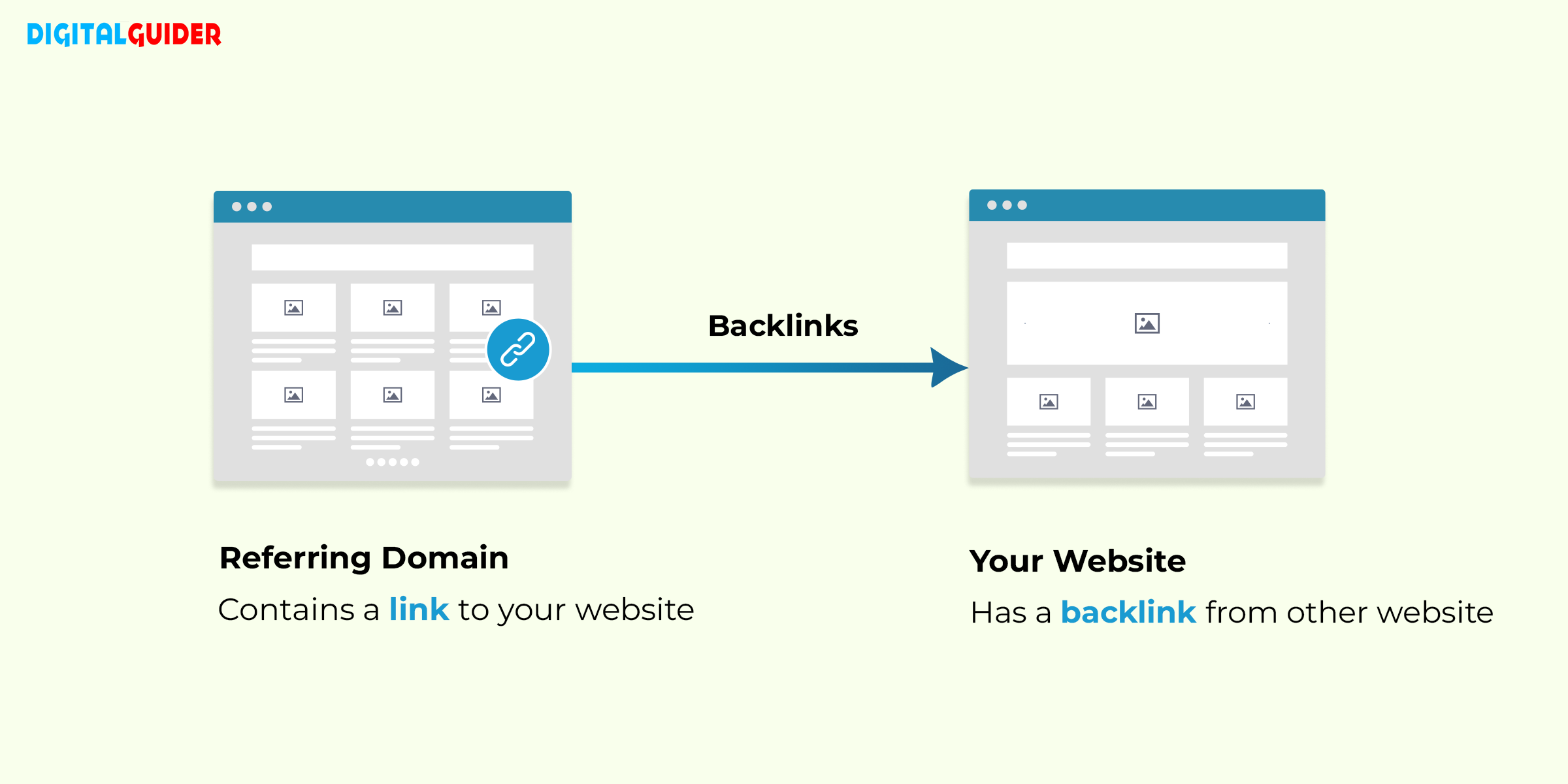
When it comes to SEO, both play a crucial role in building authority and improving rankings.
But what’s the difference between them? And which one should you focus on?
In this blog, we’ll break down backlinks vs referring domains, explain how they work, and help you understand which factor matters more for better search rankings.
What Are Backlinks in SEO?
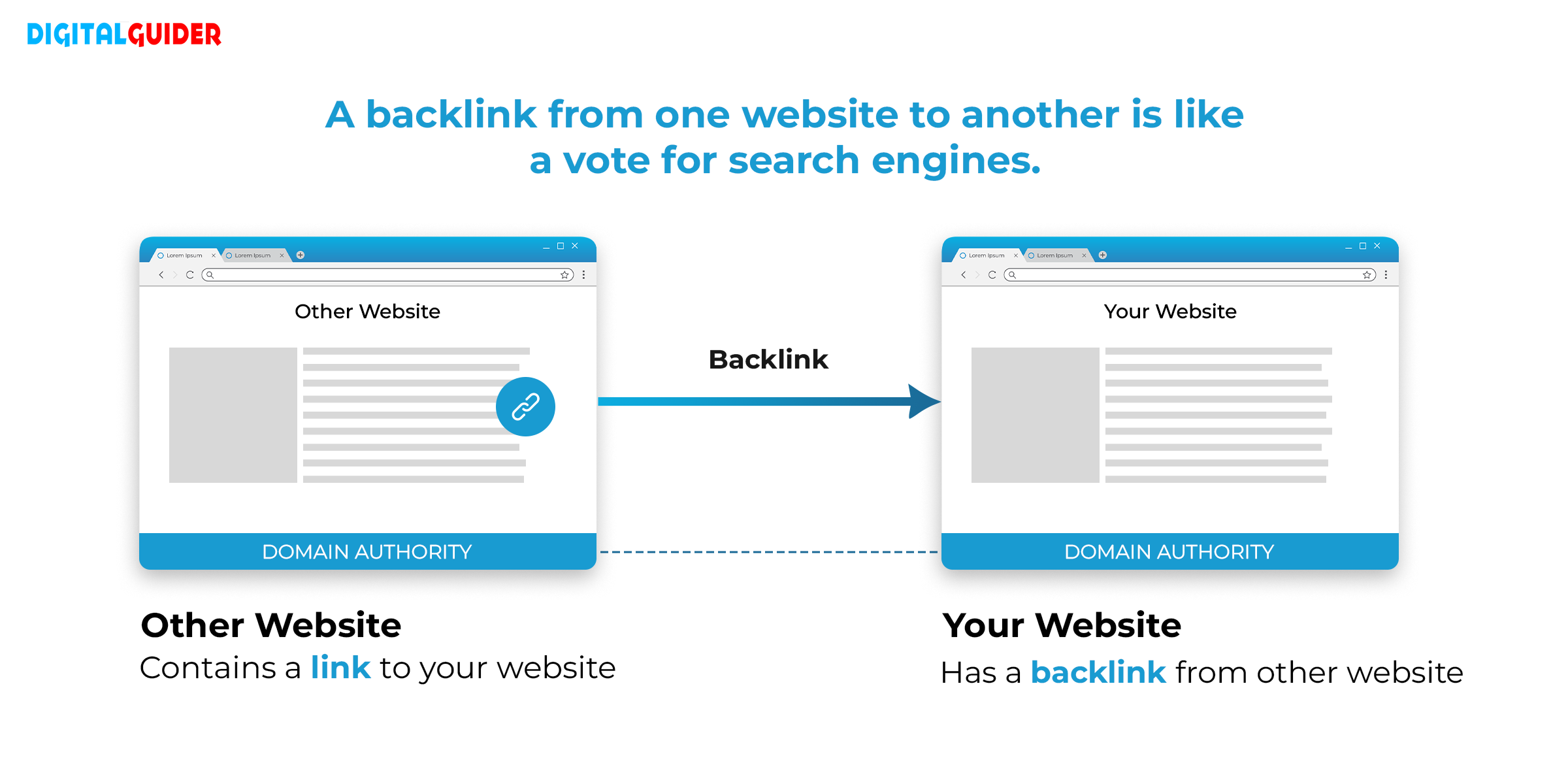
Backlinks are links from other websites that point to your website. They are also known as incoming or inbound links. Backlinks act as a vote of confidence from other websites. When a site links to your content, it signals that your content is valuable and trustworthy.
Backlinks are important for SEO because they help search engines understand the relevance and credibility of your website. However, quality matters more than quantity links from trusted websites carry significantly more value.
Types of Backlinks
Do-Follow Backlinks
These backlinks pass SEO value (link equity) to your website and directly help improve rankings.
No-Follow Backlinks
These backlinks do not pass direct SEO value but are still useful for building a natural backlink profile and driving traffic.
What Are Referring Domains?
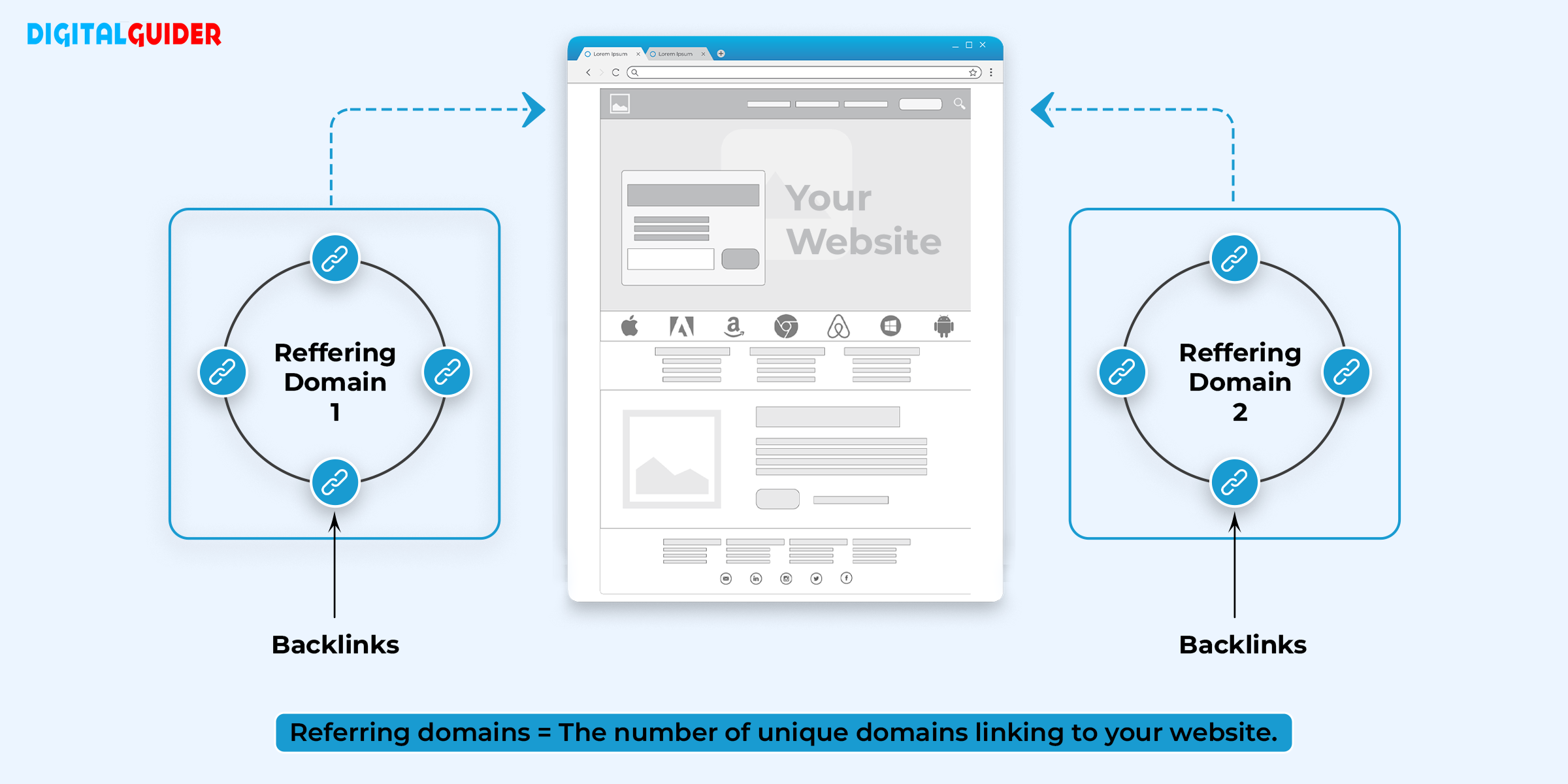
Now let’s consider referring domains. Referring domains are the number of unique domains linking to your website. Referring domains and backlinks are often confused. You can understand backlinks as physical links from another page to your site. Referring domain mentions that the domain linking to your site refers to your domain as another great place for content.
Why Referring Domains Matter More in SEO
Referring domains matter more in SEO because they represent links from unique websites, which signal stronger trust and authority to search engines. While multiple backlinks from the same site can help, their value decreases over time. In contrast, links from different domains act as independent votes of confidence, making your website more credible. This link diversity is a key ranking factor, helping improve rankings, traffic, and overall authority.
Key reasons why referring domains are important:
- Show trust from multiple unique websites
- Strengthen domain authority
- Improve keyword rankings
- Increase organic traffic
- Ensure a natural link profile
A backlink is helpful if it:
- Comes from an authoritative source
- Leads people to your website
- Points to a crucial service or page
In simple terms, a backlink would mean that a different website from yours has deemed your content of such high-quality. It means they would like their readers to refer back to your content. And read the desired article or whatever you have posted.
Backlinks vs Referring Domains: Key Differences Explained
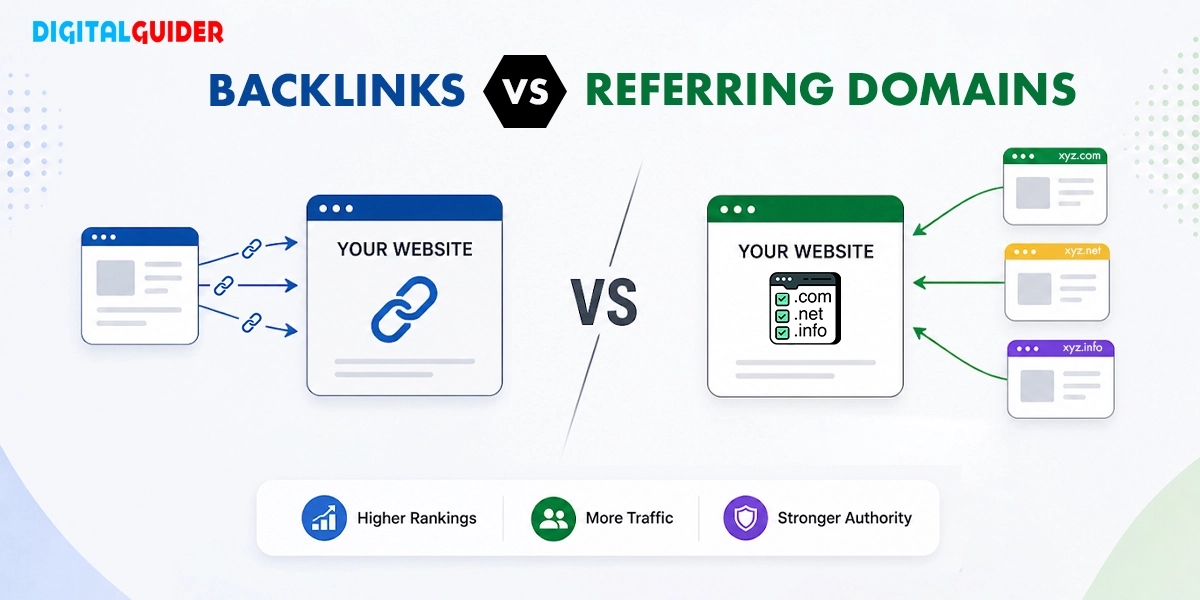
Backlinks are the total number of links pointing to your website, while referring domains are the number of unique websites that provide those links. In SEO, both metrics matter, but referring domains usually carry stronger ranking value because they show link diversity and trust across multiple websites.
For example, if one blog links to your website 10 times, you gain 10 backlinks but only 1 referring domain. If 10 different websites each link to you once, you still have 10 backlinks, but now you also have 10 referring domains which is typically more valuable for search visibility and authority.
Backlinks can help improve rankings, while referring domains enhance your website’s credibility, visibility, and long-term SEO performance. Understanding how both work together allows you to create a more balanced and effective link-building strategy.
Backlinks vs Referring Domains
| Factor | Backlinks | Referring Domains |
| Definition | Total number of links | Unique websites linking |
| SEO Impact | Moderate | High |
| Value Growth | Decreases from the same source | Increases with new domains |
| Role | Strengthens link profile | Builds authority and trust |
Which is More Important for SEO in 2026?
Both backlinks and referring domains are important for SEO, but their impact is not equal. In 2026, search engines prioritize quality, relevance, and diversity of links over sheer volume.
While backlinks help strengthen your overall link profile, referring domains provide stronger signals of trust and authority. A website with links from multiple unique domains is generally seen as more credible than one relying on repeated links from the same source.
👉 This means focusing only on increasing backlink count is no longer effective. A balanced and strategic approach is required to achieve sustainable rankings.
Do Referring Domains Matter More Than Backlinks?
Yes, referring domains generally matter more than backlinks.
Each referring domain acts as an independent vote of confidence for your website. When multiple unique websites link to your content, it signals to search engines that your content is valuable and widely trusted.
On the other hand, multiple backlinks from the same domain tend to have diminishing SEO value over time.
👉 This is why websites with a higher number of quality referring domains often rank better than those with a large number of backlinks from limited sources.
When Backlinks Are More Valuable
Backlinks can be more valuable in certain situations, especially when:
- They come from high-authority and trusted websites
- They are placed contextually within relevant content
- They use natural and optimized anchor text
- They drive real traffic to your website
In these cases, even a single high-quality backlink can have a strong impact on rankings and visibility.
Ideal Balance Between Both
The best SEO strategy is not choosing one over the other, but maintaining a balance between backlinks and referring domains.
👉 A practical approach is:
- Focus on acquiring new referring domains regularly
- Strengthen your profile with high-quality backlinks
- Avoid spammy or low-quality links
A balanced link profile helps build long-term authority, improves rankings, and ensures steady organic growth.
Backlinks vs Referring Domains: What Data Says
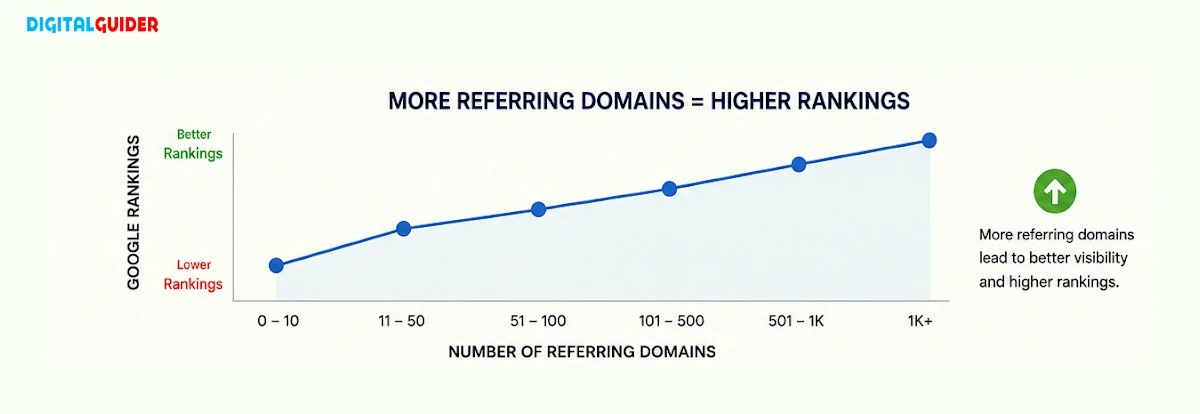
Modern SEO data shows that referring domains have a stronger relationship with search rankings than the total number of backlinks. While backlinks are still important, search engines place more value on links coming from multiple unique websites rather than repeated links from the same source.
This is because link diversity signals broader trust and authority, which plays a key role in how search engines evaluate and rank websites.
Correlation Between Referring Domains & Rankings
SEO studies show a strong correlation between the number of referring domains and higher search rankings. Websites on the first page of Google typically have links from more unique domains, which signals broader trust and authority. Search engines value links from different websites because they act as independent endorsements, making your content appear more credible and relevant. As a result, gaining links from multiple high-quality domains can significantly improve your chances of ranking for competitive keywords.
Key signals Google looks for:
- Trust from multiple unique websites
- Higher content relevance across sources
- Stronger authority in your niche
- Natural and diverse link profile
How Backlinks and Referring Domains Impact SEO Rankings
A common question in SEO is: which matters morebacklinks or referring domains?
The answer depends on quality, relevance, and diversity. Backlinks are links from one website to another, while referring domains represent the number of unique websites linking to your site.
A high-quality backlink from an authoritative website carries strong value, but links from multiple referring domains significantly boost your website’s trust and authority.
In modern SEO, the best results come from a combination of high-quality backlinks and diverse referring domains. Focusing only on backlink quantity is not enough, especially if the links come from limited or low-quality sources.
With the right balance, you can improve your rankings, authority, and overall organic visibility.
Increased Organic Traffic
People can find your site in more locations than search results. Backlinks allow other audiences to discover your website, increasing traffic, social media engagements, and possible conversions.
Higher Keyword Rankings
Overall, backlinks from quality domains can help your site rank higher in search engine results pages (SERPs). As Google notices your connections with other sites, it will rank you above sites with fewer or low-quality backlinks.
Faster Indexing & Crawlin
Backlinks help search engines discover and crawl your website more efficiently. When your site is linked from multiple domains, search engine bots can find and index your pages faster, improving visibility in search results.
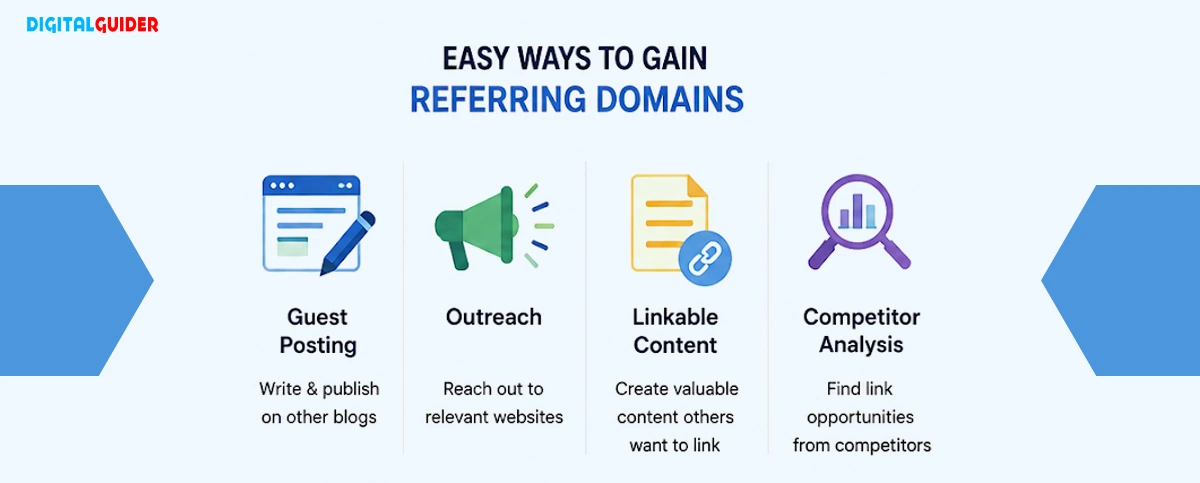
How to Increase Referring Domains
Increasing referring domains is essential for building authority and improving search rankings. Instead of focusing only on the number of backlinks, you should aim to get links from new, relevant, and high-quality websites.
A strong strategy for gaining referring domains involves consistent outreach, valuable content creation, and analyzing what works in your niche.
Guest Posting
Guest posting is one of the most effective ways to gain referring domains. It involves writing content for other websites in your industry and including a link back to your site.
By contributing valuable content to authoritative blogs, you can earn high-quality backlinks and build relationships with other websites.
Digital PR & Outreach
Digital PR focuses on getting your brand featured on news sites, blogs, and industry platforms. This can include press releases, expert quotes, or collaborations.
Outreach involves contacting website owners, bloggers, and influencers to promote your content and earn backlinks from new domains.
Linkable Content Creation
Creating high-quality, valuable content naturally attracts backlinks from other websites. This includes:
- In-depth guides
- Research-based articles
- Infographics and statistics
- Tools and resources
The more useful and unique your content is, the more likely other websites will link to it.
Competitor Backlink Analysis
Analyzing your competitors’ backlinks helps you discover new opportunities for referring domains.
By using SEO tools, you can identify:
- Which websites are linking to your competitors
- What type of content is earning links
- Where you can also get backlinks
👉 This allows you to target proven sources and expand your referring domain profile more effectively.
Advanced Link Building Factors You Must Know
Building backlinks is not just about quantity or even diversityseveral advanced factors influence how much value those links pass to your website. Understanding these factors can help you create a more natural and effective link-building strategy.
Link Velocity
Link velocity refers to the speed at which your website gains backlinks over time.
A steady and consistent increase in backlinks appears natural to search engines, while sudden spikes may look suspicious and can raise red flags.
👉 The goal is to build links gradually and consistently rather than acquiring a large number in a short period.
Anchor Text
Anchor text is the clickable text used in a hyperlink.
A healthy backlink profile includes a natural mix of:
- Branded anchors (your business name)
- Generic anchors (e.g., “click here”)
- Keyword-rich anchors
Over-optimizing anchor text with too many exact-match keywords can appear spammy and may negatively impact your rankings.
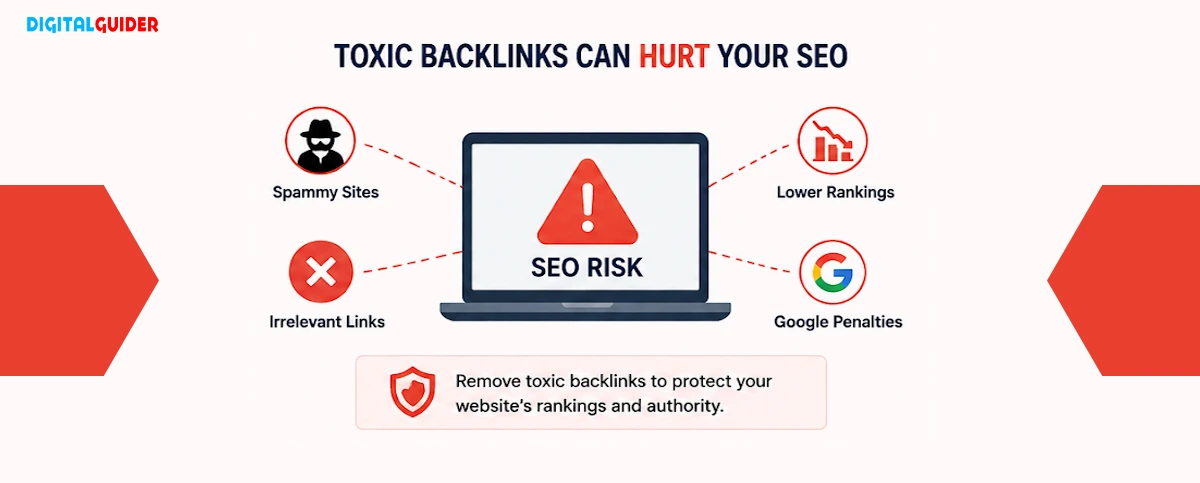
Toxic Backlinks
Toxic backlinks are low-quality or spammy links that can harm your website’s SEO performance.
These may come from:
- Spam websites
- Irrelevant or low-authority domains
- Link farms or paid link schemes
It’s important to regularly audit your backlink profile and remove or disavow harmful links to maintain a healthy SEO profile.
Ideal Backlink Strategy for 2026
In 2026, SEO is no longer about building as many links as possible. Search engines now focus on quality, relevance, and diversity.
Quality vs Quantity
A few links from authoritative websites are more valuable than hundreds of low-quality links.
Backlink to Referring Domain Ratio
A healthy profile includes links from multiple domains, not just repeated links from the same site.
Common Mistakes to Avoid
Avoiding common link-building mistakes is just as important as building links.
Some key mistakes include:
- Focusing only on backlink quantity
- Getting links from low-quality or irrelevant websites
- Over-optimizing anchor text with exact-match keywords
- Ignoring link diversity and relying on a few domains
- Building links too quickly (unnatural growth)
👉 A natural, consistent, and quality-focused approach is the best way to achieve long-term SEO success.
Conclusion
Backlinks and referring domains both play a crucial role in SEO, but their impact is different. While backlinks help strengthen your overall link profile, referring domains are the primary drivers of authority and trust because they represent links from unique websites. To achieve better rankings in 2026, focus on acquiring links from new and relevant domains, prioritize quality over quantity, and maintain a natural and diverse backlink profile. By following a balanced and strategic approach, you can improve your website’s authority, increase organic traffic, and achieve long-term SEO success.
FAQs – Backlinks vs Referring Domains
Q1. What is the difference between backlinks and referring domains?
Backlinks are the total number of links pointing to your website, while referring domains are the number of unique websites linking to you. Referring domains carry more SEO value because they indicate link diversity and broader authority.
Q2. How many referring domains do I need to rank on Google?
There is no fixed number, but websites with more high-quality and relevant referring domains tend to rank higher. Focus on earning links from authoritative and niche-relevant websites.
Q3. Are backlinks still important for SEO in 2026?
Yes, backlinks remain important, but their value depends on quality and diversity. A few high-quality backlinks from unique domains are more effective than many low-quality links.
Q4. Can too many backlinks hurt SEO?
Yes, low-quality or spammy backlinks can negatively impact your rankings. It’s important to maintain a clean, natural, and diverse backlink profile.
Q5. What is link diversity in SEO?
Link diversity refers to getting backlinks from different websites and sources. It is a key ranking factor that helps improve trust, authority, and overall SEO performance.
Share This Article
About the Author: Liam O'Shea

Related Articles
 October 26th, 2026 | 9 minutes read
Most customers don’t buy the first time they visit a website. They may need a reminder, helpful information, or a
- October 22nd, 2026 | 9 minutes read
Finding a dentist used to start with a recommendation. Today, it often starts with a search. When patients face any
- October 19th, 2026 | 8 minutes read
The next patient for your dental office is probably already searching for you. The question is: Will they find you
- October 12th, 2026 | 6 minutes read
Imagine someone needs a lawyer today. What do they do? They pull out their phone, search Google, compare a few