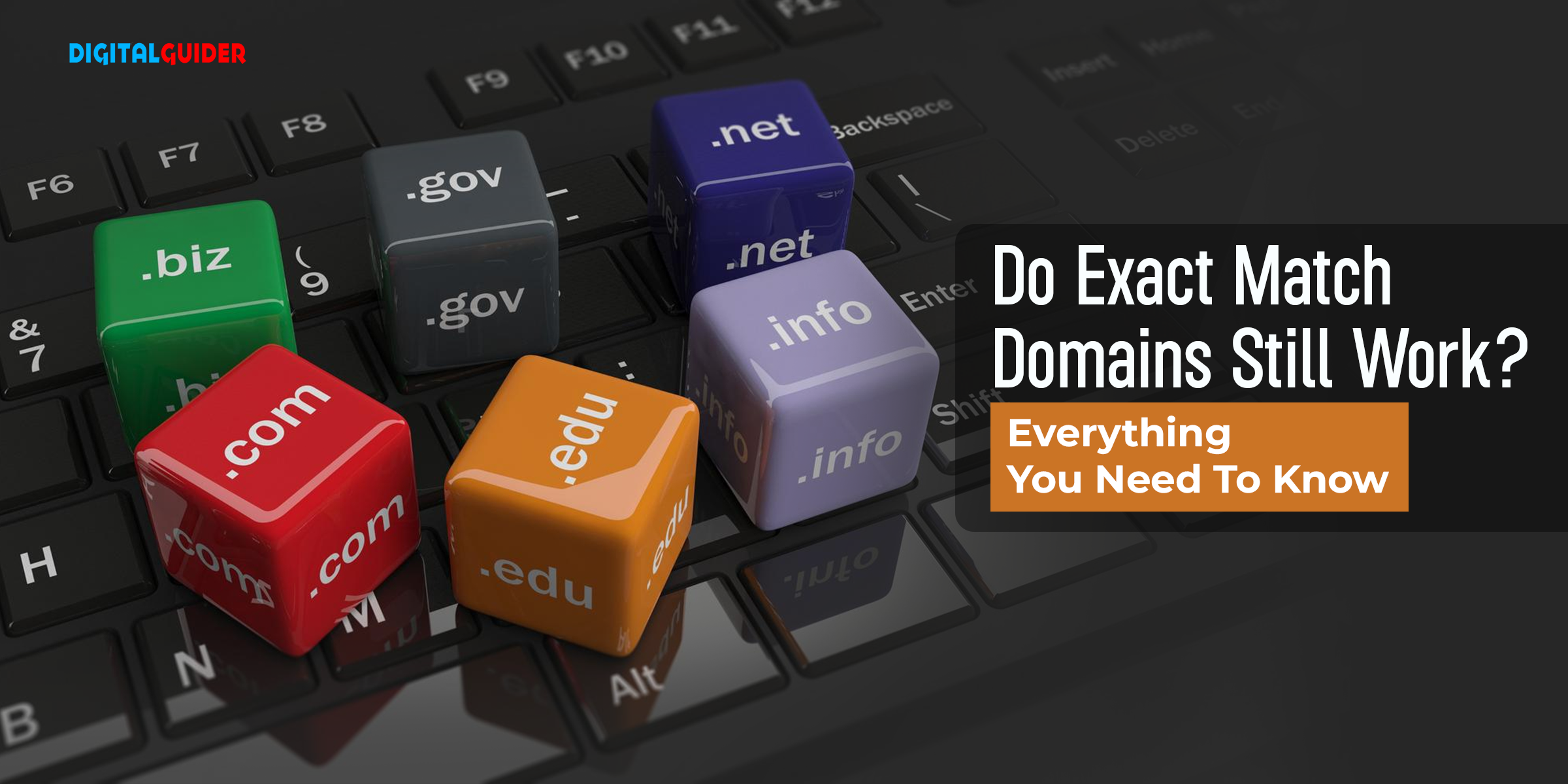
In the early days of SEO, exact match domains (EMDs) were a hot topic. Many marketers believed having a domain that perfectly matched their target keyword was the key to ranking high on search engine results pages.
However, as Google’s algorithms have evolved, the effectiveness of EMDs has come into question. The SEO community has many discussions about the importance and benefits of using an EMD.
While an EMD domain has been an effective way to deliver great rankings and traffic in the past, do exact match domains still work? Let’s find out. In this blog, we’ll learn what are exact match domains, when and how to use an EMD, it is essential, how Google treats them, and how it can influence your SEO campaign and strategy.
What are Exact Match Domains?
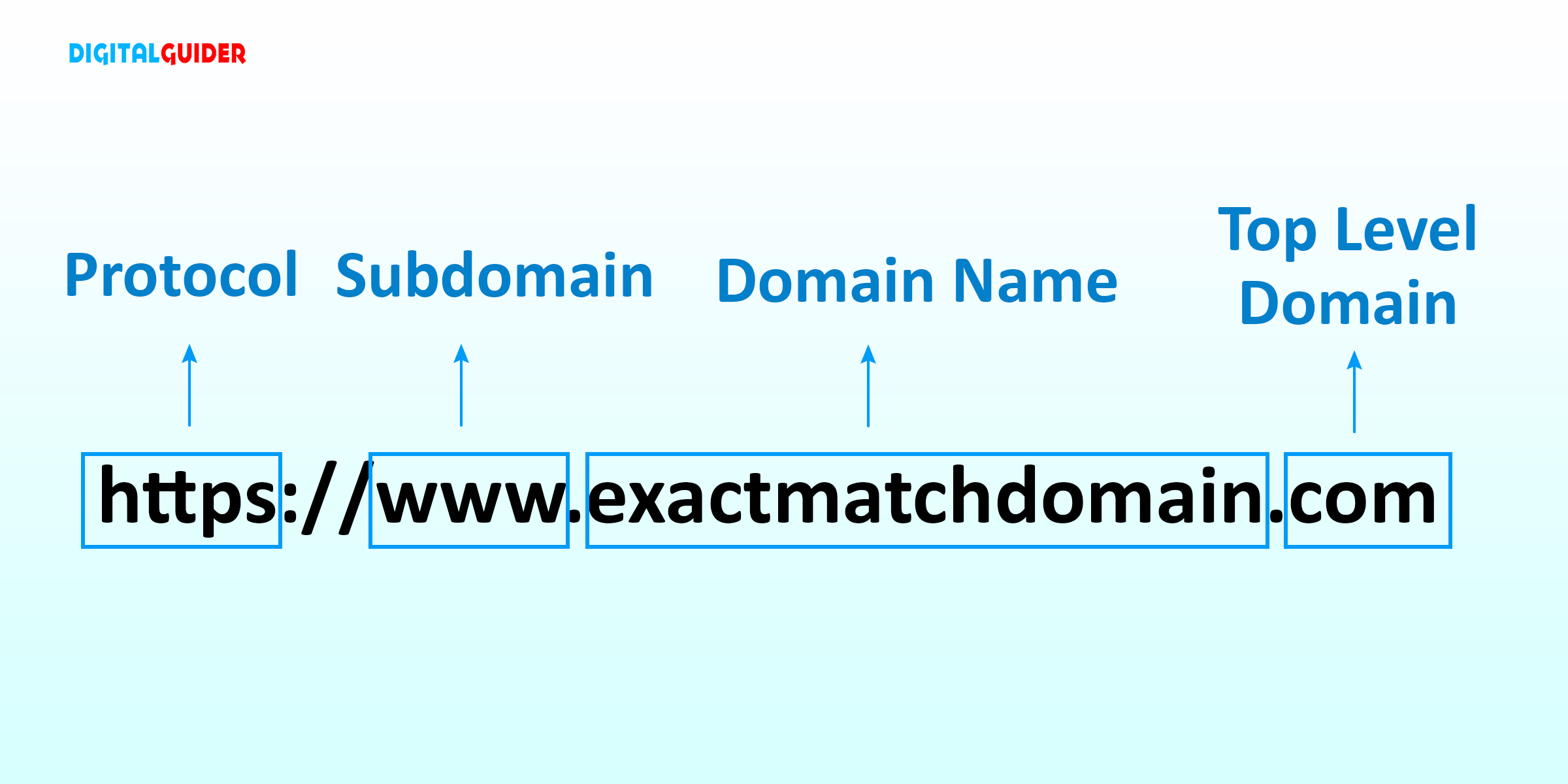
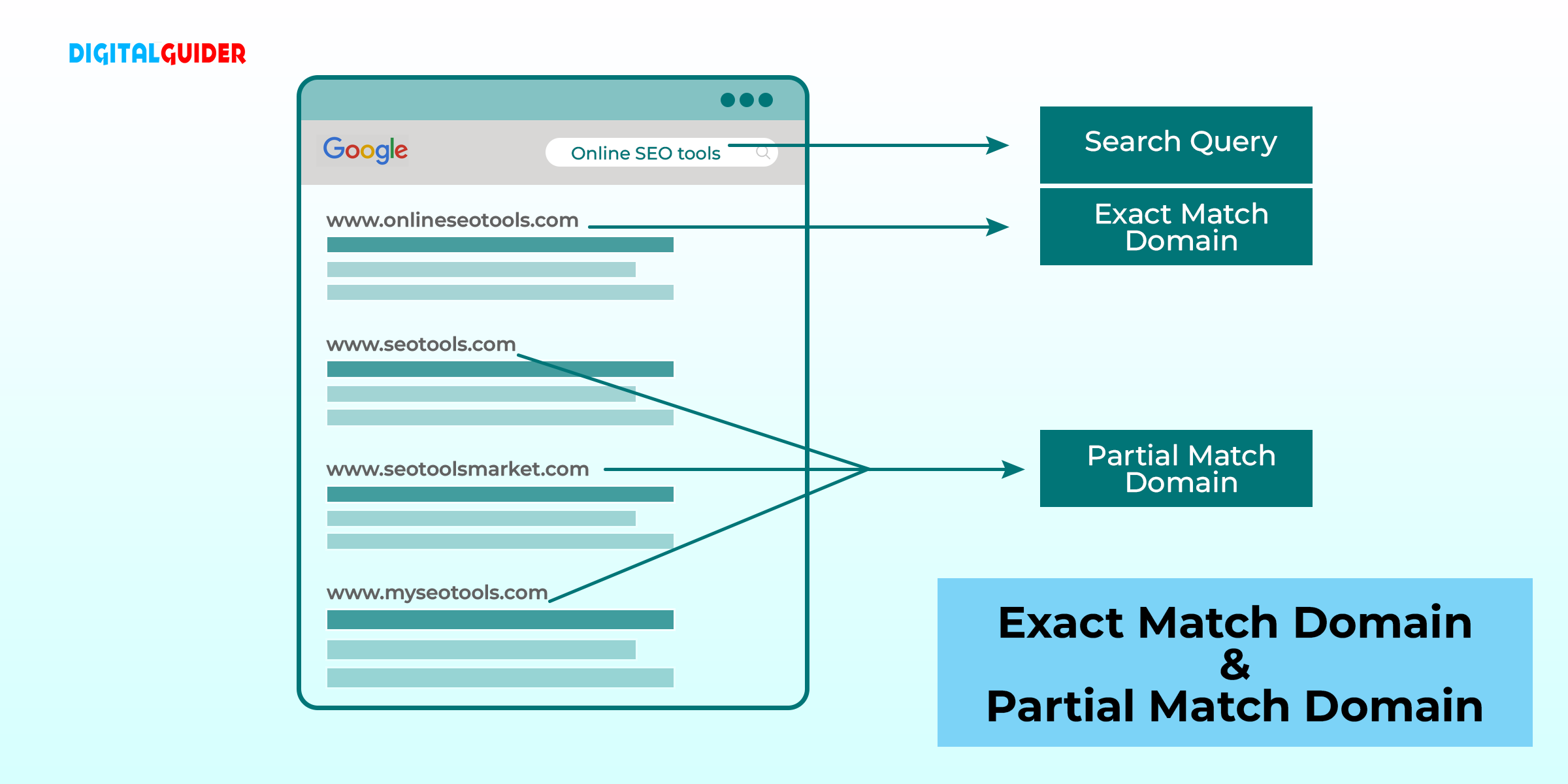
An Exact Match Domain (EMD) is simply a website name that matches a search term people type on Google. For example: DenverDentist.com, ChicagoRoofRepair.com, or MiamiBeachRentals.com.
A lot of people still get stuck on one question: “Will a keyword domain help me rank?”
But the real question should be different: “Will people trust this site enough to click, remember, and come back?”
That small shift changes everything.
Earlier, EMDs used to work really well. If someone searched “Denver dentist” and saw DenverDentist.com, it instantly felt relevant. Both users and search engines understood it quickly, and that alone was enough to gain an edge.
But search has changed a lot since then. People search differently, and Google has become smarter about judging quality beyond just the name.
Today, an exact match domain is not a shortcut. It’s just one small signal among many others.
Think of it like a shop board outside a store. It helps people understand what you do, but it doesn’t make them trust you, choose you, or recommend you.
That’s where most websites get it wrong.
An EMD can help with clarity and first impression, yes. But what really decides performance is your content, your credibility, and how users feel after landing on your site.
The domain might get someone to notice you. But it won’t guarantee they stay, engage, or convert.
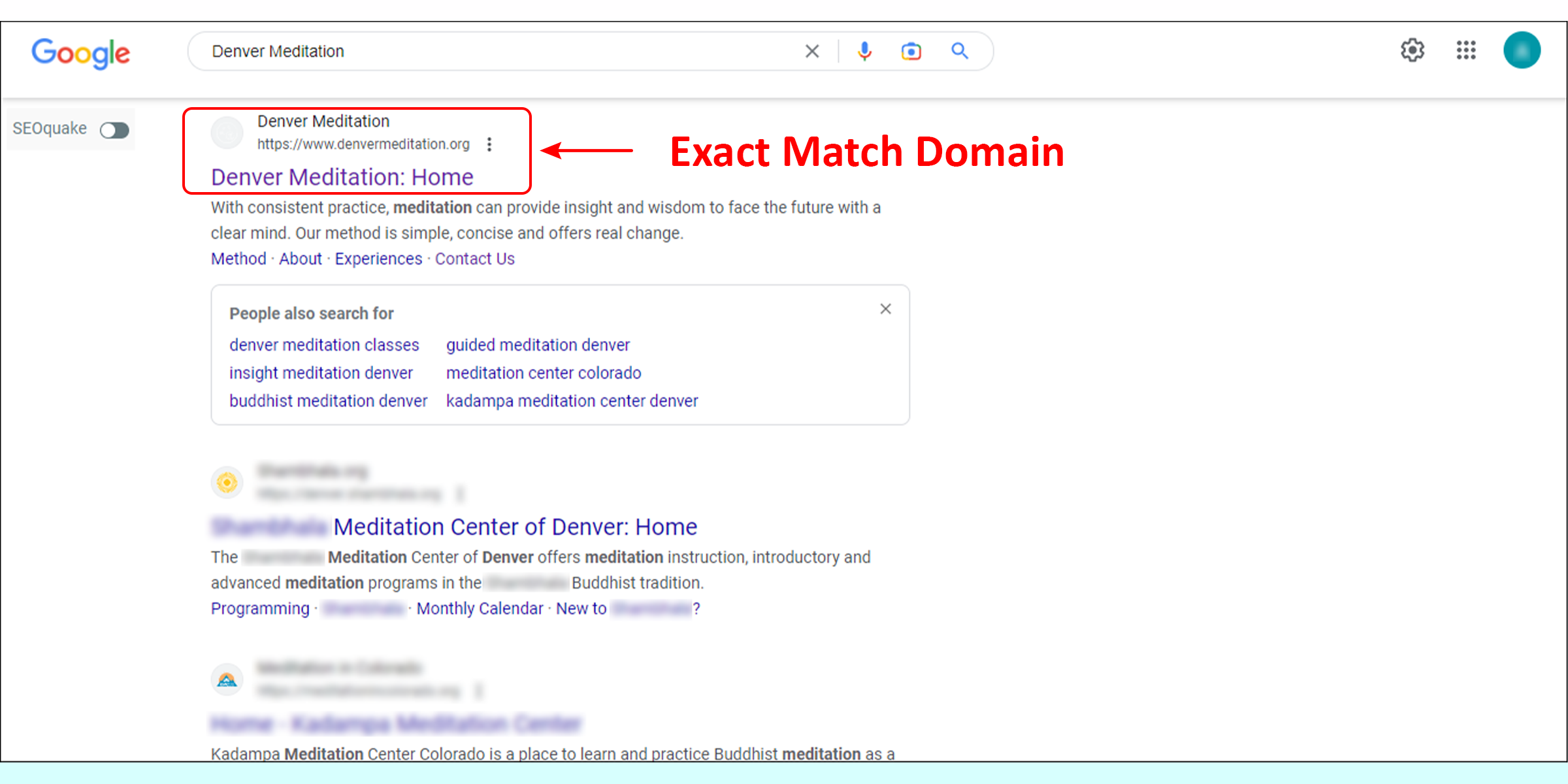
However, it’s important to note that the website’s success is not solely due to its domain name. The site also provides high-quality content that helps users make informed purchasing decisions, ultimately keeping visitors returning and driving sales. Additionally, an EMD can be helpful for successful local businesses that want to rank for location-specific keywords. See the exact match domain example below…
Exact Match Domain Example:
This domain name includes your target keywords and clearly communicates the location and nature of your business to potential customers.
What is a Partial Match Domain?
A Partial Match Domain (PMD) includes only part of a target keyword while incorporating branding or additional words.
For example:
Instead of DenverDentist.com, you might own:
- MileHighDental.com
- DenverSmileCenter.com
- PeakDentalDenver.com
Notice the difference, the keyword still exists but the domain also leaves room for branding and that flexibility matters.
Many businesses eventually expand.
- A plumber starts offering remodeling services.
- A marketing agency adds web development.
- A dental clinic opens additional locations.
Suddenly, an ultra-specific exact match domain can feel restrictive, Partial match domains often provide a middle ground between SEO relevance and brand growth. They’re descriptive enough to communicate purpose.
Yet flexible enough to support long-term business expansion.
In many industries today, that’s a very attractive balance.
Do Exact Match Domains Still Work?
How Google Treats Exact Match Domains Today
Google doesn’t treat Exact Match Domains (EMDs) as a ranking shortcut anymore, even if the domain name exactly matches what someone is searching for. Earlier, having such a domain could give an advantage, but now it’s only a very small relevance signal.
That small shift changes everything for SEO. Today, Google evaluates whether a page actually solves a user’s problem, feels trustworthy, shows expertise, and keeps users engaged. Links, content quality, and real user behavior matter far more than having keywords in the domain.
Exact Match Domains still add some relevance and can support topical clarity or slightly improve clicks in some cases. But they can’t fix weak content or low authority.
In simple terms:
A weak site with a perfect domain usually won’t win.
A strong, trusted brand often will even without keywords in the domain.
EMD vs Brand Domains: Which Performs Better Today?
Exact Match Domains still work well for local SEO, niche sites, and lead-generation pages where clarity and intent matter. But for long-term growth, AI search visibility, and building trust, brand domains usually perform better.
Most top-ranking sites today are brands, not keyword-based domains. People don’t search for generic terms anymore they search for names like Airbnb, Expedia, or Zillow. That tells Google something important: brand searches, direct traffic, and mentions all build authority.
This doesn’t mean EMDs are useless. They still perform in specific, focused use cases.
But if the goal is long-term growth, branding is usually the stronger choice. People may notice keywords, but they remember brands.
When Should You Choose an Exact Match Domain?
Pros and Cons of Exact Match Domains
Why EEAT Matters More Than Your Domain Name?
Do Exact Match Domains Help in AI Search Results?
Exact Match Domains can still give a small relevance signal, but their impact in AI search is limited.
That’s why content quality, EEAT, reviews, and brand reputation matter more than the domain name itself.
For example, a site like BestRoofRepairChicago.com may look relevant. But AI is more likely to reference a roofing company with stronger reviews, better content, and higher trust signals even if the domain is branded.
In simple terms: AI prefers authority over keyword matching.
And this shift is already happening, not something coming later.
Benefits of Exact Match Domains (EMDs) in SEO Today
EMDs were once powerful because they helped search engines quickly understand what a website was about. This could sometimes improve rankings. But today, their impact is limited and depends heavily on overall site quality.
They are no longer a shortcut to rankings. At best, they offer relevance but only when supported by strong content, trust signals, and user experience.
Key SEO Practices That Support EMD Strategy
| On-Page & Content | Authority & Growth |
|---|---|
| Target low-competition keywords | Earn backlinks from trusted sites |
| Write original, helpful content | Publish business blogs regularly |
| Optimize images | Improve local SEO / Google Business Profile |
| Improve page speed | Track performance in Google Analytics |
| Use internal linking | Optimize titles & meta descriptions |
| Update old content | Aim for featured snippets |
Practices to Avoid
- Spammy or low-quality backlinks
- Keyword stuffing in content or domains
- Excessive reciprocal linking
- Unnatural link building patterns
- Thin or duplicate content
- User-generated spam abuse
Conclusion
We offer result-driven digital marketing services, including SEO marketing, social media marketing such as Facebook, LinkedIn, etc., and website design to help your business succeed online fast. Don’t hesitate to contact our expert SEO team for advice on domains, website optimization, or other SEO services. Get a free consultation call now @ +1-307-209-3608
EMD FAQ
Do exact match domains still work?
Exact match domains used to work well, but search engines like Google have updated their rules/algorithms to focus on content quality, intent, and relevance. Today, even if you have an EMD, you need to focus on quality content & overall SEO activities to rank higher on search engine results pages (SERPs).
Are exact match domains expensive?
Exact match domains are slightly expensive as they help you generate millions of dollars in revenue if they rank higher or if you sell them in the future. With the right brand name, you've new ways to access an untapped customer base. Google also values these EMDs. A premium domain name that aligns with your brand/niche will connect you to new leads without advertisement.
Are there any risks associated with EMDs?
Using EMD domains can be risky as there are an exact match domain penalty if you are spamming your content, stuffing keywords, or performing other black hat activities. An SEO agency can help you avoid these risks and ensure your EMD SEO strategy is effective and ethical in terms of search engine bots.
Can an EMD still provide any SEO benefits to my site?
An exact match domain can have multiple targeted keywords with a high search volume in the domain name. An EMD can still provide some SEO benefits if used alongside other powerful tech SEO strategies, such as high-quality content and high DA PA link building. However, you must remember that an exact match domain alone will not guarantee higher rankings on SERPs. Get a free consultation call now @ +1-307-209-3608
Are there any alternatives to using the exact match domain?
Several alternatives to Google exact match domains exist, such as a partial domain name, brand name, or unique domain name relevant to your niche. Partnering with an SEO agency can help you identify the best optimization strategy for your business.
How long does it take to see results with an EMD strategy?
The time it takes to see results with an EMD strategy varies depending on various factors, such as the competition level in your niche and the effectiveness of your SEO strategies. An SEO agency can provide a realistic timeline based on your specific needs.
How can an SEO company help with EMD SEO?
An expert SEO company can help you determine whether an EMD is a suitable strategy for your business and niche. Renowned SEO agencies like Digital Guider can help you choose & optimize your EMD with quality & informative content, high-quality backlinks, and technical on-page optimization to boost the chances of your site ranking higher on Google's 1st page.
How can I get started with an effective SEO strategy?
To get started with an effective SEO strategy, partner with an experienced SEO agency specializing in your niche. They can provide customized solutions that meet your business needs & help you achieve your SEO goals. Contact our experts today to achieve higher rankings on SERPs and drive more quality traffic to your site. Get a free consultation call now @ +1-307-209-3608
Share This Article
About the Author: Mathew Nolan

Related Articles
 October 1st, 2026 | 8 minutes read
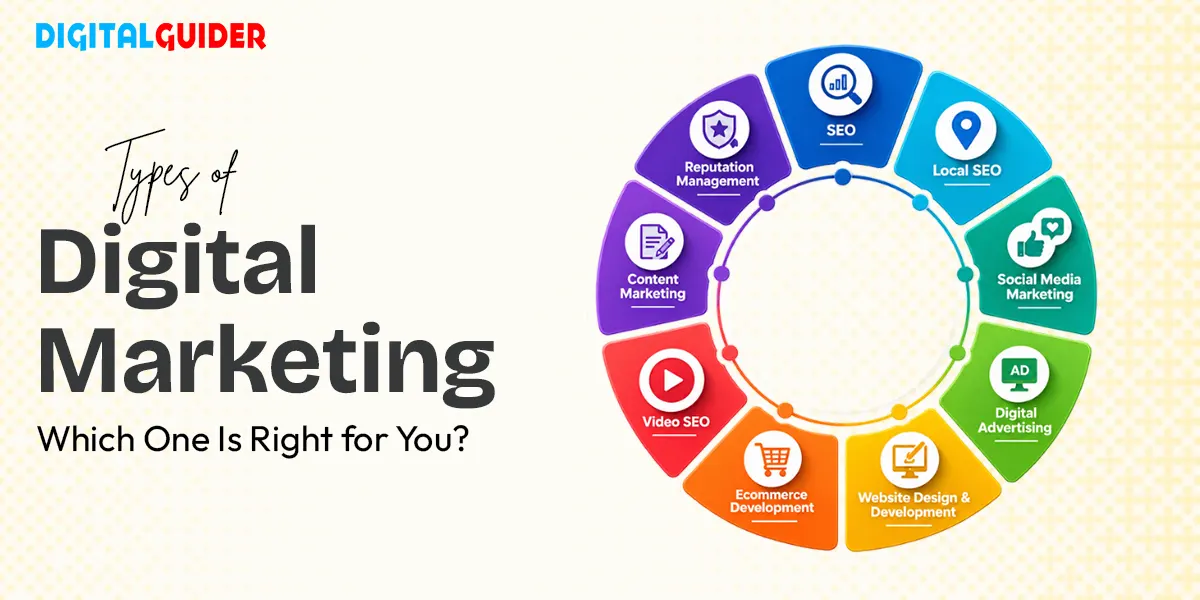
Growing your business online sounds simple until you see how many marketing options there are. SEO? Social media? Paid ads?
- September 28th, 2026 | 9 minutes read
Chicago businesses don’t all compete in the same way. A local restaurant in River North, a growing company in Fulton
- September 21st, 2026 | 8 minutes read
Someone nearby is searching for a cannabis dispensary right now. They may want a specific strain, need to check store
- September 17th, 2026 | 8 minutes read
Austin is a competitive market for local businesses, tech companies, startups, and growing brands. The right agency can help you