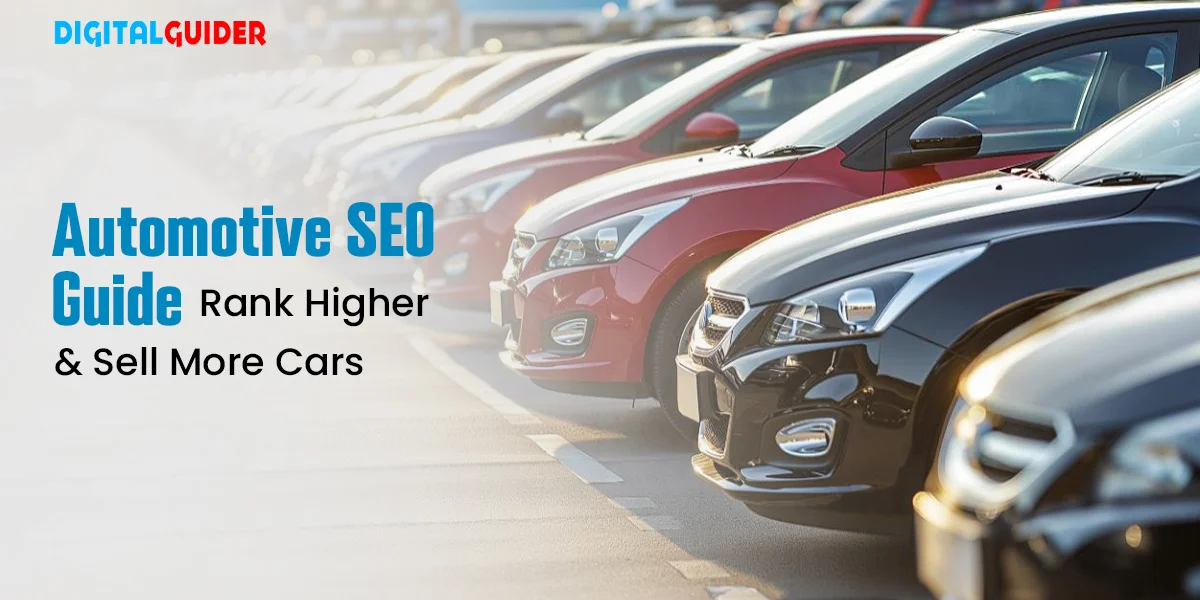
Synopsis This guide covers proven SEO strategies to help your dealership rank higher on Google, attract more leads, and increase sales. Learn how to optimize your website, keywords, local SEO, structured data, and more to drive maximum organic traffic. Whether you're a car dealer, auto repair shop, or parts supplier, this blog is your roadmap to dominating search results and selling more vehicles!Read now & accelerate your success!
Most car buyers don’t walk into a dealership without doing research first. In fact, studies consistently show that buyers compare models, prices, reviews, dealerships, financing options, and vehicle availability online before making a decision.
If your dealership isn’t visible when people search, compare, or ask AI tools for recommendations, you’re losing potential customers to competitors.
That’s where Automotive SEO comes in.
Let’s first begin by understanding what automotive SEO is & its importance.
What Is Automotive SEO?
Automotive SEO is the process of improving your dealership’s online visibility so buyers can easily find your inventory, services, and location through Google Search, Google Maps, AI search engines, and voice assistants.
The goal isn’t just higher rankings. It’s helping your dealership appear when customers are actively searching for vehicles, financing options, service appointments, or local dealerships.
Automotive SEO includes –
- Auto website audit
- Competition analysis
- High-intent automotive keywords
- On-page SEO for auto websites
- Link building for car dealerships
- Local SEO for car dealers
Why is Automotive SEO Important?
Automotive SEO helps car dealerships get noticed online, attract the right customers, and increase sales by reaching people who are looking for cars or services. Automotive dealer SEO marketing helps you rank for auto parts, part numbers, SKUs, and important automobile industry-related keywords.
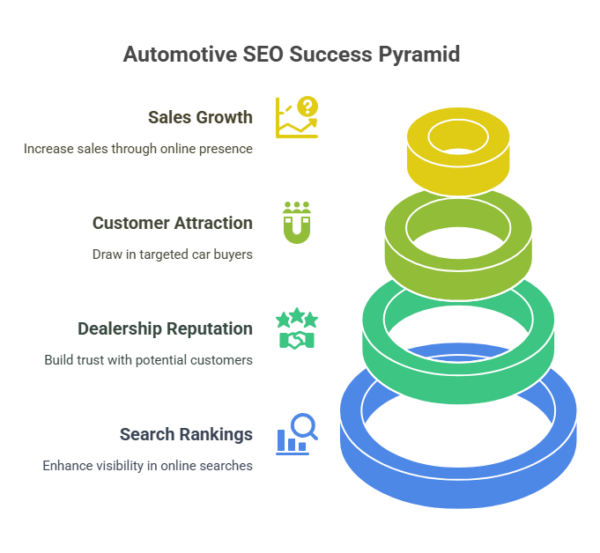
Car dealership SEO pyramid
Let’s see why is SEO important for the automobile industry-
1. Improve Car Dealership Ranking
Automotive SEO helps car dealerships show up higher in search results, attract the right customers, and create clear expectations.
This results in better online visibility & ranking. A fast, mobile-friendly website, strong Google reviews, and effective local SEO for car dealerships help customers easily find, trust, and choose your dealership, leading to more sales and satisfied buyers.
2. Drive More Car Sales and Inquiries
When an automobile business website appears at the top of search results, it generates more clicks and engagement with potential auto buyers.
You can foster their interest, build trust, and turn them into loyal customers by providing relevant and informational content.
3. Improve Car Dealership Search Rankings
When potential customers search for “car dealerships near me” or specific car models, a solid automotive SEO approach ensures that your dealership appears prominently in search engine results.
You’re missing out on valuable sales opportunities if you’re not visible.
4. Become a Trusted Car Dealership
Customers see you as a trustworthy and credible source if your business website is always at the top of their search results. This dramatically impacts customers’ decision-making process, making them more likely to choose your business for purchasing over your competitors.
Automotive SEO Strategies to Increase Car Sales and Online Visibility
A successful automotive SEO strategy starts with a website audit, competitor research, keyword targeting, on-page optimization, backlink building, and local SEO. Together, these tactics help dealerships rank higher on Google, appear in AI search results, attract qualified buyers, and generate more leads. Lets understand one by one:
Conduct an Automotive Website Audit
Before you can improve rankings, you need to understand what’s holding your website back. An SEO audit helps uncover technical issues, content gaps, and user experience problems that may be preventing your dealership from getting more traffic and leads.
How to do it:
- Use tools like Google Search Console and Screaming Frog to find broken links, indexing issues, and slow-loading pages.
- Review your page titles, meta descriptions, and headings to make sure they target relevant keywords.
- Check whether your website is easy to navigate for both visitors and search engines.
Analyze Your Competitors
If other dealerships are ranking above you, there’s usually a reason. Looking at what competitors are doing well can help you find opportunities to improve your own SEO strategy.
How to do it:
- Use tools like Ahrefs or SpyFu to see which keywords they’re ranking for and where they’re getting backlinks.
- Review their blogs, vehicle pages, and FAQs to understand what content attracts traffic.
- Analyze their Google Business Profile, reviews, and local SEO efforts for ideas you can apply to your dealership.
Target High-Intent Automotive Keywords
Not every search leads to a sale. Focus on keywords used by people who are actively researching or planning to buy a vehicle.
How to do it:
- Find specific search terms like “best hybrid SUVs under $30,000” or “used trucks for sale near me.”
- Use Google’s People Also Ask section to discover common buyer questions.
- Target local searches such as “Honda dealer near me” or “used car dealership in Houston.”
Optimize Your Website Pages
Even great content can struggle to rank if your pages aren’t properly optimized. Every important page should clearly tell search engines and visitors what it’s about.
How to do it:
- Write compelling title tags and meta descriptions that include your target keywords.
- Use clean and descriptive URLs, such as
/used-suvs-houston. - Add schema markup to help search engines better understand vehicle listings and dealership information.
- Use internal links to guide visitors to inventory pages, financing options, service departments, and special offers.
Build Quality Backlinks
Backlinks are still one of Google’s strongest ranking signals. When trusted websites link to your dealership, it helps build authority and trust.
How to do it:
- List your dealership on trusted automotive websites and directories.
- Partner with local bloggers, automotive websites, and industry publications.
- Publish useful resources like buying guides, comparison articles, and automotive tips that naturally attract links.
Focus on Local SEO
Most car buyers search for dealerships near them. That’s why local SEO is one of the most important parts of an automotive SEO strategy.
How to do it:
- Claim and optimize your Google Business Profile with accurate contact details, photos, and business information.
- Encourage happy customers to leave reviews regularly.
- Keep your business name, address, and phone number consistent across all directories.
- Create location-specific pages that target the cities and areas you serve.
A strong local SEO presence helps your dealership appear in Google Maps, local search results, AI Overviews, and “near me” searches where many buyers begin their journey.
Automotive SEO: Top 10 Local SEO Strategies for Car Dealerships
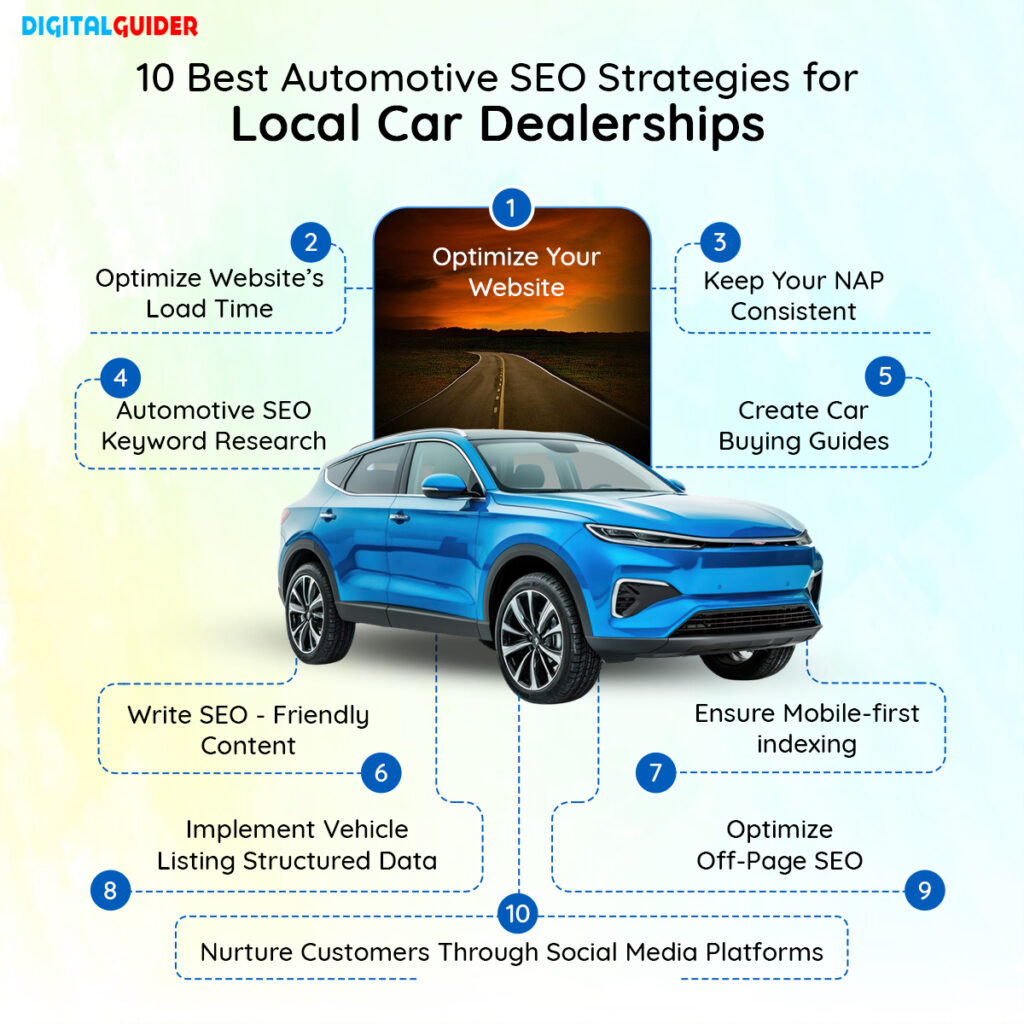
Top 10 Local SEO Strategies to Drive More Customers to Your Car Dealership
1. Automotive SEO Keyword Research
Keyword research is essential for a successful automotive SEO plan. Instead of going after common, highly competitive keywords, businesses should aim for longer, more specific keywords that match what customers are searching for e.g. “best fuel-efficient SUVs for city driving” or “affordable electric cars under $40,000.”
Tools like Google Keyword Planner, Ahrefs, or SEMrush can help find useful keywords for automotive digital marketing strategy.
2. Optimize Your Website’s Load Time
Slow websites frustrate users and kill conversions. Unfortunately, many car dealership websites are shockingly slow due to unnecessary scripts, bloated code, and unoptimized images.
How to Speed Up Your Site
- Manually optimize images instead of relying on your CMS’s built-in tools.
- Use Lighthouse Tool to identify problem areas.
- Minimize excessive scripts and third-party tools that slow down loading times.
A faster website improves automotive SEO rankings, enhances user experience, and increases lead generation.
3. Keep Your NAP (Name, Address, Phone Number) Consistent
An ideal situation is when people search for “auto repair in [city],” “car dealer near me,” and your business website shows up in the top results in local 3 pack. Local SEO for car dealerships techniques will help you rank in search queries related to your business.
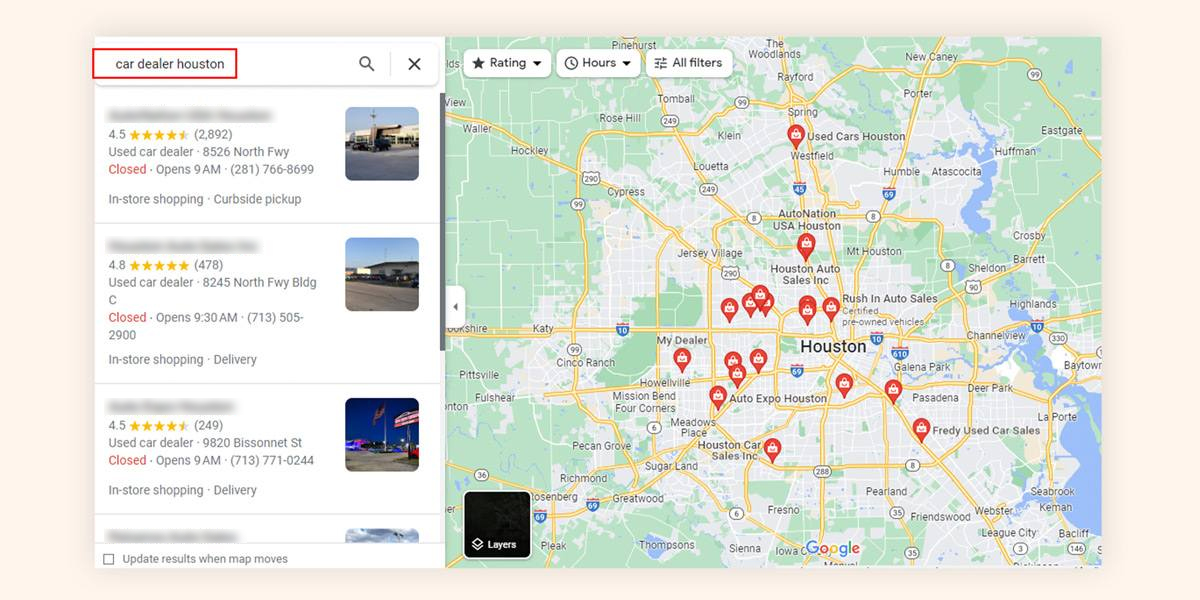
Google Maps search for ‘car dealer Houston’ highlighting local SEO and NAP consistency for automotive SEO.
How to Manage NAP Consistency
- Lock down your business listings by claiming and verifying them across platforms.
- Use tools like Moz Local or BrightLocal to monitor and maintain NAP consistency.
- Merge duplicate listings and remove unauthorized profiles.
Must Read – How to Generate Organic Visits for Google Business Profile + Free Tools
4. SEO-Friendly Layout
Many dealerships are stuck with clunky CMS platforms like Sincro, CDK, DealerInspire, or DealerOn. These systems might be co-op approved, but they often limit customization and slow down automotive digital marketing performance.
Look at the below website. It has a clean & SEO-friendly layout –
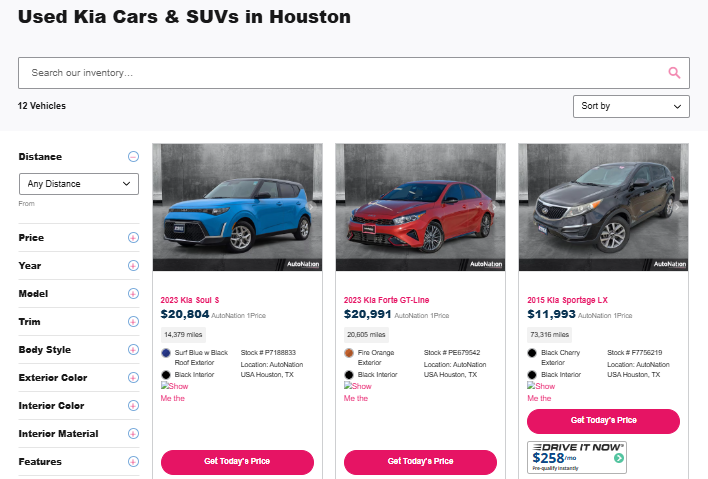
An example of an SEO-friendly car dealership website with a clean layout, optimized listings, and user-friendly filters
What You Can Do
- If you have the budget, build a custom website for better user experience and automotive SEO performance.
- If a custom build isn’t an option, push your CMS provider to improve, ask for a custom Vehicle Display Page (VDP), a better mobile layout, or other enhancements.
- Work with an automotive SEO agency to ensure your site structure, URLs, and on-page content are fully optimized.
5. Create Car Buying Guides
A great car-buying guide also attracts backlinks from automotive blogs and industry websites. Car buying guide can position your car dealership as an authoritative resource, improving SEO rankings. It also helps potential buyers make informed decisions, increasing lead conversions.
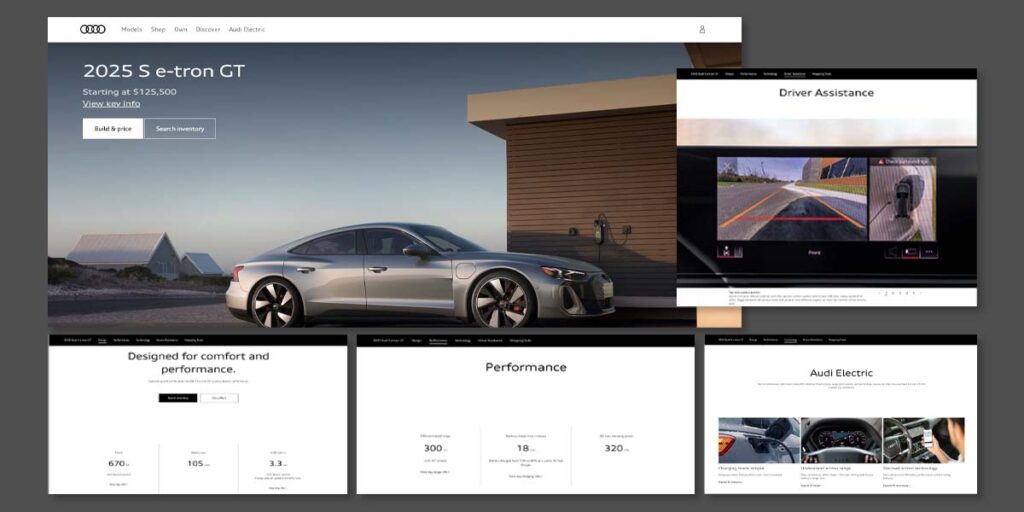
Comprehensive Audi car buying guide with model details, pricing, and features for informed purchasing decisions
How to Do It Right
- Write a detailed guide for each model and year.
- Include videos, trim comparisons, pricing breakdowns, and frequently asked questions.
- Optimize pages with long-tail keywords like “Best 2026 Ford F-150 trim for towing.”
6. SEO-friendly Content Writing
Automotive SEO content marketing or SEO-optimized content will interest more people in your services. SEO-friendly content is one of the best car dealership SEO strategies to have. Writing SEO-optimized content is not just about words as it includes interesting stories, useful information, and smart use of keywords.
For instance, instead of saying, “This product has a 2.0L engine,” a better description would be, “Enjoy smooth driving and great fuel savings with a strong and eco-friendly 2.0L engine made for both city and highway travel.”
Google loves hyperlocal content, and dealerships can capitalize on this by creating pages that mention surrounding towns and communities. You can also write & post driving route guides featuring nearby attractions or maintenance guides to help out your potential customers. Be mindful to follow Google’s E-E-A-T & Y-M-L guidelines.
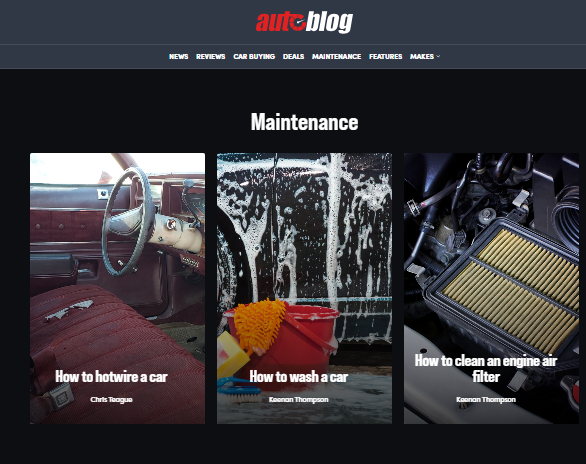
SEO-friendly automotive content marketing strategies for car dealerships, focusing on local SEO, driving guides, and maintenance tips
Or you can write blog posts about local events and how different car models suit the area’s terrain and weather. Naturally, add city names and landmarks throughout your content.

Automotive blog discussing how different car models perform in various terrains and weather conditions.
7. Ensure Mobile-Friendly Website
These days, most people search the web on their phones. With Google’s mobile-first indexing, your site’s mobile version is what Google looks at first when deciding where to rank you.
So, if your website isn’t mobile-friendly, you’re missing out on better automotive dealer SEO rankings. It should showcases photos, specs, pricing, and clear buttons for action – all in a simple, mobile-friendly layout. That’s exactly what you need to aim for!
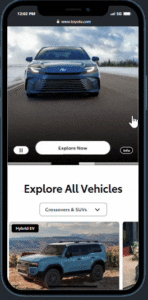
GIF showing mobile-optimized automotive site.
8. Implement Vehicle Listing Structured Data
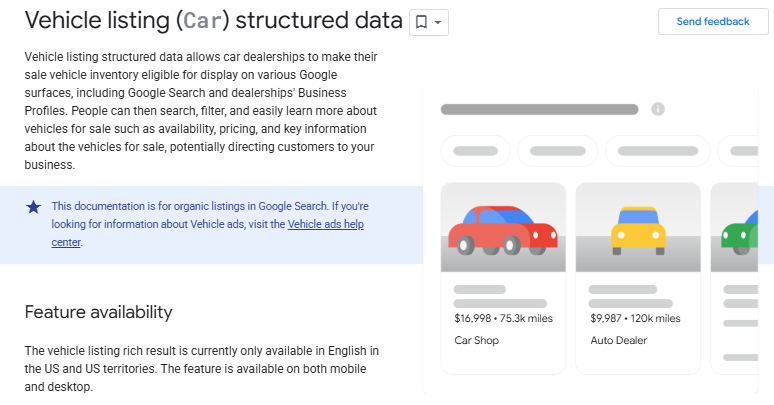
Google’s Vehicle Listing Structured Data example showing how car dealerships can display vehicle details like price and mileage in search results using schema markup
Structured data markup (Schema Markup) takes visibility a step further by helping search engines understand and present your content in more appealing ways.
By adding automotive-specific schema markup, businesses can enable rich snippets that display crucial details like pricing, vehicle specifications, and customer ratings directly in search results.
This enhances click-through rates and provides users with immediate value before they even visit your website.
For instance, dealerships can use Vehicle Listing Schema to highlight inventory details in search results, while FAQ Schema can be applied to common questions about financing, leasing, or car maintenance.
9. Optimize Off-Page for Automotive SEO
Many businesses pay a lot of attention to backlinks, but off-page SEO includes more than just that.
It involves –
- social media signals
- online public relations
- working with influencers & more
All these activities help in improving domain authority and search rankings. A great way to get good backlinks is by teaming up with industry experts, bloggers, and review sites. You can also make shareable infographics, guest posts, and videos that naturally draw in links for automotive digital marketing strategy.
10. Social Media Optimization
Social media plays an important part in SEO & branding success. Engaging content shared on platforms like Facebook, Instagram, Twitter, and LinkedIn can drive traffic to a website, increasing visibility and potential backlinks.
A well-structured social media strategy should include:
- Posting regular industry updates and promotions
- Engaging with customers through comments and DMs
- Sharing user-generated content and customer testimonials
You can share content like vehicle showcases, customer testimonials, and behind-the-scenes footage.
CASE STUDY

John is the owner of a mid-sized car dealership in Dallas. For years, he relied on word-of-mouth and occasional ads to bring in customers. But even after so many efforts, there was a constant drop in showroom visits and sales.
Without an online presence, John was missing out on countless potential customers. He needed a solution that would bring in consistent, high-quality leads.Unsure where to start, John turned to our aviation SEO services and that decision changed everything.
Challenges & Pain Points
- Low website traffic
- No ranking when people searched for cars in his area
- No leads or filling out contact forms or booking test drives
- His GBP listing had only three outdated reviews and was buried under competitors.
To turn things around, we implemented a comprehensive automotive dealer SEO strategy as mentioned above. With the help of right keyword research, on-page & local SEO optimization, content marketing & blogging, technical SEO, and link building, within 6 months, John saw an improved transformation:
| Metric | Before SEO | After SEO |
| Organic Website Traffic | Low, <500 visits/month | Increased by 70% to 1,500+ visits/month |
| Google Search Ranking | Page 3 for key searches | Page 1 for “best car dealership in Dallas” |
| Lead Generation | Few inquiries online | 50% increase in test drive bookings |
| Google Business Profile | Low engagement, 3 reviews | Ranked in the top 3 local results, more calls & visits |
| Website Load Time | 8 seconds | 2 seconds (faster, better UX) |
Our automotive SEO helped him with increased showroom visits, phone calls, and online inquiries. More customers found his dealership on Google in his area with keyword searches.
Key Takeaways & Lessons Learned
- SEO is not just about rankings it’s about getting in front of the right buyers at the right time.
- Local SEO can make or break a dealership. A well-optimized Google Business Profile brings in more foot traffic.
- Website speed and UX matter. Faster, easier-to-navigate sites convert more visitors into leads.
Client Testimonial
“Before SEO, I felt invisible online. Now, more customers say they found us on Google, and sales have increased. It’s been a game-changer.” – John, Dealership Owner
Just like John, you can attract more customers and grow your sales with the right strategy.
Automotive SEO FAQ
1. What exactly is automotive SEO?
Automotive SEO is simply how you make your dealership show up on Google when people search for cars, dealers, or services. It focuses on improving your website and local presence so buyers can find you before they visit a showroom.
2. Why does SEO matter so much for car dealerships today?
Because most buyers don’t walk in blindly anymore. They compare options online first. If your dealership isn’t showing up during that research phase, you’re losing customers before you even get a chance to talk to them.
3. How long does it actually take to see results from automotive SEO?
In most cases, you’ll start noticing movement in 3–6 months. Local SEO improvements like better visibility on Google Maps can happen quicker, but consistent leads usually build over time.
4. What really makes a dealership rank higher on Google?
It usually comes down to a few things: strong Google Business Profile, good reviews, fast-loading website, and pages that match what buyers are actually searching for, like specific car models or “near me” queries.
5. What is local SEO for car dealerships in simple terms?
Local SEO helps your dealership appear when someone nearby searches things like “car dealer near me.” It’s mainly about your Google listing, location-based content, and consistent business details across the internet.
6. Do reviews actually impact rankings or just reputation?
Both. Reviews help build trust, but they also influence how Google ranks your dealership locally. More positive, recent reviews usually mean better visibility and more clicks.
7. What kind of keywords bring real buyers, not just traffic?
The ones that show intent. For example, searches like “used cars under 10 lakh near me” or “Hyundai dealer in [city]” usually come from people ready to visit or buy—not just browse.
8. My website gets traffic but no calls—what’s going wrong?
This happens a lot. Usually, the site isn’t built to convert—slow loading, confusing layout, or no clear next step like “Book a Test Drive.” Traffic alone doesn’t matter if users don’t take action.
9. Is SEO better than running ads for car dealerships?
Ads bring quick leads, but they stop the moment you stop paying. SEO takes time, but once it starts working, it keeps bringing in traffic and inquiries without ongoing ad spend.
10. Can smaller dealerships really compete with big auto websites?
Yes, especially in local searches. Big platforms dominate broad keywords, but local intent—like city-based searches—is where smaller dealerships can win with the right SEO strategy.
11. What’s the fastest way to improve dealership visibility right now?
Start with your Google Business Profile. Update details, add photos, collect reviews, and stay active. For many dealerships, this alone brings noticeable improvement within weeks.
12. What’s one common SEO mistake most dealerships make?
Ignoring local SEO and relying only on inventory pages. Without optimized local signals and supporting content, even a great inventory won’t rank well.
Share This Article
About the Author: Mathew Nolan

Related Articles
 June 15th, 2026 | 13 minutes read
Imagine you are an expert plumber in Toronto who knows how to fix a burst pipe even in the freezing
- June 8th, 2026 | 12 minutes read
Imagine you are running a coffee shop in Chicago. You know how to brew the best coffee in your neighborhood,
- June 1st, 2026 | 11 minutes read
TL, DR; People are now using AI tools like ChatGPT, Gemini, and Google AI to get direct answers online. ChatGPT
 May 25th, 2026 | 8 minutes read
List of Top 10 Digital Marketing Agencies in USA 1. DigitalGuider 2. WebFX 3. Disruptive Advertising 4. Ignite Visibility 5.