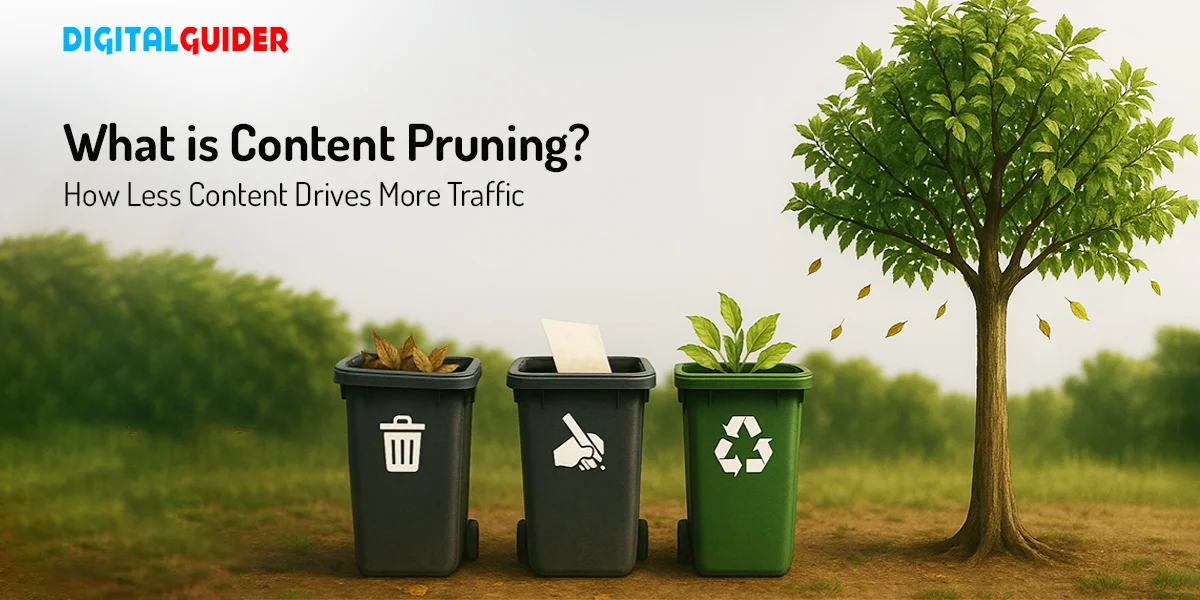
Ever cleaned out your closet and realized how much space those old, unused clothes were taking up? Suddenly, your favorite outfits look better, and finding what you need feels easier.
Your website works the same way. Over time, it collects outdated blogs, thin pages, and irrelevant content that secretly hold back your SEO.
That’s where your website needs content pruning. It is like decluttering your digital space. By removing what no longer serves your audience, you highlight what truly matters.
The result? A cleaner, healthier website that ranks better and engages visitors more effectively.
In this blog, you’ll learn how to identify weak content and how trimming the clutter can supercharge your website’s performance.
What is Content Pruning?
Content pruning is the process of cleaning up your website by eliminating, updating, or merging low-performing or outdated content. The goal is to enhance SEO performance and ensure that your most valuable and relevant pages stand out to both search engines and visitors.
Content pruning for SEO is not just about deleting pages. Even some low-traffic content can be refreshed, optimized, or repurposed if it still has opportunities to improve SEO, drive conversions, or boost engagement.
Let us understand with a quick example:
Imagine your website has a travel blog titled “Top 10 Places to Visit in 2018 🌍”.
By now, some destinations may have lost their charm, and new hotspots are trending. Instead of deleting the post, you can give it new life by adding trending destinations, new images, and current travel tips.
This approach makes your content useful, updated, and engaging for readers who are looking for the latest travel ideas. This way, you preserve the backlinks already earned while transforming an old post into a refreshed, traffic-generating asset.
So, why should you care about pruning your content? Let’s break down the benefits.
Why Your Website Needs Content Pruning for SEO?
When done right, pruning your website’s content brings impactful benefits like these:
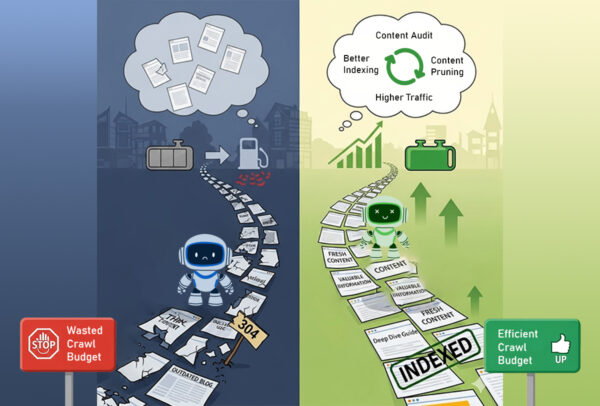
Better Crawl Efficiency
Search engines have a limited crawl budget for every website, and pruning removes unnecessary pages so Google can focus on your best content, index faster, and boost rankings. This decreases the workload for search engine crawlers and ultimately boosts the chances of ranking your best pages.
Enhanced Content Quality
It’s like spring cleaning for your site. Old blogs, irrelevant updates, or outdated service pages can frustrate visitors. Replacing them with fresh, useful insights lowers bounce rates and keeps your audience engaged. This makes your website more valuable and credible for both readers and search engines.
Improved Keyword Rankings
When duplicate or weak content is trimmed, your strong pages don’t have to compete with each other. For example, instead of three half-useful blogs on the same keyword, you can prune content and keep one solid piece that ranks higher.
Enhanced User Experience
Visitors don’t want to waste time on outdated or irrelevant pages on a website. They expect clear, valuable, and engaging information that captures their attention. Content Pruning SEO helps them quickly find what they need, whether it’s a product, service, or answer.
Stronger Site Authority
A website flooded with thin or low-quality pages looks untrustworthy. Pruning your content ensures presenting only the most valuable and trustworthy content, signaling expertise, relevance, and authority. This helps strengthen your domain reputation, making it easier to rank well for relevant competitive keywords.
More Organic Traffic
And, of course, with improved visibility and reduced keyword cannibalization, SEO content pruning naturally drives more organic traffic, bringing the right visitors to your site without the need for paid advertising.
Although not every website requires pruning, there are some red flags that you just can’t ignore.
If your site shows these signs, it’s definitely time to clear out the clutter.
Red Flags That Show It’s Time for Content Pruning
If your business or online store has been active for several years, you might notice some pages underperforming, duplicate content popping up, or outdated information confusing both visitors and search engines.
Even with numerous product pages, blogs, and service updates, problems can arise over time. Common red flags include:
⚠️ The key problems faced are:
- Visitors land on your site and leave quickly, indicating high bounce rates.
- Some product pages cover similar topics, creating duplicate content that confuses users and search engines.
- You also have old blog posts and products that haven’t generated traffic or sales in months.
- Thin content and outdated information, like old pricing or discontinued services, hurt credibility and prevent your strongest pages from ranking.
- Crawl and index issues, showing that search engines are wasting time on low-value pages.
These issues are clear signals that your website needs content pruning for SEO. By identifying and fixing them, you can clean up your site, improve user experience, and boost SEO performance.
How to Prune Content for SEO? (Step-by-Step Process)
In content pruning SEO, you do not have to throw things out, but organize, refresh, and make sure only the best stays visible.
Here’s the step-by-step process explained in detail:
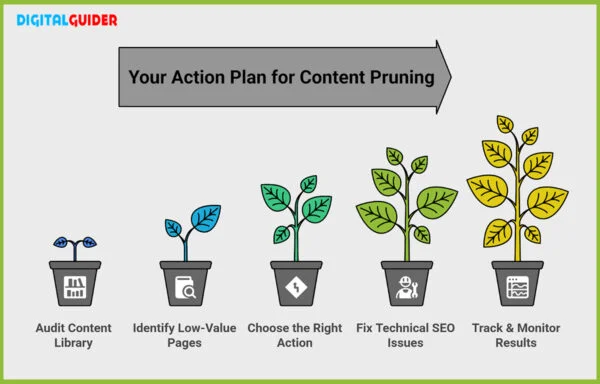
1. Audit Your Content Library
The first step of content pruning is like taking inventory of everything you own. Think of this step as opening every drawer in your house before decluttering, as you need a complete picture before making changes.
- How to do it: To make a comprehensive list of your pages and URLs, use tools like Google Analytics, Google Search Console, SEMrush, and Ahrefs. Once you have the full list, don’t just look at the numbers. Instead, evaluate the content itself and check if it’s accurate, relevant, aligned with your brand voice, and useful for today’s audience.
- What to check: Start pruning your content with keyword research to identify which topics and search terms your content currently ranks for and which have growth potential. Then, look at performance insights such as organic traffic, impressions, bounce rates, backlinks, keyword rankings, and conversion rates.
Alongside, ask qualitative questions like:
- Is this page outdated?
- Does it answer user intent?
- Is it overlapping with another piece of content?
- Why it matters: This strategy gives you a bird’s-eye view of what’s working, what’s lagging, and what’s completely ignored by both users and search engines. Without knowing what you have, you risk eliminating pages that are secretly bringing in SEO value.
2. Identify Low-Value Pages
Not all content is worth keeping. There may be some weak lines in the content that are detracting from your site’s overall quality. The red flags in your ages or content may include:
- Pages with zero or minimal traffic or very low dwell time over months.
- Outdated content like old blog posts, obsolete data, or discontinued services.
- Duplicate content, such as product descriptions copied across multiple pages.
- Similar product or service pages cannibalizing each other.
- Thin content (a few lines with no depth or value).
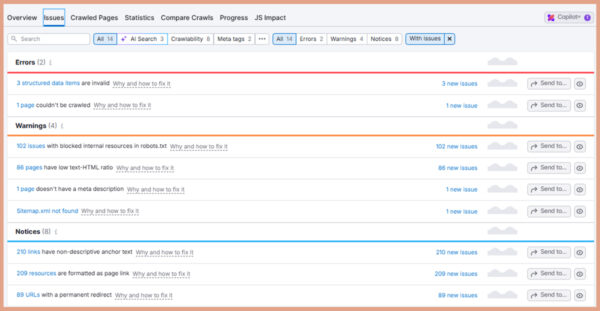
This step will help you identify the “dead weight” that’s wasting crawl budget, confusing users, and slowing down your site.
3. Choose the Right Action
This is where the real content pruning happens. For each low-performing page, you can choose the best option:
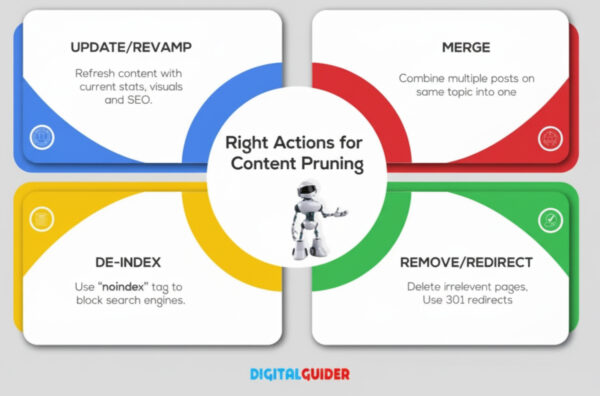
Update/Revamp
If the topic is still relevant, refresh it with current stats, images, videos, and SEO best practices. For example, a blog titled ‘Best Places to Visit in Texas in 2021’ can be updated to ‘Best Places to Visit in Texas in 2025.’
Merge
Got multiple posts on the same topic? Combine them into one stronger, evergreen post. For example, three short blogs on “on-page SEO tips” can be merged into one “Complete On-Page SEO Guide.” This signals that you are consistently providing current, reliable information and strengthening your topical authority.
De-Index
For pages that must remain live for internal or regulatory reasons but shouldn’t show up in search results (like internal thank-you pages, low-value landing pages, or privacy policies), use a noindex tag to block search engines from indexing them without removing the page from your website.
Remove/Redirect
If the content is irrelevant (like discontinued product pages), delete it. To secure the link equity, use 301 redirects to point to a relevant page.
📌 Interesting Read – Understanding the 302 Status Code: SEO Implications & Best Practices
4. Fix Technical SEO Issues
Your SEO content pruning is incomplete without technical SEO. When you remove or merge pages, ensure the backend environment is in good shape.
- Update internal links pointing to deleted or old content.
- Set up 301 redirects for removed pages to preserve SEO value.
- Add canonical tags for pages with overlapping content.
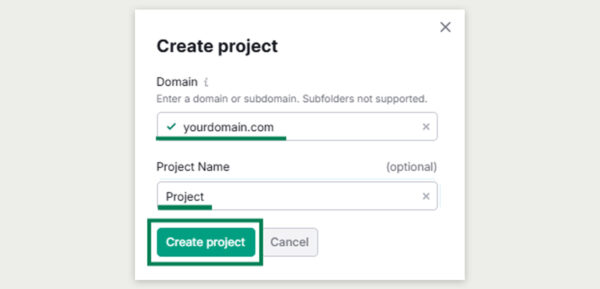
- Update your XML sitemap and submit it to Google Search Console.
This ensures search engine bots crawl your site efficiently without wasting time on low-value pages.
5. Track & Monitor Results
Content Pruning SEO is not a one-time task. It is an ongoing strategy that helps you understand whether your efforts are paying off.
- Track improvements in organic traffic, rankings, and bounce rates.
- Watch to see if updated/merged pages start receiving backlinks or better engagement.
- Schedule regular website audits (every 6-12 months) to maintain your site’s health.
For example, many businesses see a rise in traffic within weeks after pruning the content, as search engines focus on high-quality pages instead of wasting resources on dead weight.
This complete process of SEO content pruning is not just about cutting content; it is about making space for better performance, stronger SEO, and happier users.
Let us explore some bonus tips to take your prune content to the next level.
Pro Tips for Smarter Content Pruning
Content pruning for SEO works best when you implement proven strategies that save time, protect SEO value, and keep your site performing at its best.
- Prioritize pages that have the most potential to improve traffic, conversions, or SEO rankings before everything else.
- Don’t remove pages with strong backlinks; either update them or set up proper 301 redirects.
- Keep a record of updates, merges, redirects, and de-indexed pages to track results and avoid confusion later.
- Focus efforts on pages that remain relevant over time to maximize long-term SEO benefits.
- Treat content pruning as an ongoing website “health check” to improve performance for both users and search engines.
- After pruning, focus on content amplification by promoting updated or merged pages via social media, newsletters, and backlinks to maximize reach and traffic.
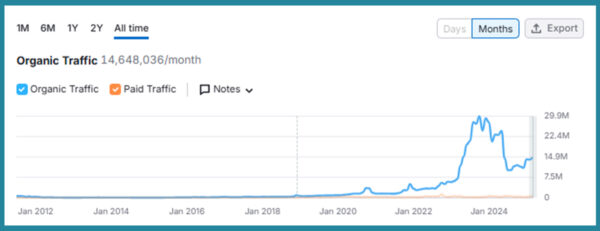
The real proof of smart pruning lies in its results. That’s where tracking the right metrics truly matters.
Must-Measure KPIs for Smarter Pruning
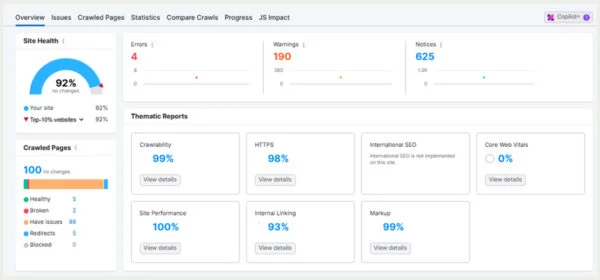
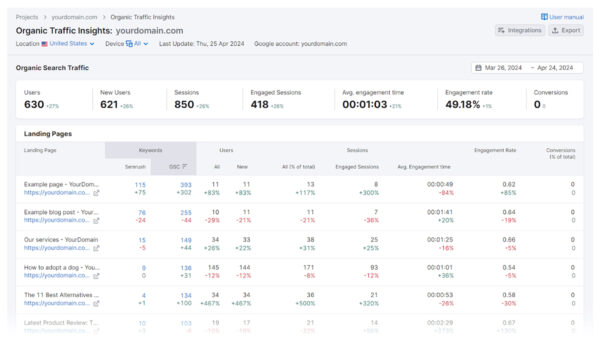
In content pruning, tracking the KPIs acts like a health check for your website, which helps you to identify which pages deserve to stay, be revamped, or be trimmed.
Source – SemRush
Here are some key metrics to keep an eye on:
- Organic Traffic – Track whether pruned or updated pages begin attracting more visitors from search engines. A steady rise in organic traffic means your refreshed content is performing better.
- Keyword Rankings – Rankings show if your pruned content is regaining authority. That’s why it is important to track keyword rankings in search results. If keywords are moving up, your updates hit the mark. If not, the page may require deeper optimization.
- Click-Through Rate (CTR) – Check if more visitors are clicking on your links in search results after SEO content pruning. Higher CTR usually comes from better titles, meta descriptions, and more relevant content.
- Bounce Rate & Dwell Time – Dwell time is the best way to check if readers are truly hooked. They stay longer and don’t bounce away instantly. Improvements here in dwell time & lesser bounce rate mean your content is finally delivering real value.
- Conversion Rates – Traffic is good, but what really matters are the results. The core purpose is to drive a specific action (such as a newsletter sign-up, a download, a purchase) that tells you if content pruning SEO has improved the user journey.
- Backlink Profile – Valuable backlinks keep boosting your domain authority. Even after pruning, track whether updated content retains its old backlinks or earns new ones, both signal SEO strength and credibility.
- User Engagement – User engagement insights show how users connect with your content and take meaningful actions. Track the metrics like time on page, scroll depth, clicks, and social interactions to analyze the results after pruning your content.
With the right KPIs in hand, the next step is using the right tools to track them efficiently.
Essential Tools to Track Content Performance
| Tool | What It Tracks | Why It’s Useful for Content Pruning |
| Google Analytics | Traffic trends, bounce rate, dwell time, conversions | Shows how pruned content is performing and engaging users. |
| Google Search Console | Impressions, clicks, indexing status, CTR | Ensures search engines recognize your updates and help resolve technical SEO issues |
| SEMrush / Ahrefs | Backlinks, keyword performance, content audits | Identifies low-performing pages, analyzes backlinks, tracks keyword movement, and offers optimization opportunities |
| Screaming Frog SEO Spider | Website audit, broken links, orphaned pages, crawl data | Crawl your website to detect thin, duplicate, or broken pages and check redirects. |
TL;DR – Pruning in a Nutshell
Overall, content pruning is a smart strategy, which is less about deleting and more about refining. The more consistent you are with pruning and measuring progress, the easier it becomes to spot what sparks engagement and what drags your website down. In the long run, that’s how you win both trust and traffic.
So, keep nurturing, trimming, and refining, and you will build a content ecosystem that remains fresh, relevant, and irresistible to both readers and search engines.
Ready to start your content pruning for SEO journey with the experts—Contact Digital Guider today!
FAQs
Q1. Can AI tools help with content pruning?
A1. Yes, AI tools can speed up audits by spotting thin, duplicate, or outdated pages, but final decisions still need human judgment.
Q2. How often should content pruning be done?
A2. Ideally, audit and prune content every 6–12 months to keep your site lean, relevant, and high-performing in search.
Q3. Is it better to prune content before or after a site redesign?
A3. Before—it ensures only high-quality content is migrated, saving both time and cost.
Q4. How does pruning impact content freshness signals?
A4. Regular pruning helps Google see your site as actively maintained, improving freshness scores and crawl efficiency.
Q5. Is content pruning SEO relevant for video or multimedia content?
A5. Definitely, even outdated or low-performing videos, infographics, and visuals can be refreshed or removed just like text-based content.
Q6. Can pruning help websites hit by Google penalties?
A6. Often, yes. Cleaning up thin or duplicate content can lift penalties and restore rankings in search results.
Q7. How do I decide what to prune vs. update?
A7. Keep content with potential traffic or backlinks—prune only what’s outdated, irrelevant, or offers no unique value.
Q8. Can pruning affect keyword rankings?
A8. Yes, if done carelessly. Always analyze traffic and backlinks before deleting pages to avoid losing ranking equity.
Q9. How can pruning improve crawl budget efficiency?
A9. By removing thin or duplicate pages, you help search engines crawl your valuable content more frequently and effectively.
Q10. Will pruning still matter in 5 years?
A10. Absolutely, even more so, since search engines continue to prioritize depth, quality, and relevance over sheer volume.