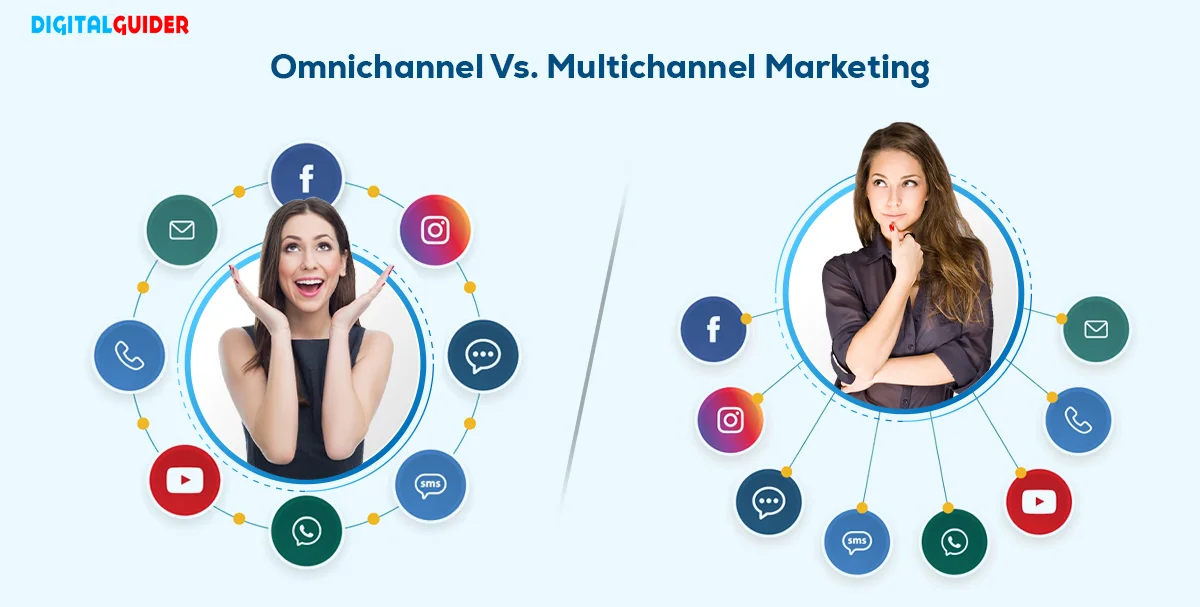
What is Omnichannel vs Multichannel Marketing?
Omnichannel
Omnichannel literally means “all channels.” As per consumer behavior, customers no longer interact with brands through a single platform. They move between mobile, social media, websites, and physical stores at the same time. Customers expect to browse, interact, and purchase without friction between channels. A well-planned omnichannel strategy allows businesses to meet customers wherever they are and deliver consistent experiences anytime, anywhere.
As per research, a large percentage of shoppers use smartphones to compare prices and gather product information before making a purchase. Social platforms also play a major role where customers follow brands and interact with them, and even complete purchases directly through these networks. This shift has made omnichannel marketing essential.
Multichannel
Multichannel marketing refers to using more than one platform—such as social media, email, websites, mobile apps, and physical stores—to reach customers. In this approach, brands maintain a presence across several touchpoints, but each channel operates separately. Campaigns, data, and messaging are managed independently, without a real-time connection between platforms.
While this allows businesses to promote products through different channels, the lack of integration often results in inconsistent communication and disjointed customer journeys. As a result, customers may encounter different offers, messaging, or experiences depending on the channel they use, leading to a fragmented brand experience rather than a seamless one.
Key Differences
| Aspect | Multichannel Marketing | Omnichannel Marketing |
|---|---|---|
| Purpose | Presence across multiple, independent channels. | Unified customer experience across all touchpoints. |
| Integration | Channels operate independently with separate strategies and data. | Channels are connected, sharing data in real-time. |
| Customer Journey | The customer may have a different experience in each channel without continuity. | Customer journey flows smoothly between channels, remembering prior interactions. |
| Data Usage | Different data is shown within individual channels. | Central profile aggregates data from all interactions for holistic insights. |
| Personalization | Personalization may be tailored to a channel’s audience, not to the cross-channel behavior. | Interactions are personalized based on the individual’s complete history and real-time data. |
| Primary Goal | Optimize each channel for conversions independently. | Focus on the overall customer relationship and seamless experience. |
| Technology | Often uses different tools for each channel. | Relies on integrated CRM connecting backend systems and customer data. |
| Team | Separate teams for social, email, web, retail, etc. | Teams are aligned as one, around the customer journey. |
| Measurement | Measures success per channel (e.g., email open rate, social engagement). | Measures customer journey across channels and overall business impact. |
| Customer Effort | The customer may need to repeat information or restart processes when switching channels. | Effortless transitions; the system remembers preferences and history. |
| Example | A customer receives a promotional email, but the call center agent has no record of it. The in-store experience is completely separate from online. | A customer browses items on a mobile app, saves a cart, receives an abandoned cart email, and an in-store associate can access that cart to help complete the purchase. |
Key Differences Across Different Functions
| Aspect | Multichannel Marketing | Omnichannel Marketing |
| Sales channels | Website, app, and store work separately | All channels are connected |
| Customer experience | Different experiences on each channel | Same experience everywhere |
| Cart & wishlist | Not shared across channels | Shared across app, website, store |
| Inventory view | Separate stock per channel | Unified real-time inventory |
| Support channels | Email, chat, and call work separately | All support channels are connected |
| Customer history | Repeated every time | Agents see full history |
| Response quality | Inconsistent | Consistent and personalized |
| Issue resolution | Slower due to repetition | Faster and smoother |
| Inventory management | Separate stock per channel | Centralized stock system |
| Order fulfillment | Channel-specific fulfillment | Flexible fulfillment from anywhere |
| Demand forecasting | Based on individual channels | Based on combined data |
| Stock issues | Higher risk of over/under-stocking | Better stock balance |
Why omnichannel vs multichannel matters in modern marketing?
- Customer Expectations Have Changed:
Today’s customers move across multiple marketing channels during their shopping journey. In fact, 73% of customers use more than one channel, and they expect consistent messaging, pricing, and customer service across all customer touchpoints, whether online, on mobile apps, or in physical stores. - Superior Customer Experience:
Omnichannel marketing enables a continuous customer conversation across social media, websites, mobile apps, and in-store interactions. Because it uses connected customer data, brands can deliver personalized experiences instead of disconnected, one-off interactions. - Business Impact:
Customers tend to spend more and stay loyal when they receive a seamless cross-channel experience. Businesses with strong omnichannel strategies often see higher customer retention rates, better engagement, and year-over-year revenue growth compared to brands using disconnected multichannel approaches. - Personalization at Scale:
Omnichannel marketing helps create a single customer view, combining data from all channels. This allows brands to deliver customer personalization, smarter recommendations, and even use predictive analytics to understand future buying behavior. - Competitive Advantage:
In today’s competitive market, brands must choose between omnichannel vs multichannel marketing carefully. Companies that continue using disconnected channel marketing risk losing customers to competitors offering faster, smoother, and more consistent experiences.
Omnichannel Marketing Process
The main aim of omnichannel marketing is to remove all hurdles between customers’ online and offline journeys, so a customer can seamlessly continue to finish their shopping journey. Customers enjoy a consistent, seamless journey wherever and whenever they engage with the brand. Here is a simple process overview:
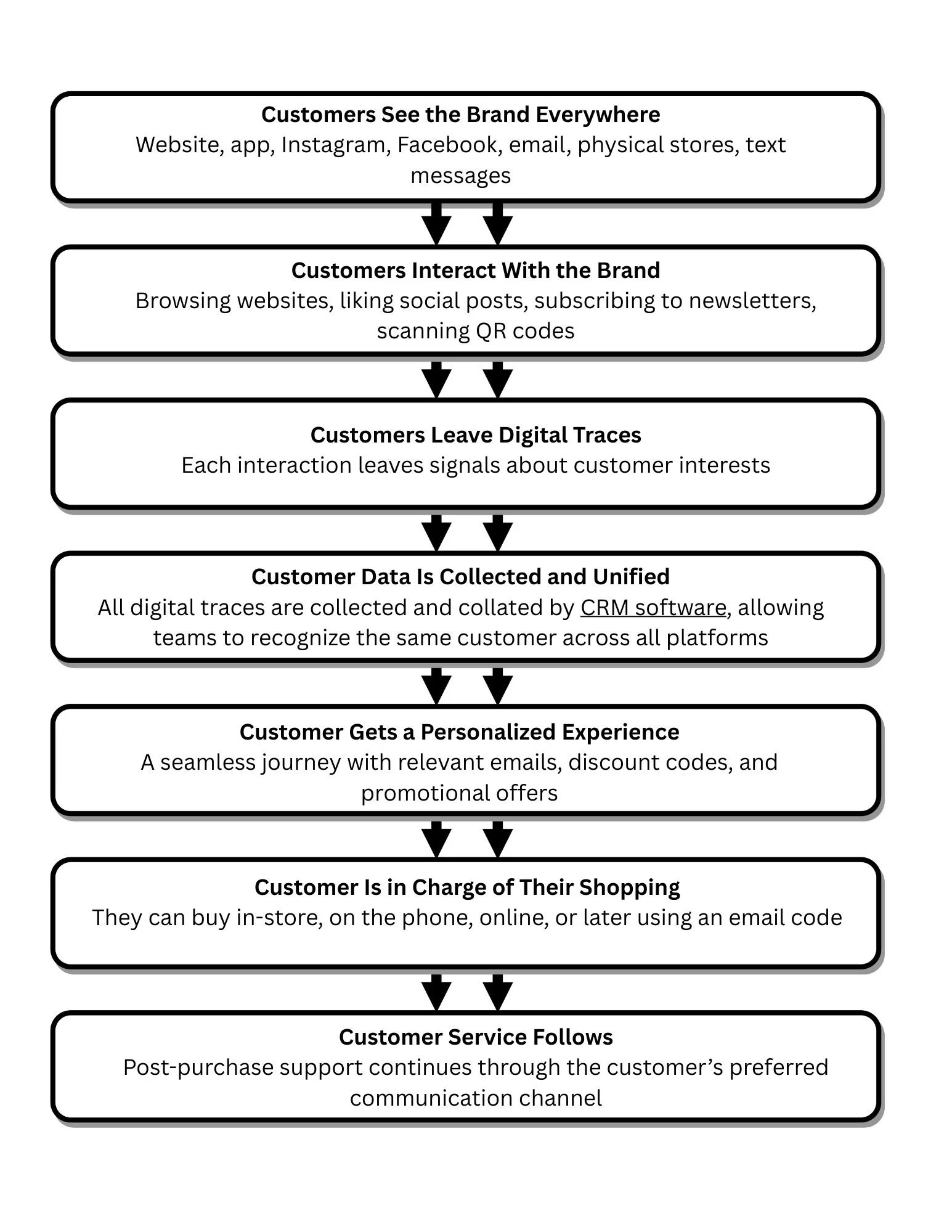
- 🌐 The Brand Is Everywhere – Customers see it everywhere, from the website and mobile app to Instagram, Facebook, emails, physical stores, and even SMS.
- 🧠 Customers Leave a Digital Footprint – Browsing a product, liking a post on Instagram, signing up for a newsletter, or scanning a QR code — each interaction leaves behind a digital trace that reveals customers’ interests.
- 📊 CRM Connects the Dots – All these digital footprints are captured and organized by a CRM system. It helps the business understand that these footprints belong to the same customer.
- 🎯 Personalized Experiences – A complete view of the customer journey gives a personal touch; a customer might browse a product today and receive a personalized email the very next day.
- 🛍️ Customers Choose How They Buy – Customers can discover a product online, check it in-store, purchase via phone, or redeem an email offer later at home.
- 🤝 The Relationship Continues – Even after the purchase, the journey continues. Customer support follows up, ensuring help & updates.
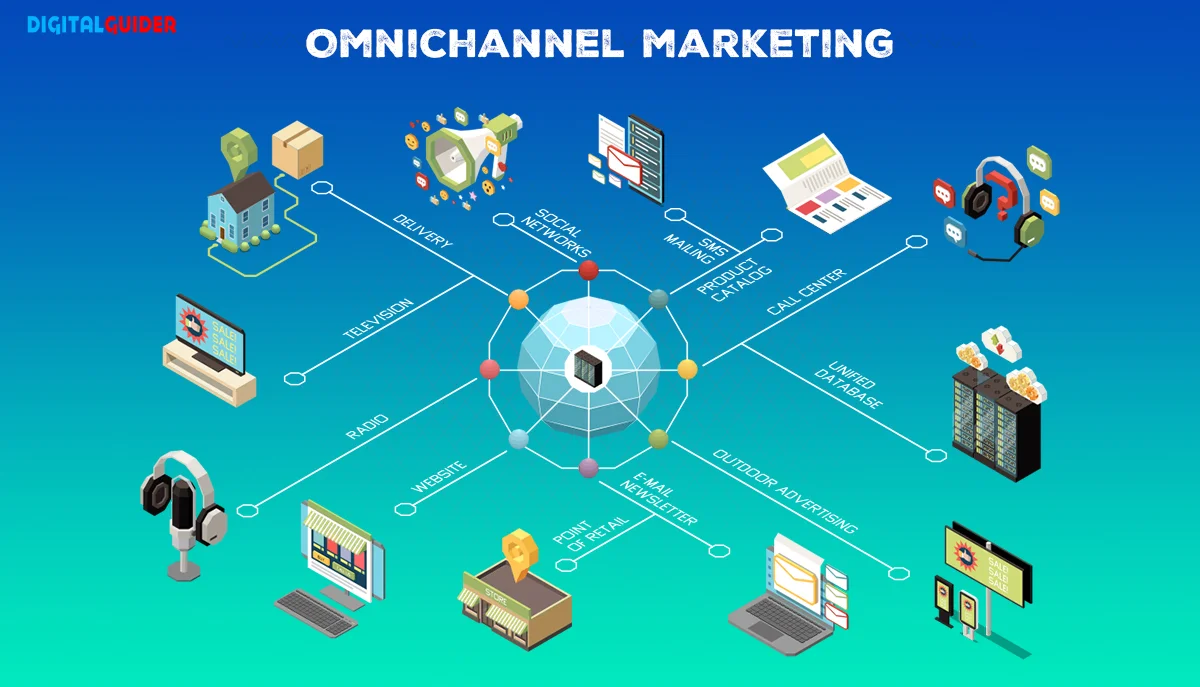
Pros of omnichannel marketing
Omnichannel marketing helps businesses create a smooth and connected experience for customers across all platforms—online and offline. It brings everything together into one seamless journey. Omnichannel marketing boosts engagement and long-term growth. Here’s what’s in it for a business:
- Customers enjoy the same experience across websites, apps, social media, and physical stores.
- They don’t need to repeat information or restart the process again and again.
- When customers see the same message and branding everywhere, it feels reliable.
- Customers can purchase at their convenience, using the channel they prefer.
- Satisfied customers are more likely to stay loyal to the brand.
- By tracking behavior across channels, brands understand customer needs better.
- If customers ignore one channel, another can still reach them.
- Data from multiple channels is combined into one, and helps brands know what customers really want.
- Repeated exposure makes the brand easier to remember.
- All marketing channels work together; this saves time, improves efficiency, and delivers better results.
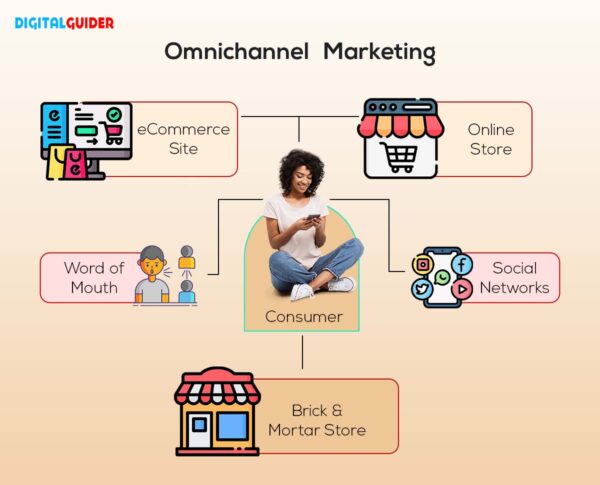
Example:
Let’s say you have a furniture store. A shopper finds your brand on social media. He clicks on your online store link and adds some items to his cart, but decides to go to your physical store. He finds the same products at the same prices. Later, he gets an email with a discount for his cart items. He is impressed and makes his purchase online.
Cons of omnichannel marketing
While omnichannel marketing is a powerful strategy, it’s complex and not without drawbacks. Here are the major challenges:
- It needs substantial investment in technology (CRM, CDP, marketing automation), integration, and infrastructure, along with skilled teams.
- Systems need constant updates, security patches, and management, along with regular performance monitoring, bug fixes, vendor coordination, and staff training.
- Increases hiring costs for data analysts, UX designers, IT specialists, and strategists.
- Making old systems, online stores, billing software, and customer databases work smoothly together often takes a long time and costs more.
- Many companies run social media, email, and store teams separately. Working as one team can cause internal conflicts and slow decision-making.
- Keeping your brand’s voice, message, and promotion perfectly in sync across all channels is very challenging.
- Gathering and pooling tons of customer data makes you a bigger target for cyberattacks.
- The flood of data from omnichannel setups can feel totally overwhelming, digging out useful insights, and without knowing what to do next.
- There are channel-specific drawbacks. Forcing Instagram’s fun, visual vibes into an email is very difficult.
Omnichannel: Advantages vs Limitations (At a Glance)
| Aspect | Pros | Cons |
| Customer Experience | Delivers a seamless, unified experience across online and offline channels. | Requires complex technical and operational integration. |
| Cross-Channel Engagement | Customers can switch channels without repeating information. | Misaligned touchpoints can break the experience. |
| Brand Consistency & Trust | Consistent messaging builds confidence and credibility. | One inconsistency can impact trust across all channels. |
| Sales & Conversions | Flexible buying options increase conversions and reduce drop-offs. | Tracking and attributing conversions is difficult. |
| Customer Loyalty | Smooth experiences encourage repeat visits and loyalty. | Poor execution can reduce customer confidence. |
| Personalization | Cross-channel data enables timely and relevant communication. | Requires advanced systems and continuous optimization. |
| Customer Insights | Unified data provides a complete view of customer behavior. | Managing large, integrated datasets is resource-intensive. |
| Brand Recall | Consistent exposure improves memorability and recognition. | Overexposure or inconsistency can confuse customers. |
| Operational Efficiency | Integrated channels save time and improve efficiency. | System and team integration is costly and complex. |
| Technology & Team Needs | Enables coordinated strategies and unified customer profiles. | High investment in technology and skilled personnel. |
| Risk & Compliance | Continuous engagement reduces missed opportunities. | Centralized data raises privacy and security risks. |
Multichannel Marketing Process
The main aim of multichannel marketing is to increase brand visibility by promoting products or services across multiple platforms at the same time. Each channel works independently, allowing customers to interact with the brand wherever they prefer. While the messaging may be similar, the channels are not deeply connected, and their journey usually starts and ends within the same channel. Here is a simple process overview:
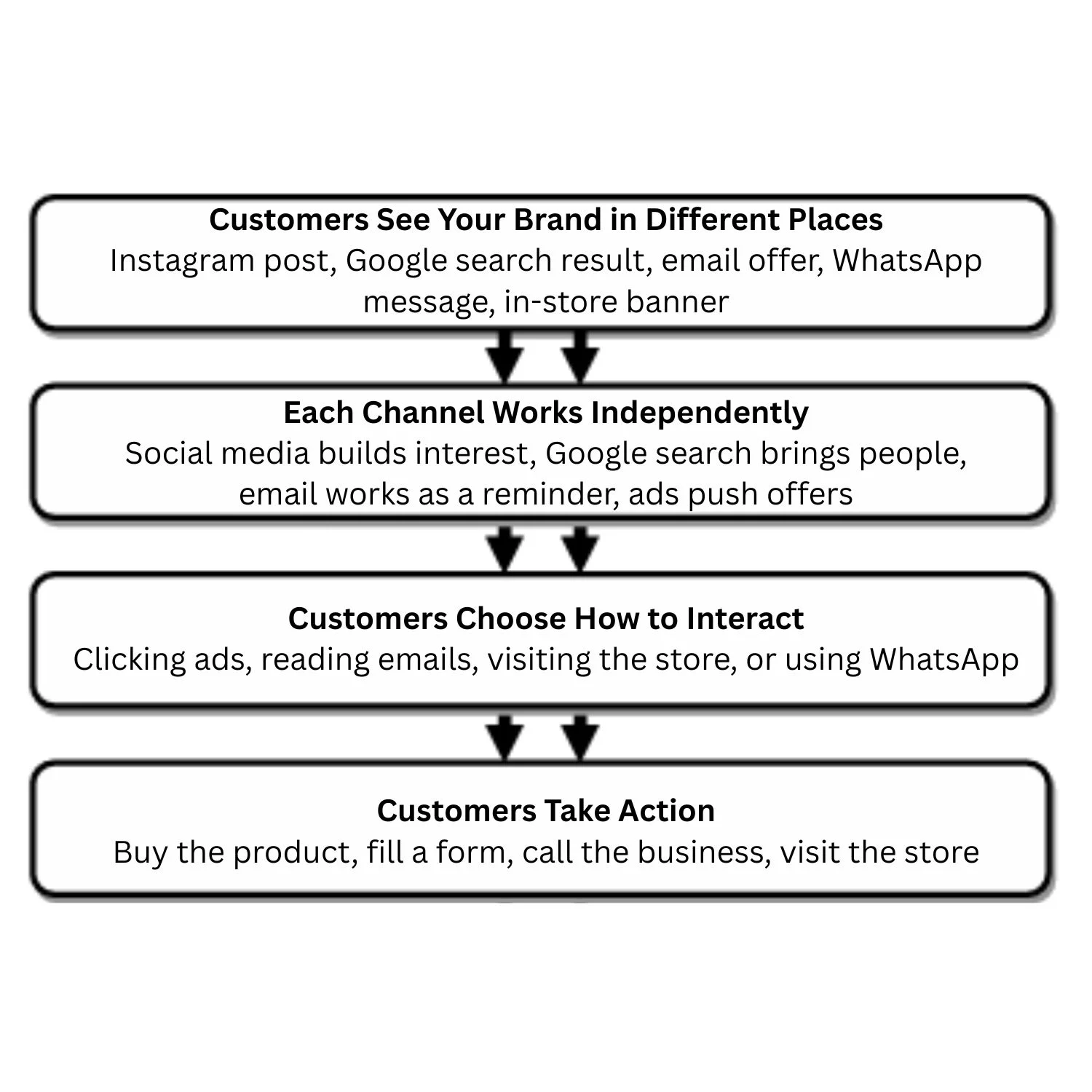
- 🌐 The Brand Is Present on Many Channels – Customers see the brand on the website, social media, emails, search results, and in physical stores.
- 🧠 Customers Can Interact on Different Platforms – Customers may browse a product on the website, like a post on Instagram, or receive an email offer, but each action usually stays within that specific channel.
- 📊 Data Lives in Silos – Each platform collects its own data. Website data, social media interactions, and in-store activity are often tracked separately, without being fully connected.
- 🎯 Personalization per Channel – Customers may receive offers or messages based on their activity on a single channel, such as an email, after signing up.
- 🛍️ Customers Buy Within One Channel – The customer journey typically starts and ends on the same platform, such as discovering and purchasing online or buying directly in-store.
- 🤝 Limited Post-Support – After a purchase, follow-ups or support usually happen through the same channel used for buying, with less cross-channel coordination.
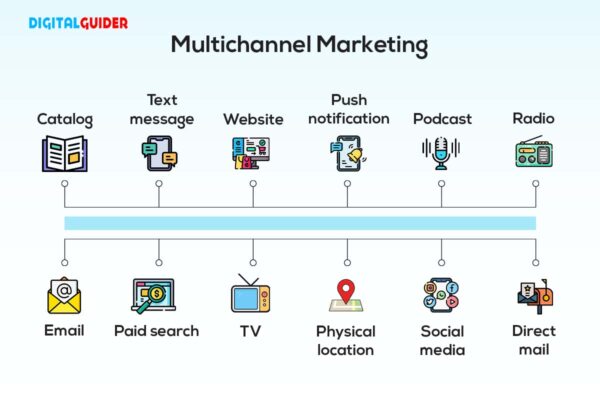
Multichannel Marketing Approach
Pros of multichannel marketing
Multichannel marketing is a popular strategy for e-commerce brands that sell through their websites, online marketplaces like Amazon and eBay, social media, and physical stores. Here’s what multichannel marketing offers businesses:
- Customers don’t shop in just one place anymore. If you sell fishing rods on your website, through Facebook ads, and in a local store, you’re reaching buyers across multiple customer touchpoints, increasing visibility, boosting social engagement, and increasing chances of conversion.
- The more places people see your brand, the more familiar and trustworthy it feels. Seeing a brand on an app, then on social media, and later hearing about it from a friend strengthens brand credibility.
- People like to shop in their own way. Some prefer buying on mobile phones, others on desktops, and some still like visiting stores.
- Multichannel marketing supports flexible shopping behavior by letting customers choose how and where they engage.
- Relying on one channel is risky. If your website goes down or ad performance drops, other sales and marketing channels can continue driving traffic and revenue, helping maintain business stability.
- Each channel works independently to influence the buying decision. More channels mean more chances to sell. Having a presence both online and offline makes it easier to convert interest into sales.
Cons of multichannel marketing
Think of a company operating separate regional offices without a headquarters. Each regional office may succeed locally, but a lack of coordination and shared information may lead to a poor brand reputation. While multichannel expands your reach, its cons can severely limit its effectiveness. Here’s how it may hurt a business:
- Maintaining a uniform brand voice and promotional message across different marketing channels is challenging. Inconsistencies can confuse customers.
- Each channel requires dedicated and specialized personnel to coordinate or message across different channels, multiple independent teams, or vendors.
- Customers’ data is fragmented within each channel. This creates a fractured analytic view of the customer journey, making holistic analysis and attribution difficult.
- Customers’ actions on one channel are not recognized on another, forcing them to restart their journey. This may frustrate the customer.
- The same person may receive the same ad message or email multiple times across different channels, leading to customer irritation.
- Because channels don’t share customer behavior data, you cannot create a seamless, personalized next-step e.g., following up on an abandoned cart.
- Customer service teams lack visibility into cross-channel interactions. A customer calling about an ad message may have to re-explain their entire issue, damaging trust.
- The source of all drawbacks is that the multichannel marketing strategy is built around the brand’s channels and goals, not the customer’s.
Multichannel: Advantages vs Limitations (At a Glance)
| Aspect | Pros | Cons |
| Customer Reach | Expands brand presence across websites, marketplaces, social media, and stores. | Customers must restart their journey when moving between channels. |
| Brand Awareness | Multiple touchpoints improve familiarity, recall, and brand visibility. | Inconsistent messaging can confuse customers and weaken brand identity. |
| Customer Convenience | Customers can choose how and where they prefer to shop. | Disconnected channel experiences may frustrate customers. |
| Sales Opportunities | Independent channels create multiple opportunities to influence purchases. | Poor coordination across channels can reduce overall effectiveness. |
| Risk Distribution | Revenue is spread across channels, reducing reliance on one source. | Managing multiple channels increases operational burden and costs. |
| Channel Independence | Channels operate independently with flexible execution strategies. | Lack of integration leads to fragmented customer experiences. |
| Resource Requirements | Easier and faster to launch new channels without deep integration. | Requires separate teams, tools, and processes for each channel. |
| Customer Data Management | Channel-level data tracking is simpler to manage. | Data remains siloed, limiting full customer journey analysis. |
| Personalization Capability | Enables basic, channel-specific promotions and messaging. | Limited personalization due to isolated customer data. |
| Strategic Focus | Focuses on maximizing the performance of each individual channel. | Channel-first approach prioritizes platforms over customers. |
| Customer Service & Support | Each channel manages customer queries independently. | Customers may need to repeat issues across different channels. |
Which One is the Better: Omnichannel or Multichannel?
The choice depends on the size of your business, budget, and goals. There’s no one-size-fits-all answer.
Best choice for enterprise & e-commerce brands:
⏩ Omnichannel
- Deliver a smoother customer experience
- Connects sales, marketing, and support gradually
- Improves repeat purchases and brand loyalty
- Manages large customer volumes efficiently
- Offers personalized experiences at scale
- Uses the same data across all channels
Example: Amazon-like experience across app, web, store, and customer support
Best choice for startups:
⏩ Multichannel
- Lower cost and faster to set up
- Easier to manage with small teams
- Focuses on getting visibility and first customers
Example: Website + Instagram + WhatsApp, managed separately
Why Is Omnichannel Marketing Gaining Popularity?
⏩ Today’s customers don’t follow a straight path. They may see a product on Instagram, check reviews on Google, compare prices on a website, and finally buy it in a store or app. Omnichannel marketing works because it matches how people actually shop today.
⏩ Customers also expect brands to remember them. They don’t want to repeat their details, preferences, or problems on every platform. Omnichannel connects all channels, so the experience feels smooth, familiar, and personal.
⏩ Another big reason is convenience. People want to start on one channel and continue on another without friction. When brands make this easy, customers stay longer, trust the brand more, and buy again.
⏩ Competition is tougher than ever. Brands using omnichannel stand out by being faster, smarter, and more customer-friendly, which directly leads to better sales and stronger loyalty.
⏩ Here’s a list of questions you must ask yourself to determine if omnichannel is the right fit for your business.
- Is customer experience a top priority for your business?
- Do you have a variety of channels through which customers interact with your brand?
- Can you invest in the necessary technology and infrastructure for integration?
- Are you operating in a competitive market where customer experience is a differentiator?
- Are your customers likely to engage with your brand across multiple digital platforms?
There’s no denying that omnichannel marketing takes more time and money to set up and maintain, but it’s worth it.
Omnichannel Vs. Multichannel – Real World Examples
Nike – Multichannel Brand:
Nike is one of the world’s most popular fitness wear brands. It sells its products through various channels, including physical stores, an online store, and mobile apps. It also distributes its products through third-party retailers. While Nike offers customers a variety of ways to buy its products, the channels do not always work together seamlessly.
You can purchase Nike shoes on their official website, the Nike app, or at a local Nike store. However, your shopping cart, wish lists, and order history are not synced across all channels.
For example, if you start shopping on the Nike website and later switch to the Nike app, you may find that your cart does not transfer to the app, forcing you to start from the beginning again.
Starbucks – Omnichannel Brand:

One of the most successful omnichannel brands is Starbucks. The coffeehouse chain has perfected the art of integrating different channels seamlessly to offer customers a consistent and easy-to-use experience. With Starbucks, you can order coffee directly from the responsive mobile app and pick it up at your local store. The app also has a loyalty program, where you can earn points for each purchase.
Whether you order online, in the store, or through the website, your points accumulate and sync across channels. You can also reload your Starbucks Card within your app or at your local store, and your balance reflects instantly, no matter which channel you reload your card from.
IKEA – Multichannel Brand:
IKEA is a Swedish furniture retailer that operates in two ways: physical stores and an online e-commerce site.
You can go to a physical IKEA store and browse the furniture and home accessories that the store has to offer. If you decide to buy something, you can pay for it at the checkout counter. While IKEA does offer an online shopping experience, the online shopping experience may not be completely integrated with your in-store shopping experience.
For example, online items may not be the same as those in stock at your physical store, and you may not be able to transfer your browsing history or preferences between the two channels.
Disney – Omnichannel Brand:

Disney is one of the most successful omnichannel brands. They offer a smooth experience across all channels, from theme parks to movies to merchandise to digital content. Customers can buy Disney merchandise at one of their physical Disney Stores, the Disney official website, or the Disney Store application.
No matter what channel the customer is using, the customer’s loyalty program membership, purchase history, and personal preferences are synchronized and recognized.
Another example is Disney’s MagicBands. MagicBands are used in Disney theme parks and are a great example of how a physical product can be connected to the digital experience. Visitors can access rides, purchases, and photo downloads from one wearable device.
Wrapping Up
There’s no one-size-fits-all. Multichannel works well for beginners, while omnichannel is ideal for growing brands focused on long-term loyalty. The key is understanding your customers and meeting them on the channels they prefer.
FAQs
Q1. How does a CDP differ from a CRM in an omnichannel strategy?
Ans. A CRM is used to handle sales and support interactions, and a CDP centralizes the customer data of all channels into one profile. CDPs are used to drive personalization, and CRMs are used to drive engagement in omnichannel marketing.
Q2. What technologies are essential for building a strong omnichannel ecosystem?
Ans. An excellent omnichannel ecosystem involves a CDP, CRM, marketing automation, analytics, integration tools, and consent management systems collaborating in real time.
Q3. What kind of data infrastructure is needed to move from multichannel to omnichannel?
Ans. The brands require centralized information on customers, real-time pipelines on data, identity resolution, and standardized data governance to facilitate smooth cross-channel experiences.
Q4. How does identity resolution impact omnichannel success?
Ans. Identity resolution links customer behaviours across devices and channels to make it possible to make the correct personalization, have easier journeys and improved attribution across touchpoints.
Q5. What are realistic first steps toward omnichannel for a small brand?
Ans. Unify customer identifiers, integrate web, email, and CRM data, and roll out basic cross-channel journeys first before going any further.
Q6. How do organizational silos block omnichannel transformation?
Ans. Silos do not allow sharing of data, reduce consistency in communication and slow down decision making, and it is hard to provide a cohesive customer experience.
Q7. What governance practices support a mature omnichannel program?
Ans. An understanding of data ownership, privacy responsibility, experience policies, and cross-team key performance indicators provides consistency, scalability, and success of omnichannel in the long term.
Q8. How does omnichannel change paid media strategy compared to multichannel?
Ans. Omnichannel paid media leverages consistent customer data to provide a series of messages, reduce unnecessary advertisements, and maximize expenditure throughout the customer journey.
Q9. Do traditional marketing strategies still work in an omnichannel world?
Ans. Traditional channels such as TV, print, and events are still effective, but their effectiveness is enhanced when incorporated into an integrated omnichannel customer experience.
Q10. What are the four core pillars of an effective omnichannel strategy?
Ans. The four pillars are integrated technology, unified customer data, constant experience design, and organizational alignment towards the customer journey.