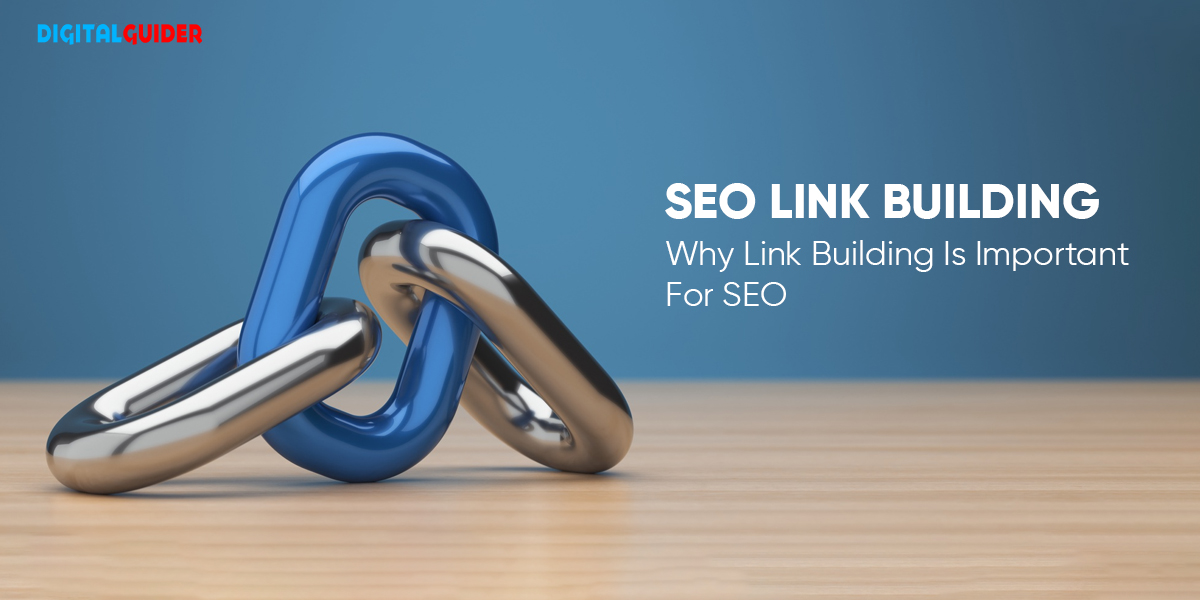
Synopsis Link building is the process of earning hyperlinks from other websites that point back to your own. Search engines like Google treat these backlinks as 'votes of confidence' - the more authoritative links you earn, the more Google trusts your site and ranks it higher in search results.
Why link building Still Matters in 2026?
If you’ve spent any time in the digital marketing world, you’ve heard it: ‘backlinks are the backbone of SEO.’ That statement was true in 2010. It’s still true in 2026 but with critical nuances that most businesses miss.
In fact, according to an Editorial.Link survey of 518 SEO experts in 2026, agencies allocate an average of 32.1% of their total SEO budget to link building more than any other single SEO activity. That’s not a coincidence.
This complete guide covers everything you need to know about
Off-page SEO link building: what it is, why it works, which strategies deliver real results in the US market, and exactly how DigitalGuider’s professional link building services can accelerate your rankings.
What is Link Building in SEO?
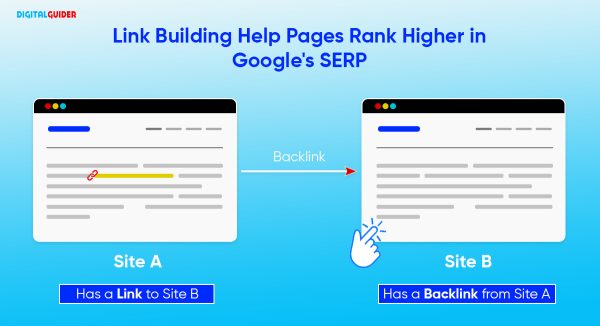
| Link building in SEO is the practice of acquiring hyperlinks called backlinks – from external websites to pages on your own website. Each backlink signals to Google that another site finds your content trustworthy and relevant, boosting your site’s authority and search engine rankings. |
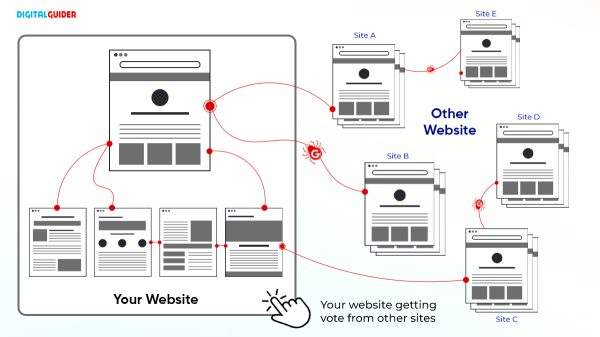
Think of backlinks as digital word-of-mouth. When a reputable website like Forbes, HubSpot, or a major industry blog links to your page, it’s essentially saying: ‘This content is worth reading.’ Google’s algorithm interprets these signals at a massive scale to determine which pages deserve top positions in search results.
Here’s why that matters for US businesses: Google’s search algorithm uses a system called PageRank-NearestSeeds, which measures how close your website is to trusted ‘seed sites’ authoritative domains like major universities, established news outlets, and government sites. The more quality links you earn from sites near these seed sites, the more ranking power flows to your pages.
Why Is Link Building Important for SEO Rankings?
Link building remains one of Google’s top three confirmed ranking factors, alongside content quality and RankBrain (user experience signals). Here’s the concrete impact backed by data:
- 13.3% Traffic Loss When Links Are Removed: Ahrefs conducted a controlled experiment disavowing backlinks, which caused a 13.3% traffic drop. Restoring those links recovered 99% of the lost traffic, proof that backlinks directly drive organic rankings.
- 40%+ Ranking Drops After Link Spam: Sites relying on low-quality purchased links saw ranking drops of 20+ positions after Google’s March 2025 algorithm update. Quality is everything.
- 32.1% of SEO Budget Goes to Link Building: The single largest SEO investment for professional agencies in 2026, according to Editorial.Link’s survey of 518 SEO pros.
- Domain Rating 70+ Links Move Rankings: A single editorial backlink from a domain with DR 70+ can outperform 100 links from low-authority, unrelated blogs.
Beyond raw rankings, strategic link building delivers three additional business benefits:
- Referral Traffic: Quality backlinks from relevant sites send real visitors who convert
- Brand Authority: Being cited by trusted sources builds brand recognition in your industry
- Faster Indexing: Google crawls linked pages more frequently, getting your new content indexed faster
Also Read: Backlinks vs Referring Domains: Understanding Their Impact on SEO
Types of Backlinks: What They Are & Which Ones Actually Count
Not all backlinks are created equal. Understanding link types is critical before launching any link building campaign.
Dofollow vs. Nofollow vs. Sponsored Links
| Link Type | SEO Value | When to Use |
| Dofollow | Full PageRank passed – highest SEO value | Editorial mentions, guest posts, resource pages |
| Nofollow | No direct PageRank – but provides context signals | Blog comments, press releases, forums |
| Sponsored | Marks paid placements – must use or risk penalty | Paid content, affiliate links |
| UGC (User-Generated) | Marks user-submitted content – neutral | Social media, community forums |
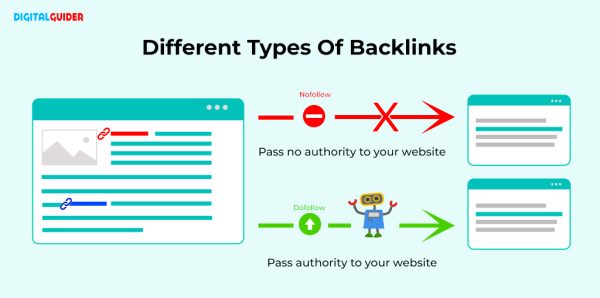
| ✅ PRO TIP: A healthy backlink profile in 2026 contains 60–70% dofollow links and 30–40% nofollow links. Exclusively chasing dofollow links creates an unnatural pattern modern algorithms detect and penalize. |
High-Value vs. Low-Value Backlinks
- High-Value: Editorial links from DR 50+ sites in your niche, news sites, industry publications
- Medium: Value: Guest posts on topically relevant blogs, resource page listings, partner sites
- Low-Value: Directory submissions (most), forum signatures, blog comment links
- Toxic: PBN (Private Blog Network) links, link farms, irrelevant paid links – cause penalties
9 Link Building Strategies That Work in the USA Market (2026)
These strategies are ranked by effectiveness-to-effort ratio for US businesses in competitive markets:
Strategy #1: Digital PR & Data-Driven Content
This is the #1 link building strategy for high-authority links in 2026. Create original research, surveys, or data studies that journalists and bloggers want to cite. US news sites (Forbes, Business Insider, TechCrunch) actively link to original data.
- How: Survey your customers or analyze public data in your niche
- Result: One study can earn 50–200+ editorial backlinks from top publications
- Difficulty: High | ROI: Extremely High
Strategy #2: Guest Posting on Authoritative Blogs
Guest posting remains one of the most scalable link building methods when done correctly. Write genuinely valuable content for high-authority blogs in your industry. Avoid ‘content farms’ that accept anyone.
- Target sites with: DR 40+, real organic traffic, editorial standards
- Average cost: $77–$609 per quality guest post placement (Editorial.Link, 2026)
- Pitch angle: Use Ahrefs’ Content Gap tool to find topics competitor blogs haven’t covered
Must Read Blog: How to Audit Your Website for SEO?
Strategy #3: Broken Link Building
Find broken links (404 errors) on authoritative pages in your niche, then offer your content as a replacement. Website owners are motivated to fix broken links, your outreach has a clear value proposition.
- Tools: Ahrefs’ Site Explorer, Check My Links (Chrome extension)
- Response rate: 5–15% from relevant, personalized outreach
- Difficulty: Medium | ROI: High
Strategy #4: The Skyscraper Technique (Updated for 2026)
Brian Dean’s Skyscraper Technique: Find high-ranking content in your niche, create a definitively better version, then outreach to everyone linking to the original.
2026 Update: With AI-generated content flooding the web, ‘better’ now means adding original data, expert quotes, interactive tools, or proprietary insights not just more words.
Step 1: Find content with 50+ backlinks via Ahrefs or Semrush
Step 2: Create a superior version with original research or better examples
Step 3: Reach out to sites linking to the original: ‘We created a more complete resource’
Recommended Blog: What Is SEO Skyscraper Technique: How to Get Quality Backlinks?
Strategy #5: Resource Page Link Building
Many websites maintain ‘Best Resources’ or ‘Recommended Tools’ pages in their niche. Getting listed on these pages earns high-authority, permanent dofollow links.
- Google search operators: ‘[niche] + inurl:resources’, ‘[keyword] + “useful links”‘
- Pitch: Keep it short – explain why your page adds value to their readers
- Difficulty: Low-Medium | ROI: High
Strategy #6: HARO, Connectively & Expert Quoting
Help a Reporter Out (HARO) / Connectively connects you with journalists needing expert quotes. Provide valuable insights, and you earn editorial backlinks from major publications at zero cost.
- Sign up at connectively.us (formerly HARO)
- Respond to 3–5 relevant queries daily with specific, data-backed insights
- Success rate: 15–25% response rate for specific, expert answers
Strategy #7: Competitor Backlink Analysis & Replication
Use Ahrefs or Semrush to analyze exactly where your top competitors earn their backlinks. Then target those same sources with better content or stronger pitches.
- In Ahrefs: Enter competitor URL → Backlinks → Filter by ‘Dofollow’ → Sort by DR
- Look for: Resource pages, partner directories, guest post opportunities, citation lists
- This is the fastest way to identify proven link opportunities in your exact market
Full Read : SEO Competitor Analysis: How to Beat Top Rankings in 2026
Strategy #8: Unlinked Brand Mentions
Monitor the web for mentions of your brand that don’t include a link back to your site. These are the easiest link building wins, the author already knows you, they just forgot to link.
- Tools: Google Alerts (free), Mention.com, Semrush Brand Monitoring
- Outreach message: Keep it friendly – ‘Thanks for mentioning us! Would you mind adding a link?’
- Success rate: 20–30% – highest of any outreach strategy
Strategy #9: Local Link Building (Critical for US Local Businesses)
For US businesses targeting local markets, local links carry disproportionate authority. These include city-specific directories, Chamber of Commerce listings, local news mentions, and community sponsorships.
Chamber of Commerce listing: Guaranteed DR 50+ local link
Local business directories: Yelp, BBB, city-specific sites
Community sponsorships: Sponsor a local event → get a link from the event website
Local news mentions: Pitch story ideas to local reporters, newsworthy hooks work
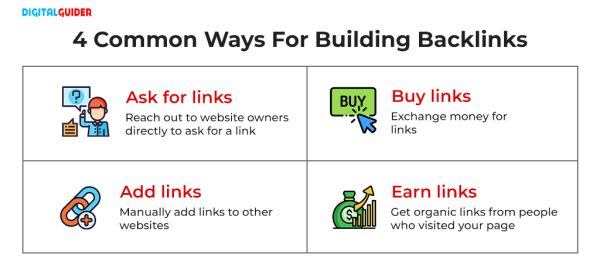
4 Common ways to get link
1. Asking for Backlinks
2. Buying links from Other Sites
3. Adding links on your own
4. Earn links from authoritative websites
1— Asking for Backlinks
When you ask a website to link to your site, it is referred as asking for links. You can request them to link to:
- Visual assets (like infographics)
- Blog posts
- Case studies
- In-depth guides
- Ebooks
- Resource page SEO link building
- Original research and data & so forth.
But you can’t possibly reach out to the folks at datasciencecentral.com and ask them to link to your page with cookie recipes, right? You need to pick websites related to your page since they are more likely to consider your request.
Recommended Blog: What Is SEO Skyscraper Technique: How to Get Quality Backlinks?
2— Buying links from Other Sites
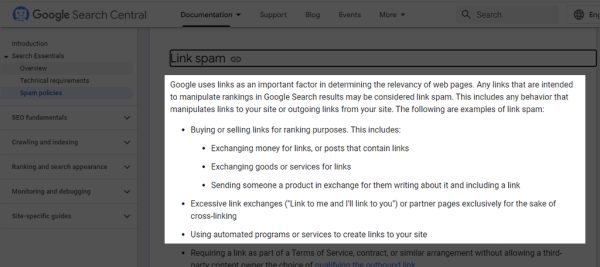
Same as above, but you offer them money (or some other compensation). It is a process of paying another website to insert a link to your website on one of their pages. Here, the goal is to buy as many links as possible to boost their rankings in Google search results. Buying links can come in different forms:
- Paid directory listings
- Paid guest posts
- Paid link placements
- Private Blog Networks
It is considered a black-hat or gray-hat SEO technique since it is against Google’s Webmaster Guidelines. According to the guidelines, link buying and selling are link schemes that intend to manipulate the PageRank algorithm. Buying links is also misleading for users.
3— Adding links on your own
This process involves adding links to another website or manually adding your link. Certain websites allow visitors to publish content on their pages with little to no moderation.
Like discussion boards, for example. You can easily register at a few and post some messages with your links in them.
For instance, you can manually add links to:
- Business directories
- Social media profiles
- Forums
- Communities, & Q&A sites (like Quora)
- User profile pages
- Blog comments & so on.
Manually adding SEO links may seem like an easy way to build links, but it is one of the least effective methods. Such links typically come from low-quality sources that Google does not want to give too much importance to.
This is because you create these links, which is like endorsing your website. This is not what Google wants when determining which websites deserve to rank higher in search results.
And since these links aren’t editorially given, they carry less value than others. While these links won’t actively help you, they won’t hurt you. Your best thing is to earn your links.
Also Read: What Is Barnacle SEO? 11 Tips to Leverage Other Sites’ Ranking & Traffic
4— Earn links from authoritative websites
When other websites link to yours without your asking, it is called an earned link. For example, SEMrush gets links from various websites for their SEO tool. And an excellent way to earn links is by creating high-quality EEAT content people want to link to. For backlinks to occur, your website content must be truly remarkable and valuable enough for other website owners to reference it on their websites.
Typically, links are added organically as a resource or a recommendation for further content readings. Here are some different types of content people tend to link to:
- Visual assets (infographics, charts, diagrams, etc.)
- Original research, statistics, and data (industry studies, surveys, proprietary research, etc.)
- Add Industry surveys, breaking news & online tools for users
- Add unique ideas and strong opinions (i.e., thought leadership)
- In-depth guides, tutorials, and others.
Look at your competitors’ backlink profiles to find more valuable content ideas.
White-Hat vs. Black-Hat Link Building: What’s the Difference?
| White-Hat (Safe) | Black-Hat (Dangerous) | |
| Definition | Ethical tactics that comply with Google’s guidelines | Manipulative tactics that violate Google’s Webmaster Guidelines |
| Tactics | Guest posting, digital PR, broken link building, resource pages | PBNs, link farms, bought links, link exchanges, cloaking |
| Risk | Minimal – actually improves site long-term | Manual penalty or algorithm devaluation |
| Result | Sustainable rankings that compound over time | Short-term gains followed by ranking collapse |
| Google’s Stance | Actively encouraged | Results in manual actions and deindexing |
| 🚨 WARNING: In 2025, over 40% of sites relying on purchased links saw ranking drops of 20+ positions after Google’s March core update. Black-hat link building is not worth the risk, especially for established US businesses. |
How to Measure Link Building Success: Key Metrics to Track
Backlinks without measurement are just hope. Track these metrics monthly to prove ROI:
| Metric | Tool | What to Watch For |
| Domain Rating (DR) | Ahrefs | Upward trend month-over-month |
| Referring Domains | Ahrefs / Semrush | Growing unique linking domains (not just total links) |
| Organic Traffic | Google Search Console | Traffic growth after link acquisition |
| Keyword Rankings | Semrush / Ahrefs | Target pages climbing for primary keywords |
| Referral Traffic | Google Analytics 4 | Real visitors arriving via backlinks |
| Link Survival Rate | Ahrefs Link Intersect | % of earned links still live after 90 days |
| 📊 PRO BENCHMARK: Ahrefs found that 66.5% of links over nine years old are dead. This means you need continuous link acquisition just to maintain current authority – not just grow it. Aim for a minimum 10–15 new referring domains per month. |
Link Building in the AI Era: What’s Changed in 2026?
Artificial intelligence has reshaped link building in three critical ways that US businesses must understand:
- AI Content Flood = Human Expertise Premium: With millions of AI-generated articles flooding the web, Google’s systems have become better at identifying authentic, human-expertise-driven content. Original research, personal case studies, and expert insights now earn links that generic AI summaries cannot.
- AI-Powered Outreach Detection: Gmail and LinkedIn now use AI to filter outreach emails. Templated mass emails see 1–2% response rates. Personalized, relationship-driven outreach to 50 qualified prospects yields 25–30% response rates.
- Generative Engine Optimization (GEO): As Google’s AI Overviews and ChatGPT cite sources directly, earning links from publications that AI systems trust is increasingly important. Being cited in Forbes, Search Engine Journal, or Moz means your content gets surfaced in AI-generated answers.
Frequently Asked Questions About Link Building
Q: How long does link building take to show results?
Link building typically takes 3–6 months to show measurable ranking improvements. Google needs time to crawl and index new backlinks, then factor them into its ranking calculations. Patience is essential — but the compounding effect over time makes link building one of the highest-ROI SEO investments available.
Q: How many backlinks do I need to rank on a page ?
There’s no universal number — it depends on your competition. Use Ahrefs or Semrush to check how many referring domains the top 3 ranking pages have for your target keyword. Then set a goal to match or exceed that number with higher-quality links. For low-competition US niches, 20–50 quality links can rank a page. For competitive terms like ‘link building,’ you’re competing with sites that have thousands.
Q: Is buying backlinks safe?
No. Buying backlinks violates Google’s Webmaster Guidelines and can result in a manual penalty that drops your rankings for months or permanently. In 2025, Google’s algorithms specifically target unnatural link patterns. Focus exclusively on earning links through legitimate outreach, content creation, and digital PR.
Q: What is the best free link building strategy?
The most effective free link building strategies are: (1) HARO / Connectively for editorial mentions from journalists, (2) broken link building using the free Ahrefs backlink checker, (3) unlinked brand mention monitoring via Google Alerts, and (4) creating genuinely linkable content (original research, comprehensive guides, free tools).
Q: Does link building still work in 2026?
Absolutely. Backlinks remain one of Google’s top three confirmed ranking factors in 2026. Ahrefs’ controlled disavow experiment confirmed a direct causal link between backlinks and traffic (13.3% traffic loss when links were removed). The strategy has evolved — quality over quantity is paramount — but link building is more important than ever.
Ready to Build a Backlink Profile That Ranks?
Building a high-quality backlink profile takes expertise, the right tools, and consistent outreach. At DigitalGuider, our link building specialists have helped US businesses across competitive industries earn editorial backlinks that move rankings and drive revenue.
| What We Offer | Results You Can Expect |
| Manual link prospecting from DR 40+ sites | Measurable ranking improvements in 60–90 days |
| Customized outreach campaigns for US markets | 10–20 new referring domains per month |
| Full backlink profile audit & toxic link removal | Protected rankings — no penalty risk |
| Monthly reporting with Google Analytics + Ahrefs data | Clear ROI tied to business outcomes |
Share This Article
About the Author: Liam O'Shea

Related Articles
 September 21st, 2026 | 8 minutes read
Someone nearby is searching for a cannabis dispensary right now. They may want a specific strain, need to check store
- September 17th, 2026 | 8 minutes read
Austin is a competitive market for local businesses, tech companies, startups, and growing brands. The right agency can help you
- September 14th, 2026 | 7 minutes read
Search used to take minutes. AI changed it into seconds. People are not more interested in scrolling down 10 blue
- September 10th, 2026 | 13 minutes read
1. DigitalGuider 2. Thrive 3. WebFX 4. Coalition 5. Victorious SEO 6. First Page Sage 7. RankScience SEO 8. The